


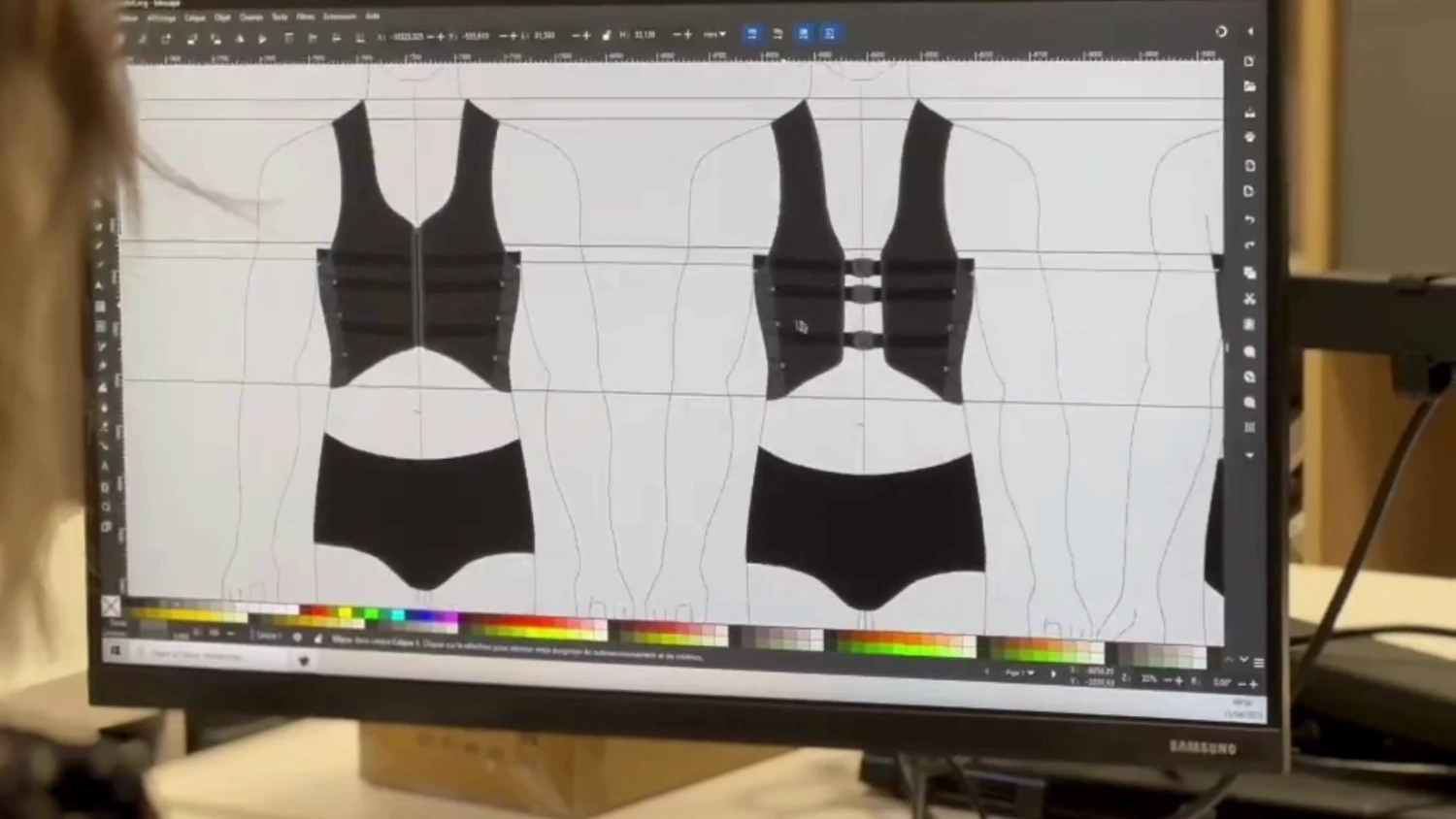

Connected garment development
E-textile architecture, sensors & integration: from idea to industrializable prototype

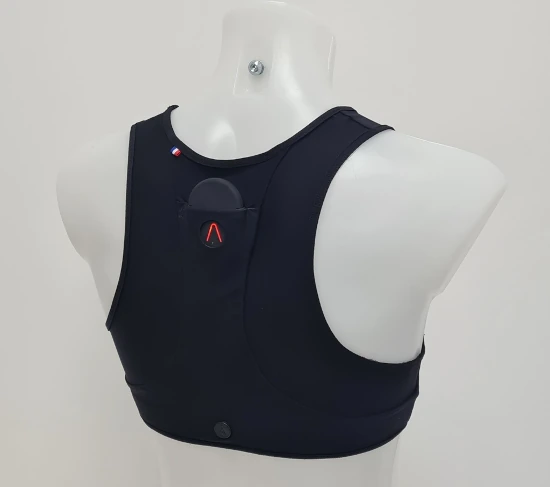
Design a relevant, comfortable and industrializable connected garment from day one
Developing a connected garment is not about gluing sensors onto a fabric. It means defining a complete e-textile architecture: electrodes, conductive tracks, connectors, electronic modules, comfort zones and mechanical interfaces — taking real-world constraints into account from the very first line of design.
At AQ-Tech, we help you turn a product idea into a coherent e-textile architecture tailored to your use case, your mechanical, thermal and electrical constraints and your market (sport, medical, industry, PPE). Our approach integrates ergonomics, washability, measurement reliability and industrial feasibility from the outset — to avoid technical dead ends and late-stage surprises.
From the functional brief to the complete architecture with integrated sensors, actuators and embedded firmware, our multidisciplinary textile–electronics–mechanical team ensures full continuity between the design, prototyping and industrialization phases.
Developing your connected garment from A to Z
From the product idea to the complete e-textile architecture: fabric, sensors, tracks, connectors and electronic modules — designed to last and to be industrialized.
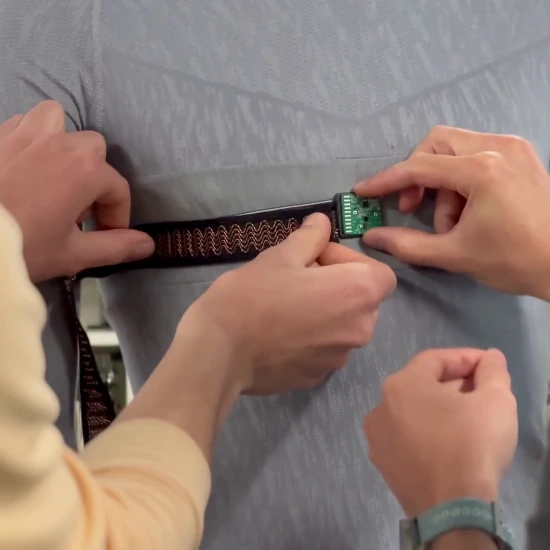
Custom e-textile architecture
Defining the right e-textile architecture is the key to a reliable and comfortable connected garment.
The e-textile architecture determines the position of the sensors, the routing of the conductive tracks, the location of the electronic modules and the management of mechanical stress zones. A poor architecture at project start inevitably translates into signal, washability or ergonomics issues at the end of development. We define it with you from the framing phase.
- + Mapping of sensor areas (ECG, EMG, IMU, pressure, temperature…)
- + Definition of conductive tracks and textile buses
- + Positioning of connectors and electronic modules
- + Management of stress zones (folds, stretching, friction)
- + Consideration of grading and sizing
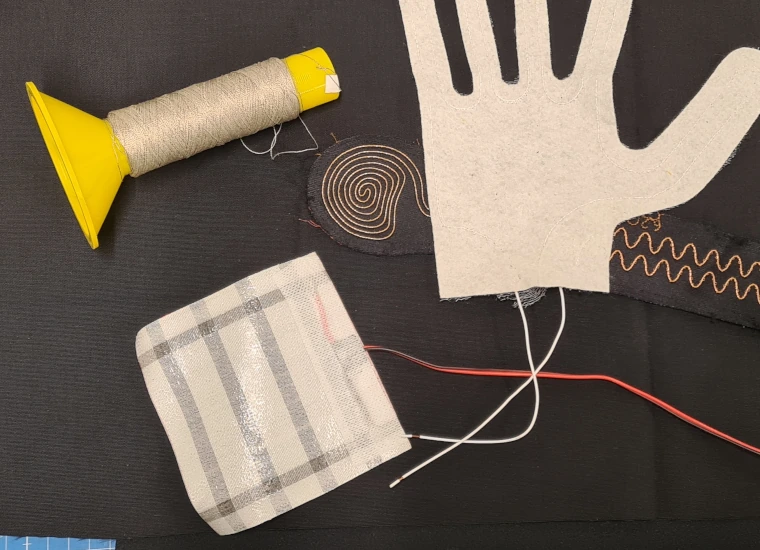
Selection of textile & conductive technologies
We choose the technologies best suited to your use case and your industrial constraints.
Conductive yarn, embroidered ribbon, conductive printing, knitting or weaving — each technology has its advantages in terms of conduction, flexibility, washability and industrial cost. We arbitrate these choices upstream, taking into account your textile partner's production chain and the cost/performance/durability trade-off.
- + Conductive yarns, ribbons and specific braids
- + Knitting, weaving, embroidery or conductive printing
- + Multi-layer textile assemblies (lamination, bonding…)
- + Compatibility with your textile partners and production lines
- + Cost / performance / durability optimization
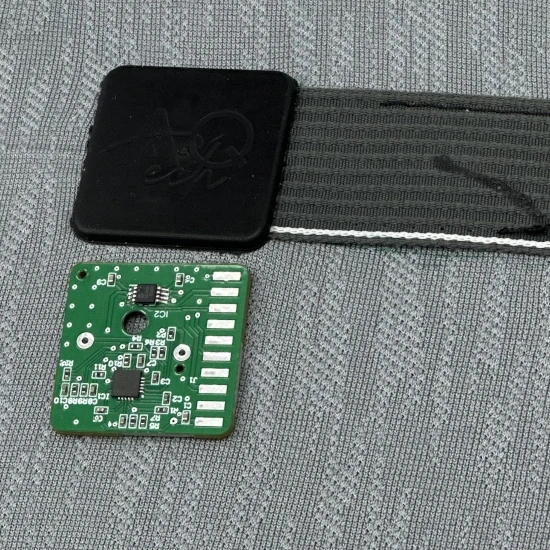
Integration of sensors & modules in the garment
Designing a smart garment means integrating sensors and modules without sacrificing comfort or aesthetics.
Integrating electronic components in a garment is a balancing act between discretion, comfort, washability and measurement performance. We work in co-design with your product, design and R&D teams to anticipate overmoulding, rigid zones and textile–electronics interfaces from the first mockups onward.
- + Discreet integration of electronic modules (ECU, batteries, antennas)
- + Management of thickness and rigidity zones
- + Textile ↔ electronics interfaces addressed from design stage
- + Preparation of future overmoulding and encapsulation steps
- + Product co-design with your marketing, design and R&D teams
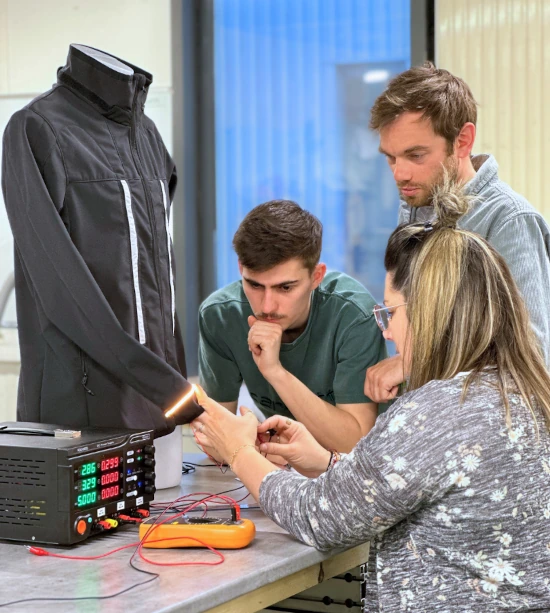
Ergonomic studies, comfort & product integration
A connected garment must be worn over time, without discomfort or added constraint.
The positioning of sensors and modules cannot be optimized on a flat pattern — it requires analysing the user's real postures and movements. We carry out ergonomic studies to validate sensor placement, the distribution of compression zones and sizing, taking into account both signal reliability and long-term comfort.
- + Analysis of main postures and movements
- + Ergonomic positioning of sensors and modules
- + Distribution of compression and support zones
- + Joint work on style, cut and sizing
- + Consideration of thermal and tactile comfort
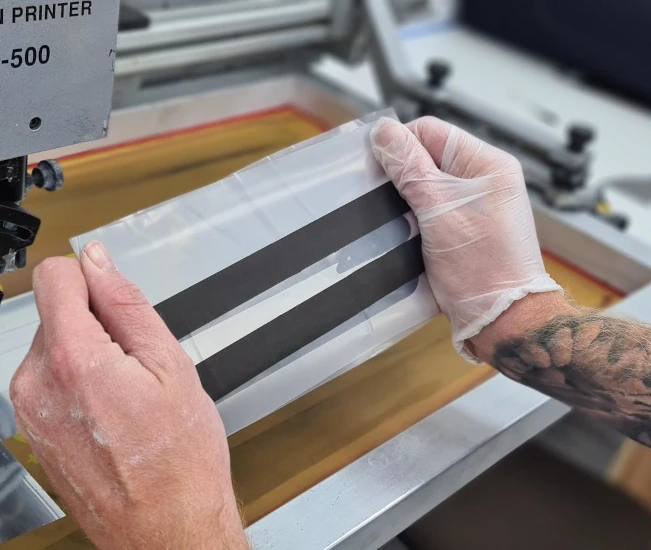
Mechanical, thermal & electrical constraints
We anticipate the constraints your connected garment will face in the field.
In use, a connected garment is subjected to constraints that the lab does not always faithfully reproduce: repeated stretching of conductive tracks, local heating through friction, electromagnetic interference from nearby actuators or motors. These issues, if not anticipated at design stage, generate signal drift or failures at the end of development. We address them from the design phase.
- + Stretching, bending, friction and traction of the textile
- + Local heating, ventilation, sweat management
- + Ground routing, shielding and electromagnetic compatibility
- + Consideration of standards and future certification tests
- + Preparation of prototyping and industrialization steps
Co-design workshops
Dedicated sessions with your product, R&D and marketing teams to frame the connected garment.
Technology exploration
Comparison of textile, sensor and connector technologies tailored to your use case.
Textile & e-textile lab
Textile prototypes, track architectures, sensor placement and comfort tests.
Electronics expertise
Specification of modules, interfaces, protocols and electrical constraints related to the textile.
Our resources dedicated to connected garment design
AQ-Tech relies on a multidisciplinary team (textile, mechanical, electronics, software) and a comprehensive lab to turn your idea into a concrete e-textile architecture. You have a single point of contact to define a solid, realistic smart garment ready to be prototyped — with no information loss between disciplines.
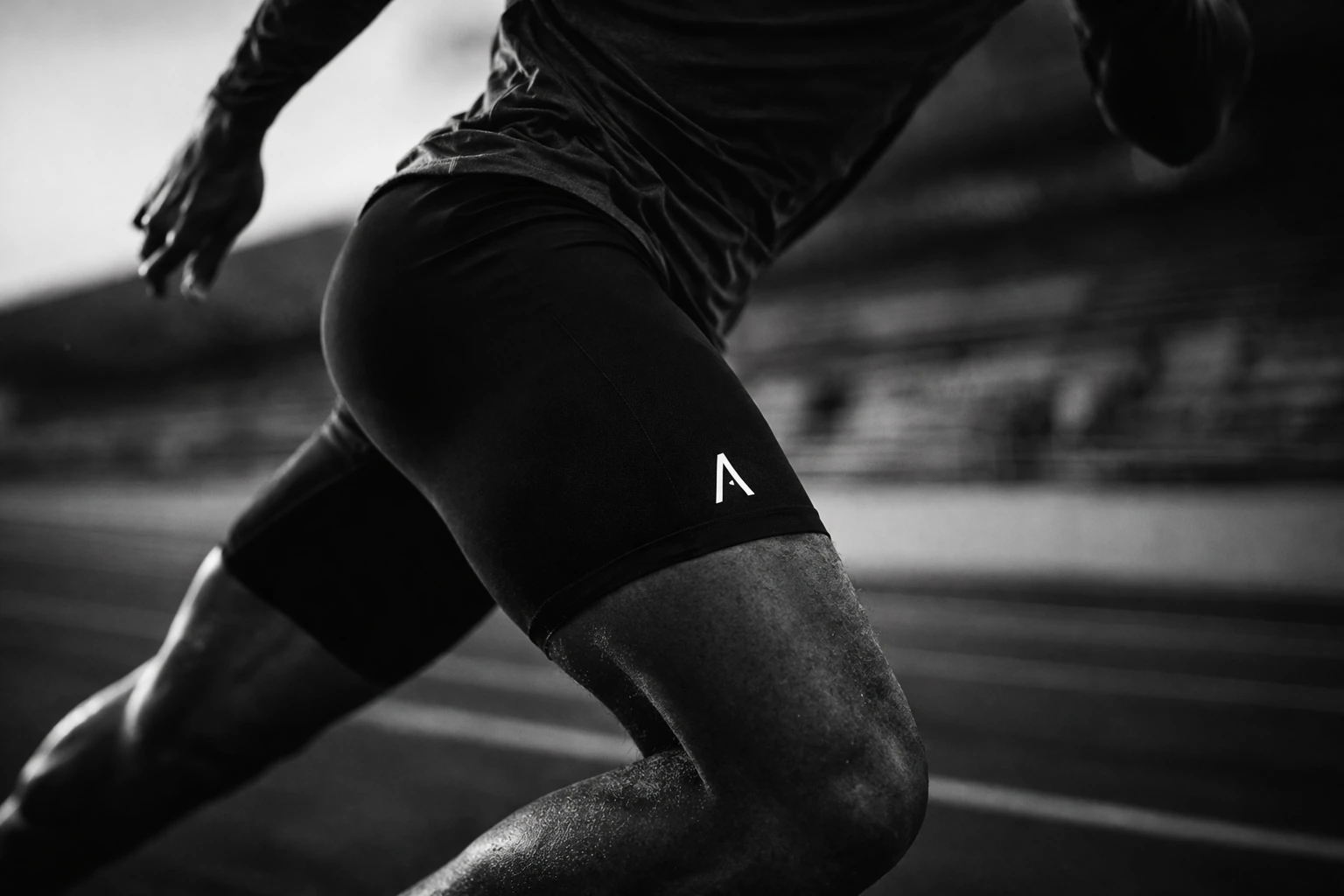
Connected garments developed by AQ-Tech
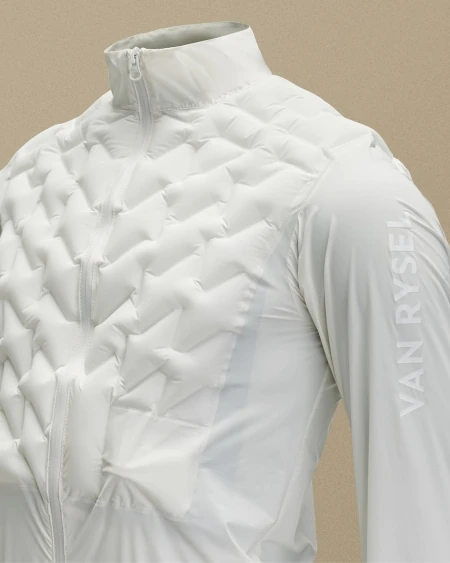
Van Rysel
Van Rysel (Decathlon) inflatable cycling vest with on-demand thermal insulation: HF-welded TPU envelope, smart pump unit and embedded electronics developed by AQ-Tech.
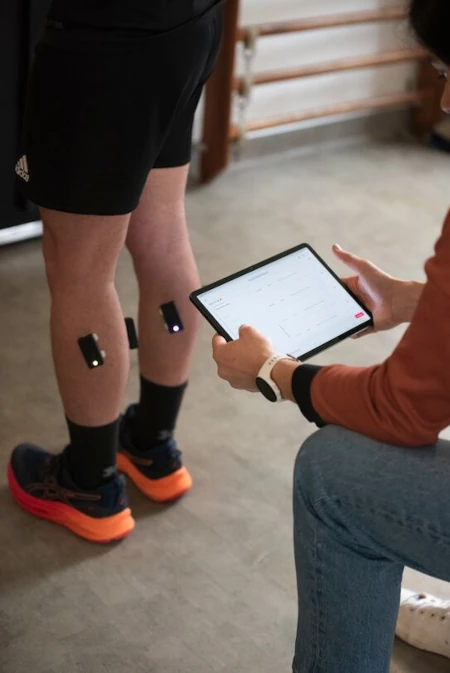
Léonard (formerly Optimergo)
Léonard EMG sensor module for industrial ergonomics and sports performance: embedded electronics and textile-electrode integration engineered by AQ-Tech.
The AQ-Tech Smart Textile ecosystem
The upstream and downstream stages of development
Designing the connected garment is the first step. It builds on our expertise in sensors, actuators and product integration, and naturally extends to prototyping and then industrialization.
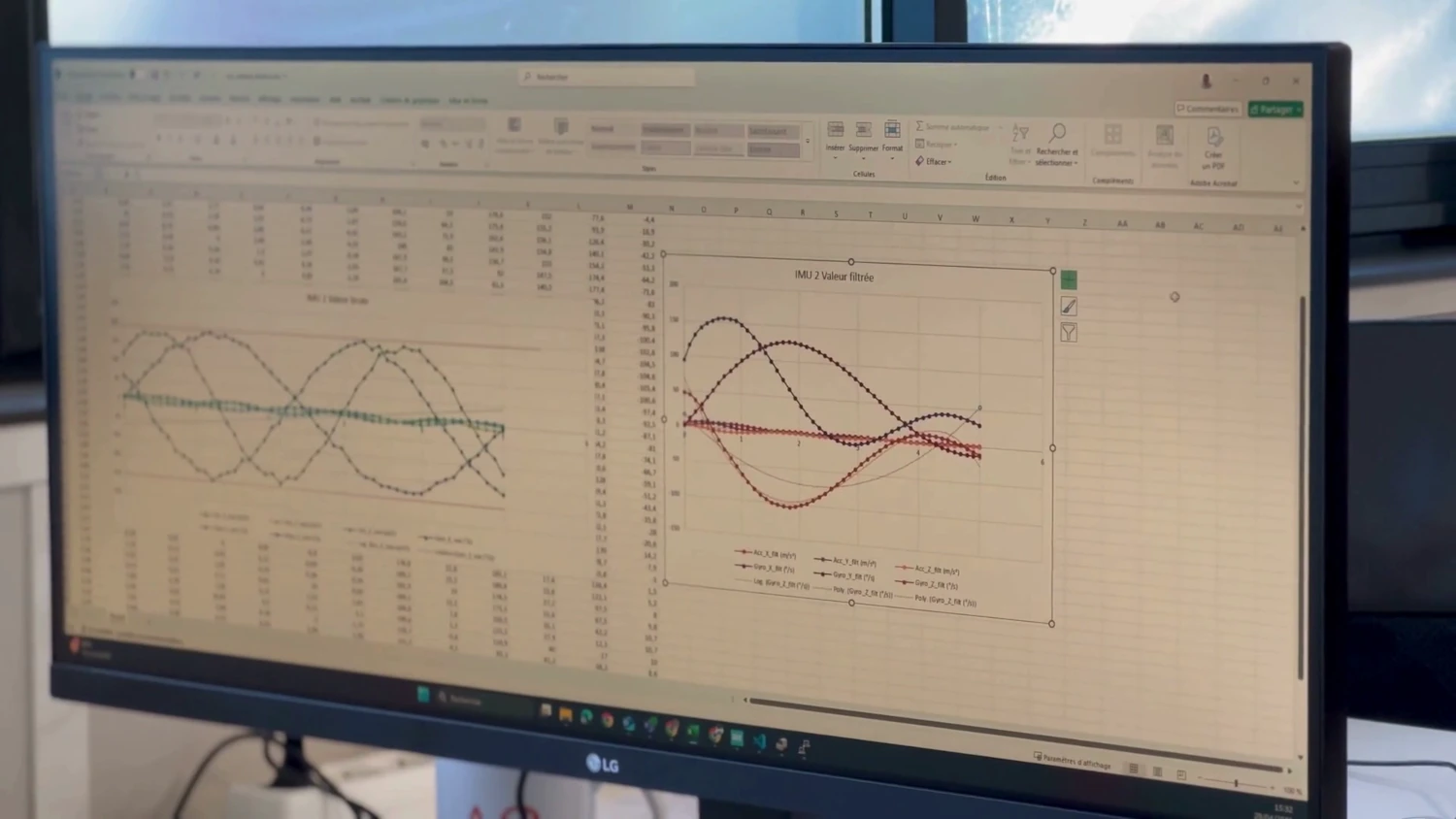
Integrated textile sensors
ECG/EMG electrodes, IMU, respiration, temperature and flex sensors integrated into the textile.
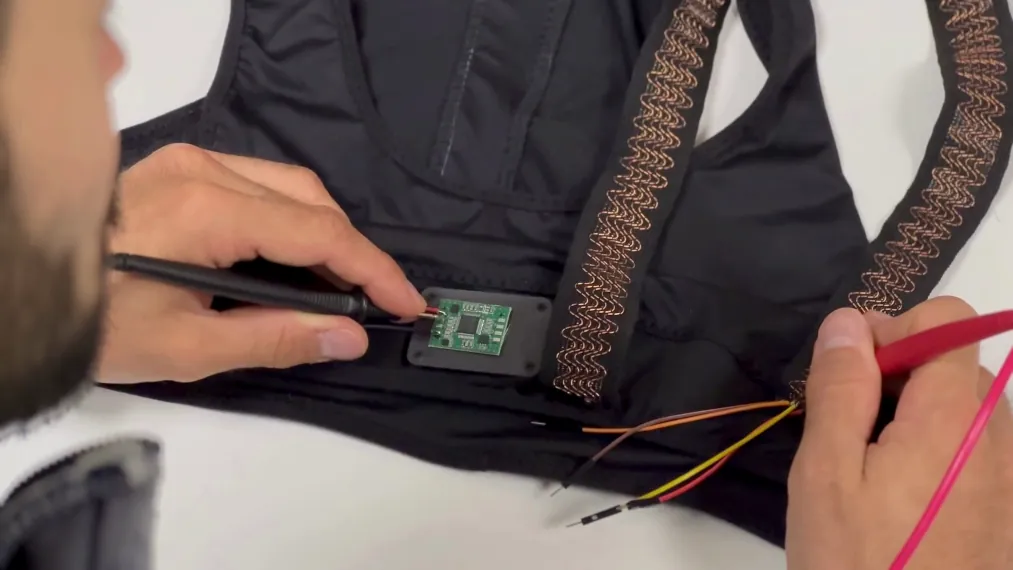
Integrated textile actuators
Haptic vibration, EMS, textile heating and light output to close the sensor → action loop.
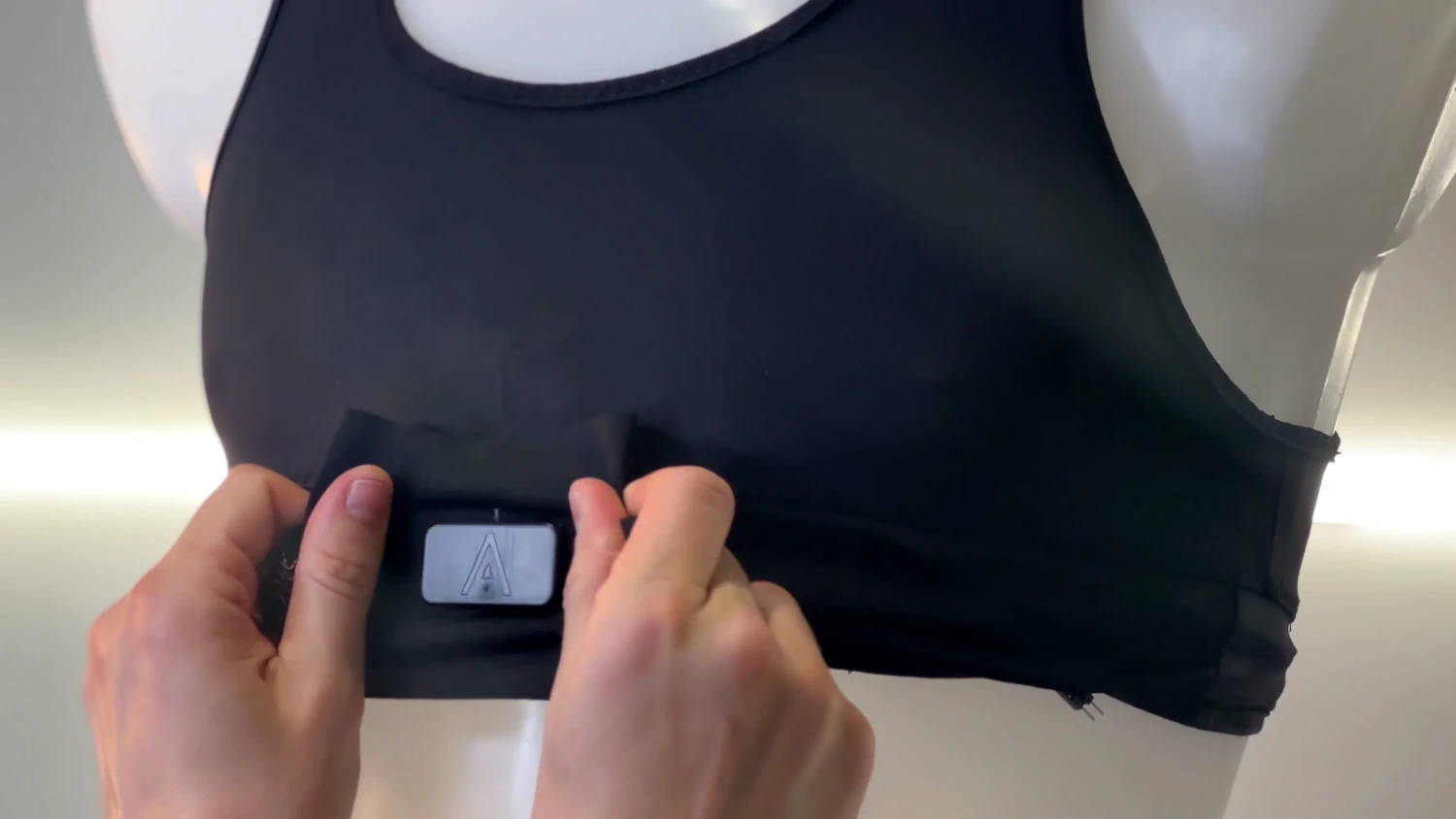
Smart Textile product integration
Overmoulding, washable connectors and flexible mechatronics to move from sensor to finished product.
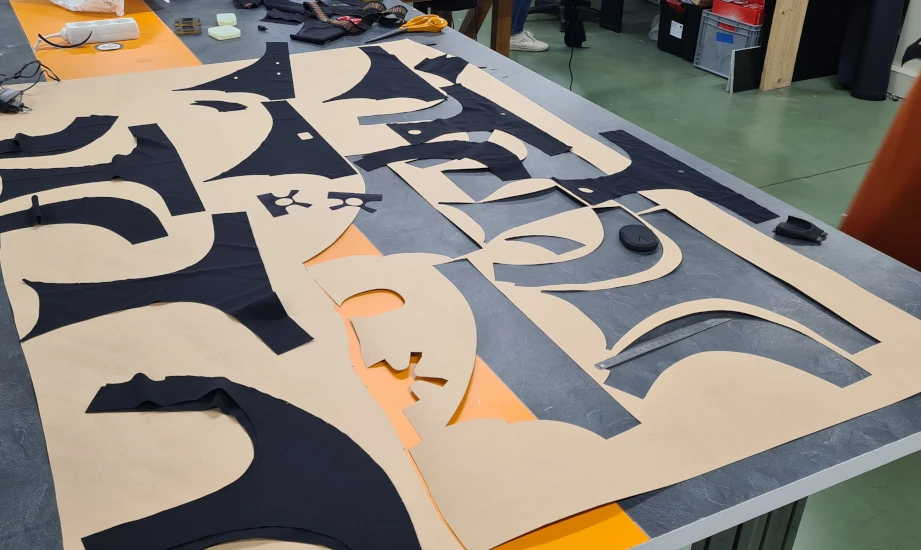
Prototyping & validation
Functional prototypes, signal testing (ECG/EMG/IMU), washing campaigns and iterations toward pre-series.
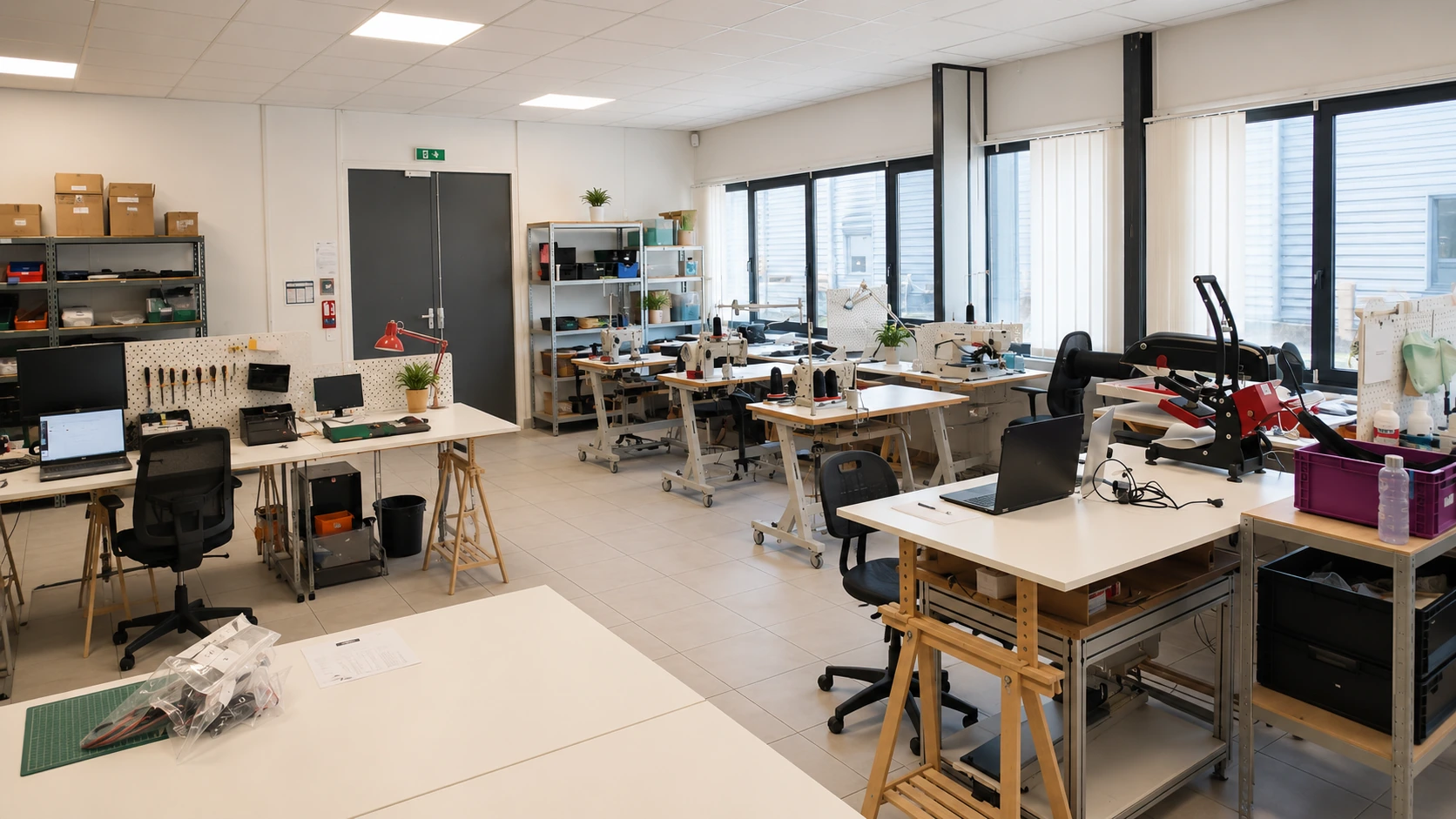
Smart textile industrialization
Reproducible processes, quality control and CE/MDR documentation for series production.
Our expertise serving your connected garment
Developing a connected garment at AQ-Tech mobilizes three in-house areas of expertise: technical textile for conductive materials, multi-layer assemblies and washability; embedded electronics for acquisition modules, firmware and connectivity; and mechanical engineering for interface durability and robustness against in-use constraints.
The most demanding connected garments combine textile sensors and textile actuators — physiological measurement and haptic feedback, heating or EMS within the same garment. This product integration is one of our specialties.
Once the connected garment is designed, we handle prototyping and validation then industrialization — with our pre-series manufacturing services. Discover the full Smart Textile hub.
Frequently asked questions — Connected garment development
Where do I start to develop a connected garment?
The first step is to clarify the use cases: which signals to measure, under which conditions (effort, perspiration, washing), with which comfort constraints and for which market. We help you define these elements during a framing workshop, then build an appropriate e-textile architecture before any prototyping investment.
Can you start from an existing garment or pattern?
Yes. We can adapt an existing pattern or product range to integrate sensors, conductive tracks and electronic modules, while preserving the DNA of your product. We regularly work in co-design with brands that bring their cut and style, while AQ-Tech takes care of the e-textile integration and the electronics.
What is the difference between a smart textile and a connected garment?
A smart textile embeds active functions (sensors, actuators, electrical conduction) directly within the fabric structure. A connected garment additionally includes embedded electronics, wireless communication and often an app or data platform. The two approaches can coexist within a single product — we help you arbitrate according to your market and your constraints.
Do you also handle prototyping and industrialization?
Yes. AQ-Tech supports you across the whole chain: e-textile design, sensor/actuator integration, prototyping and functional testing, industrial pre-series and transfer to your manufacturing partners. The same team follows the project from brief to finished product — with no information loss between phases.
Which markets do you target with connected garments?
Our applications cover performance sport (motion analysis, physiological monitoring, injury prevention), medical (class I and II MDs, patient monitoring, rehabilitation), industry (smart PPE, MSD prevention, ergonomics) and defence. Each market has specific requirements — CE/PPE certification, MDR medical, IEC standards — which we anticipate from the design phase.
What are typical lead times to develop a connected garment?
For a first wearable, testable prototype: 2 to 4 months depending on complexity (number of sensors, electronics integration, washing constraints). For a validated version ready for pre-series: 4 to 8 months. These timelines depend strongly on the maturity of the brief at kickoff and the number of iterations required — we plan with you from the very first exchange.

Let's develop your connected garment together
Whether you target sport, medical, industry or PPE, AQ-Tech designs reliable, comfortable connected garments and smart textiles ready to be industrialized. Reply within 48h.