


Smart textile industrialization
Reproducible processes, quality control & industrial transfer

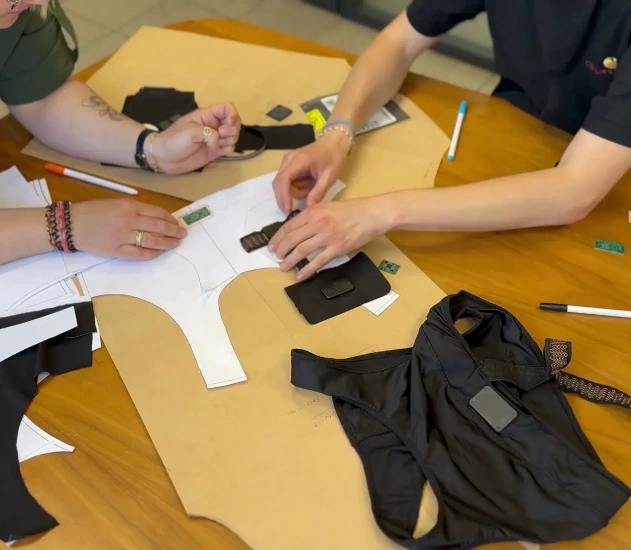
From smart textile prototype to series production
A smart textile prototype can perform perfectly in the lab and then fail as soon as it enters production. Connected textile combines constraints that are hard to hold in series: deformation, ageing, humidity, washing cycles and variability driven by operator gestures. In parallel, the integrated electronics — tracks, FPCB, connectors, encapsulation — impose strict tolerances, inspections and signal stability.
Smart textile industrialization at AQ-Tech aims to define reproducible processes, lock in long-term robustness and prepare a clean industrial transfer — to manufacture in series without quality drift. This phase benefits directly from the continuity with our prototyping and product integration teams: the upstream choices on materials, assembly and encapsulation are documented and transferable.
Our pre-series manufacturing unit then takes charge of the first runs (10 to 500 pieces) with full traceability, before industrial transfer to your textile partners or ours.
Our smart textile industrialization services
Specialized e-textile industrialization: processes, tooling, inspections and long-term validations for series production without quality drift.
Reproducible manufacturing methods
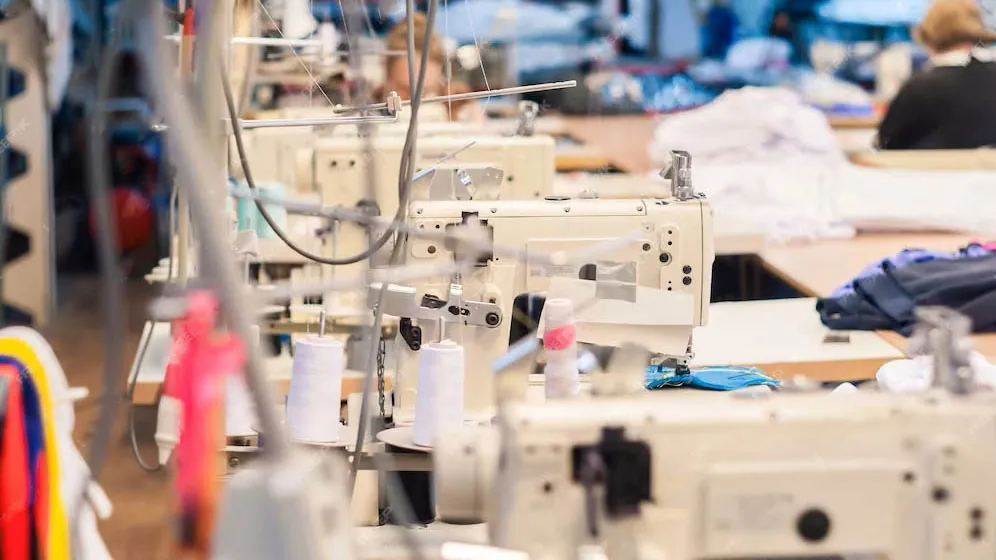
Industrializing a smart textile requires anticipating assembly methods from the design stage.
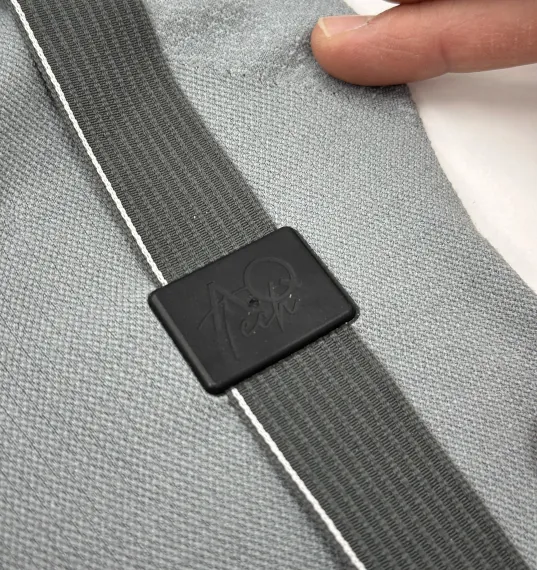
A robust industrial approach for smart textile means separating operations: electronics handled by electronic assembly specialists, sewing by textile workshops, with clearly defined interfaces between the two. This strategy delivers a stable, transferable process and embeds repairability and recyclability concerns from the design stage.
- + Separation and sequencing of assembly operations
- + Clearly defined electronics–textile interfaces
- + E-textile specific tooling and fixtures
- + Processes transferable to your industrial partners
Durability, washability & signal stability
The robustness of a connected textile is a system property, not a property of a single component.
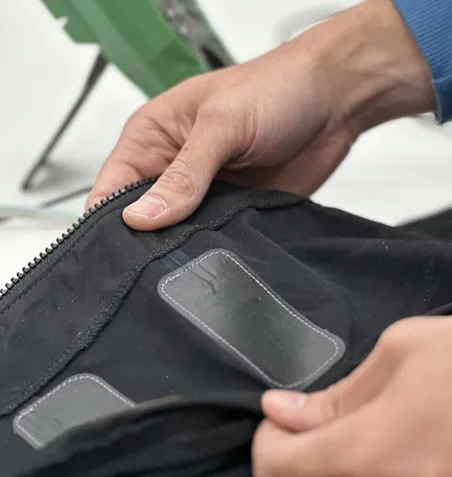
A conductive track can degrade under repeated bending, abrasion or washing. A connector can become unstable if mechanical loads are not properly absorbed by the textile. AQ-Tech sets up use-centred validations: wash and dry cycles, mechanical ageing, fatigue testing and electrical stability checks to detect failure mechanisms early.
- + Representative wash and dry cycles (ISO 6330)
- + Mechanical ageing and fatigue testing
- + Continuity, resistance, noise and signal drift monitoring
- + Identification and correction of failure modes
Quality control & drift management
A meaningful quality control plan, able to manage lot-to-lot variations and operator gestures.
Quality control on a smart textile must address variations invisible to the eye but impactful on performance: electrode skin contact, sensor placement, electrical continuity, comfort. AQ-Tech structures pragmatic control plans, light enough for production yet able to safeguard stability and compliance even in multi-site industrialization.
- + Dimensional and sensor placement checks
- + Electrical verifications at key process steps
- + Lot-level traceability when required
- + Documented acceptance criteria per critical interface
Industrial dossiers & shop-floor transfer
Hybrid documentation usable by both textile lines and electronic workshops.
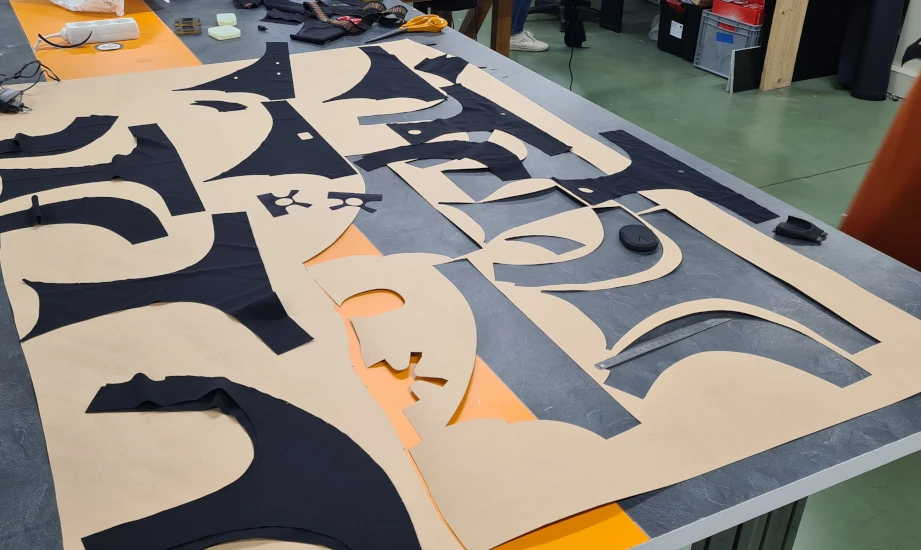
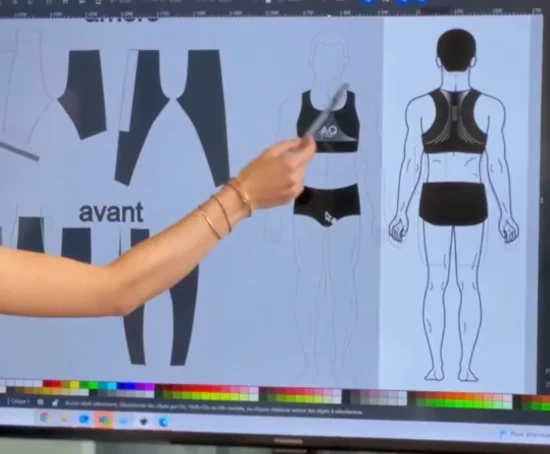
Smart textile industrialization often fails at industrial transfer due to documentation that cannot be used on the shop floor. AQ-Tech produces hybrid manufacturing-oriented documentation: consistent bills of materials, patterns and integration drawings, work instructions and inspection procedures — so that a workshop can produce without relying on an informal know-how.
- + Consistent textile and electronic bills of materials
- + Patterns and integration drawings
- + Work instructions and inspection procedures
- + Support of first series at your partners' sites
E-textile specialization
Industrialization designed for worn, washable products subjected to fatigue.
Mastered processes
Tooling, in-process inspections and reproducible methods for stable production.
Long-term validation
Robustness and signal stability under real-life usage and washing conditions.
Shop-floor transfer
Industrial dossiers usable by textile lines, with no informal know-how.
Why choose AQ-Tech to industrialize your smart textile?
AQ-Tech works on projects where smart textile industrialization relies on understanding textile phenomena (deformation, ageing, dispersion) and mastering electronic constraints (continuity, stability, interfaces). Our role is to secure a truly manufacturable product, with methods and documentation usable on the shop floor — ensuring continuity between development, prototyping, pre-series and European production.

Smart textile industrializations delivered
Léonard (formerly Optimergo)
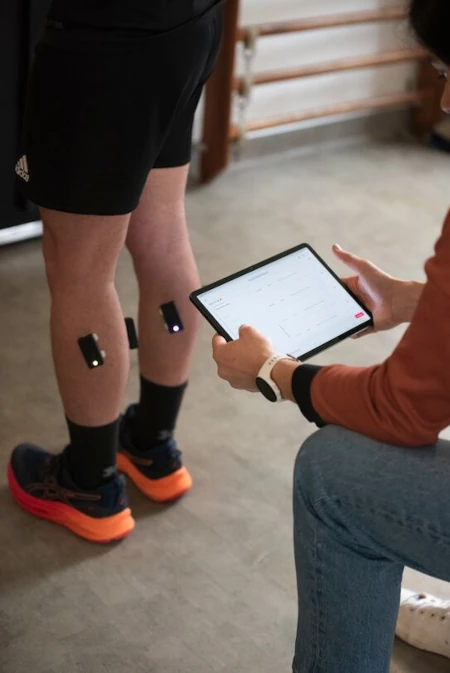
Léonard EMG sensor module for industrial ergonomics and sports performance: embedded electronics and textile-electrode integration engineered by AQ-Tech.
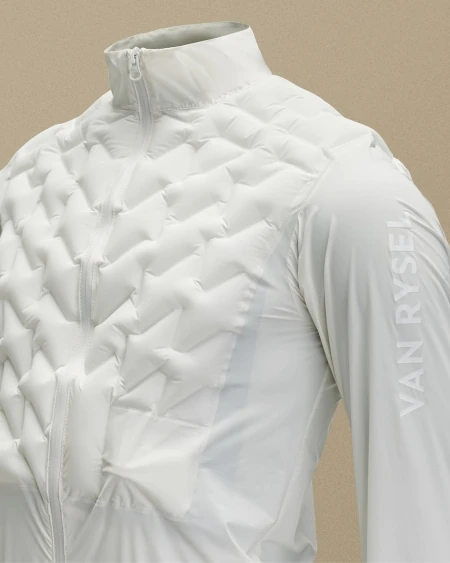
Van Rysel
Van Rysel (Decathlon) inflatable cycling vest with on-demand thermal insulation: HF-welded TPU envelope, smart pump unit and embedded electronics developed by AQ-Tech.
AQ-Tech's Smart Textile ecosystem
The steps that precede industrialization
Industrialization is the logical continuation of design, product integration and prototyping. AQ-Tech supports you across the entire smart textile cycle.
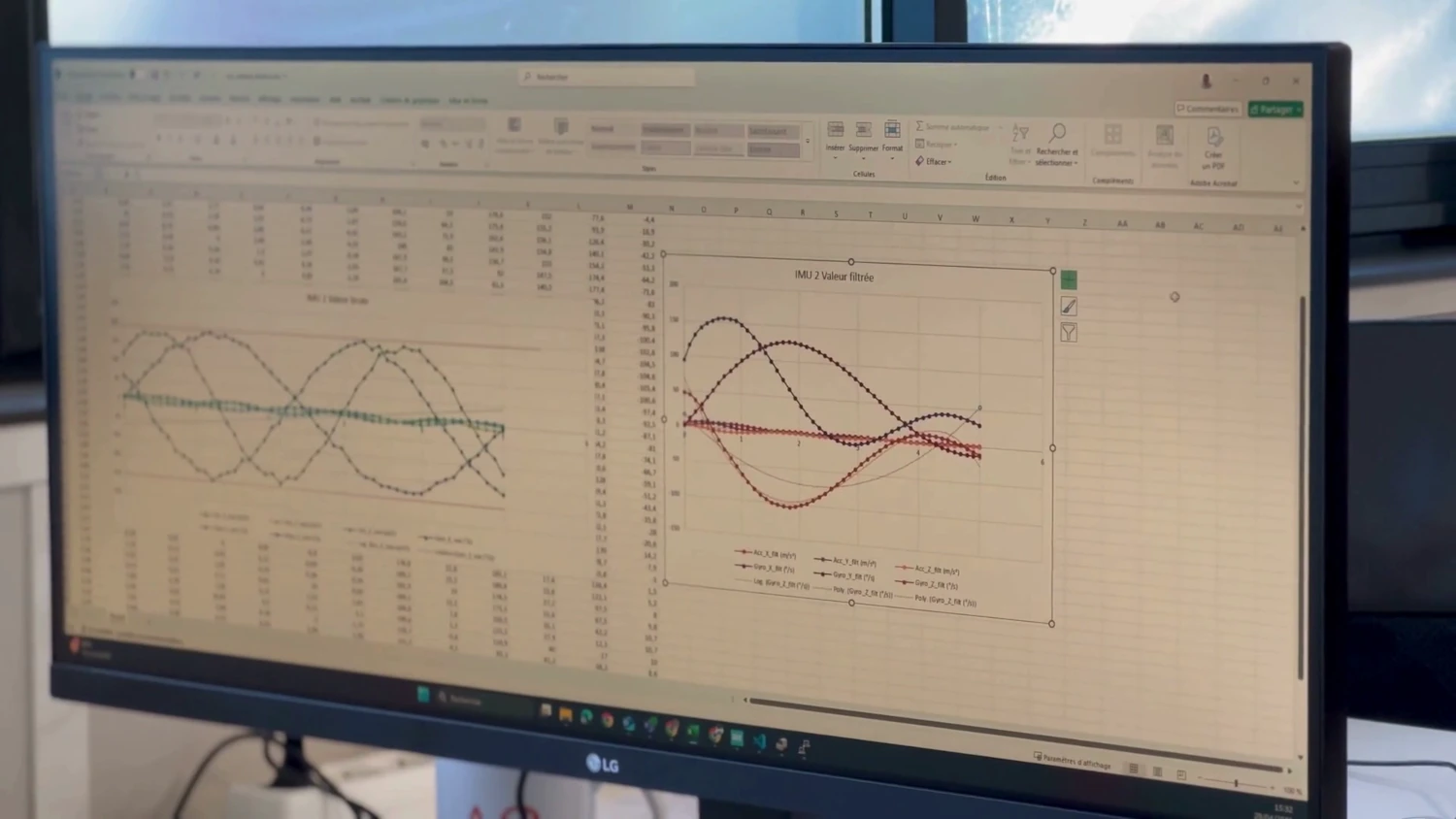
Integrated textile sensors
ECG/EMG electrodes, IMU, respiration, temperature and flex sensors integrated into the textile.
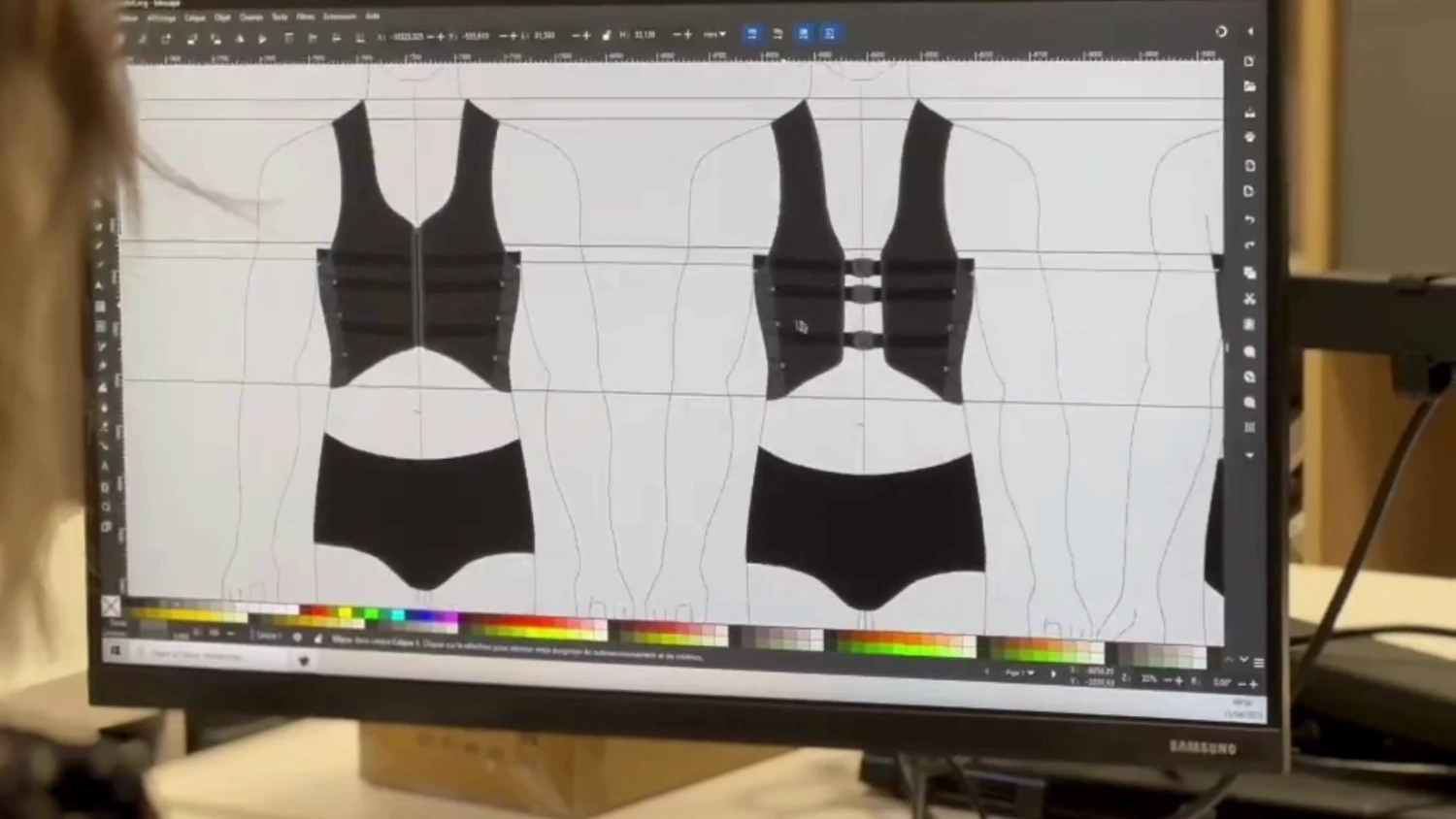
Connected garment development
E-textile architecture, functional pattern-making and integration of active components in the garment.
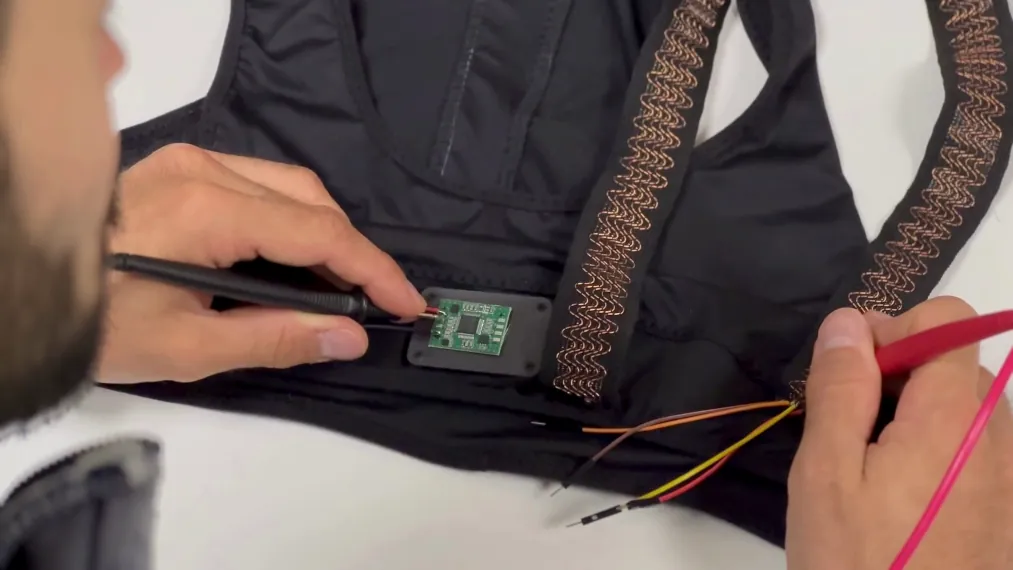
Integrated textile actuators
Haptic vibration, EMS, textile heating and light output to close the sensor → action loop.
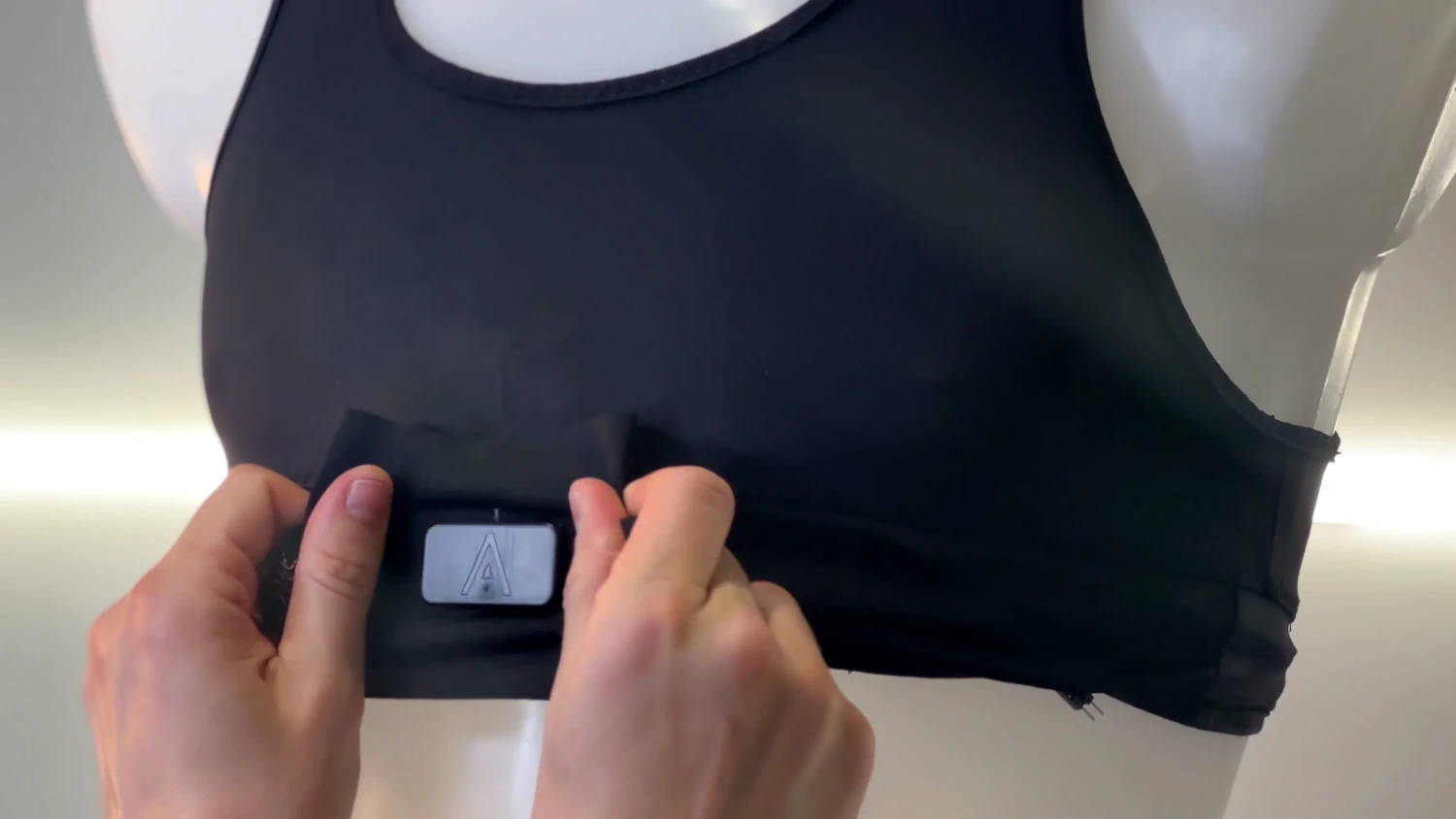
Smart Textile product integration
Overmoulding, washable connectors and flexible mechatronics to move from sensor to finished product.
Prototyping & validation
Functional prototypes, signal testing (ECG/EMG/IMU), washing campaigns and iterations toward pre-series.
Our expertise at the service of your e-textile industrialization
Smart textile industrialization brings together technical textile for assembly processes and washability, embedded electronics for signal stability and quality controls, and mechanical engineering for interface robustness and structural durability. All three disciplines are mastered in-house at AQ-Tech.
For projects subject to certification — PPE (sport, protection) or medical device MDR — we structure the documentation and validations required from the industrialization phase, to ease regulatory compliance without costly rework. Industrial and PPE projects also benefit from our expertise in traceability and quality control.
Explore the full cycle on our Smart Textile hub — from e-textile design to industrialization, including sensors and textile actuators.
Frequently asked questions — Smart textile industrialization
When should smart textile industrialization start?
As soon as the prototype is functional and you need to secure repeatability and durability. Waiting for development to be over before industrializing is a mistake: choices of materials, assembly and encapsulation must be designed for production from the prototyping iterations. We anticipate these questions with you from the design stage.
How does it differ from standard electronics industrialization?
Textile introduces phenomena absent in conventional electronics: permanent deformation, material dispersion, operator-gesture variability and usage constraints (washing, abrasion, bending). A viable process must control these variations while maintaining stable electrical performance — which requires specific e-textile expertise.
How do you guarantee washability in production?
Washability depends on the complete architecture: materials, stress zones, encapsulation, connector interfaces, process compatibility. AQ-Tech sets up representative washing cycles and electrical/mechanical inspections to identify failure mechanisms and adjust the product before series. Results are documented in the industrial dossier.
What are the typical risks in smart textile production?
The most common are lot-to-lot quality drift, intermittent ruptures, delamination, sensor placement variations and signal instabilities due to fatigue or humidity. These problems are avoidable with adapted in-process inspections and industrial dossiers usable by textile workshops.
Can you work with our workshop or our subcontractors?
Yes. AQ-Tech prepares the industrial transfer and supports your partners (textile, electronic, assembly) during the first runs: setting up work instructions, tooling, inspections, acceptance criteria and smart textile skill ramp-up. Our goal is that your partner can produce autonomously after a few supported series.
Do you offer smart textile manufacturing?
Yes. Our manufacturing unit takes charge of pre-series (10 to 500 pieces) with quality control and full traceability — to stabilize the process, validate inspections and measure production dispersion before ramping up volumes. Beyond that, we organize European production transfer to our industrial partners with a complete manufacturing dossier.
Can you prepare elements for future CE or medical compliance?
Yes. On projects subject to regulatory requirements (CE PPE, MDR medical), AQ-Tech structures the documentation, validations and technical elements needed — processes, controls, traceability, robustness — to ease the compliance phase carried by your product strategy. These elements are anticipated from industrialization to avoid costly rework.
What documentation is needed to produce a smart textile in series?
A hybrid set: consistent textile and electronic bills of materials, patterns and integration drawings, work instructions, inspection procedures, acceptance criteria and assembly/encapsulation rules. The goal is that a workshop can produce without depending on informal know-how — a prerequisite for stable multi-site production.
Industrialize your smart textile with a mastered process
Share your prototype, target market and manufacturing constraints. AQ-Tech quickly identifies smart textile risks and structures a reproducible e-textile industrialization, with documentation tailored to workshops. Reply within 48h.