



Integrated textile sensors
ECG, EMG, IMU & physiological measurement in the garment - washable and industrialisable

Robust, accurate and industrialisable textile sensor architectures
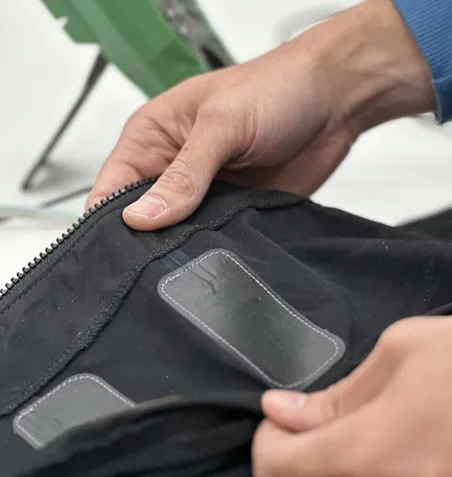
Rigid sensors reach their limits as soon as the body moves. AQ-Tech designs integrated textile sensors capable of measuring physiological signals - ECG, EMG, respiration, temperature - and mechanical parameters - motion, flexion, pressure, vibration - with accuracy compatible with clinical or industrial use.
Our approach combines three in-house disciplines: technical textile for conductive materials and comfort, embedded electronics for low-power measurement modules, and signal processing for reliability under real-world conditions. Every architecture is designed from day one for washability, durability and industrialisability.
We partner with players in performance sport, medical (class I and II MD), industry (ergonomics, PPE) and research. From the first functional prototype to clinical validation, the same team follows the project - with no loss of knowledge between phases.
Our integrated textile sensors
A unique expertise combining conductive materials, embedded electronics and advanced textile architecture - for reliable solutions from prototype to pre-series.
ECG & EMG textile electrodes
Soft, robust and stable electrodes for physiological signal measurement.
Textile electrodes replace conventional gel electrodes by offering continuous, comfortable and washable skin contact. We develop them for ECG (cardiac monitoring), EMG (muscle activity) and skin conductance, selecting the conductive materials best suited to each use case - silver-coated fabrics, conductive inks, embroidery or knit.
- + Technologies: weaving, knitting, embroidery, conductive printing
- + Optimised impedance & low noise
- + Resistant to sweat, compression and deformation
- + Textile connectors & guaranteed washability
Respiration measurement
Thoracic detection, respiratory amplitude and frequency in real time.
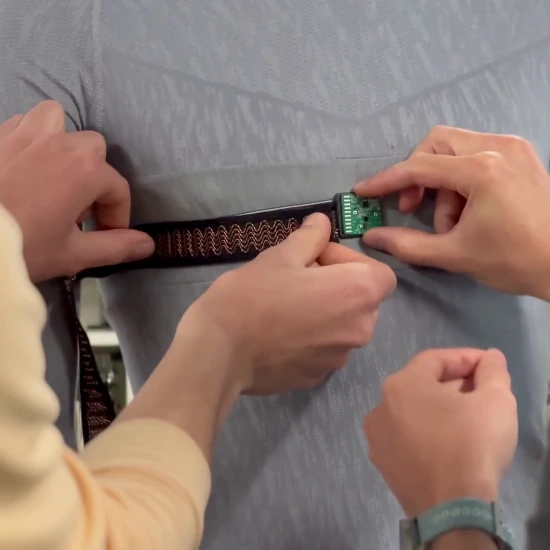
Respiration measurement inside a textile is one of the most requested applications in performance sport and medical monitoring. Our multi-zone stretch-sensing architectures measure thoracic and abdominal movements simultaneously with stable accuracy, even during intense effort or postural transitions.
- + Respiratory inductance plethysmography (RIP)
- + Piezoresistive or capacitive fibres
- + Multi-zone stretch-sensing architectures
- + Thorax + abdomen measurement
- + Stable accuracy even under intense motion
Temperature measurement
Skin or ambient thermal monitoring through dedicated textile architectures.
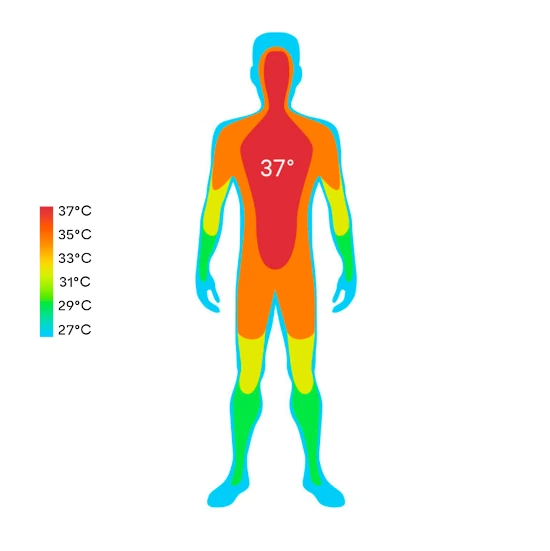
Measuring skin temperature inside a garment is particularly valuable for medical monitoring (fever detection, patient follow-up), sports recovery and active thermotherapy devices. Our architectures use thermosensitive yarns or encapsulated mini-probes, all validated against washability and the mechanical constraints of garments.
- + Thermosensitive conductive yarns or inks
- + Flexible thermometric mini-probes
- + Firmware thermal compensation
- + Washable and resilient architectures
Motion sensors (IMU)
Tracking gesture, posture or joint kinematics.
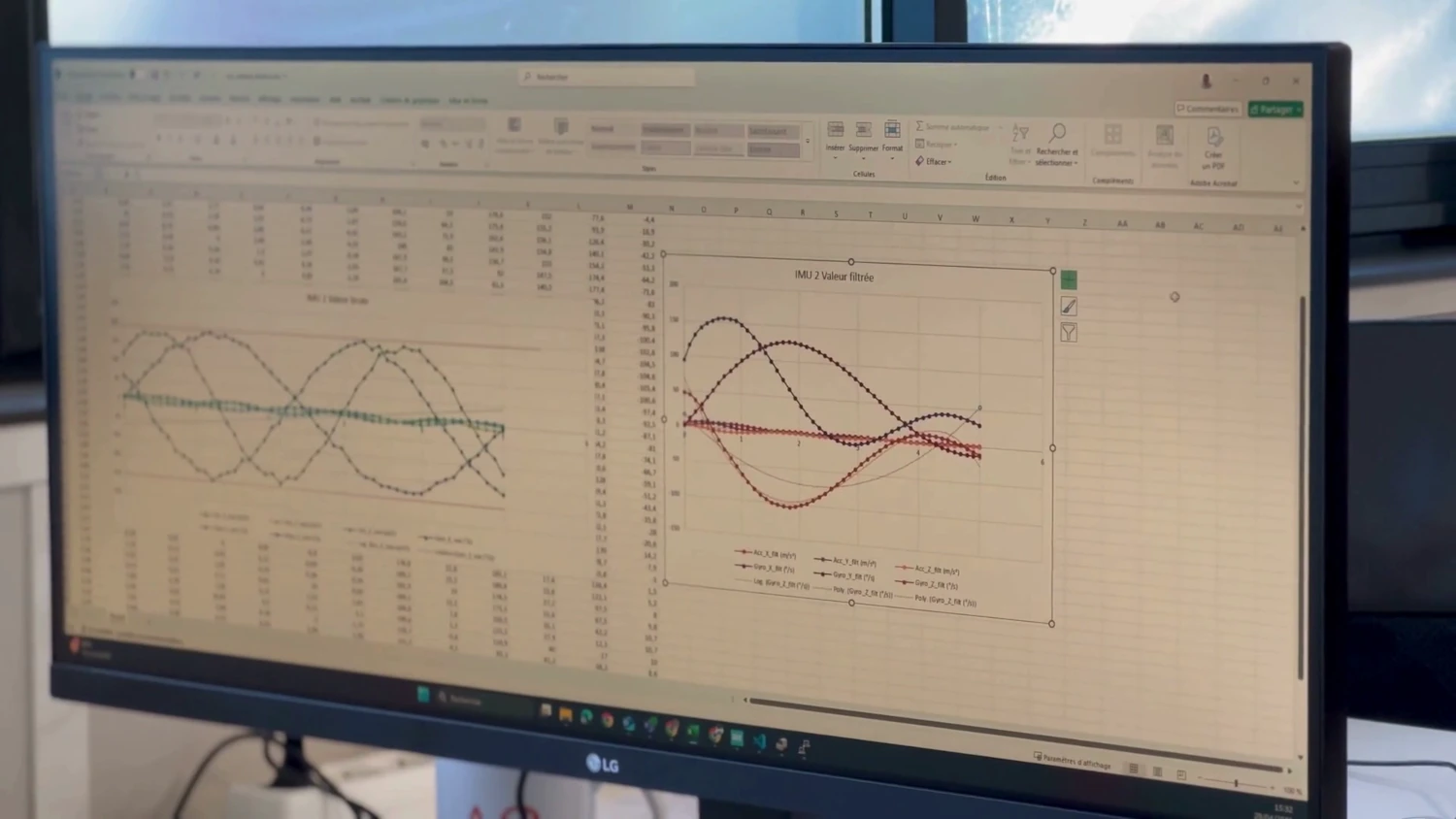
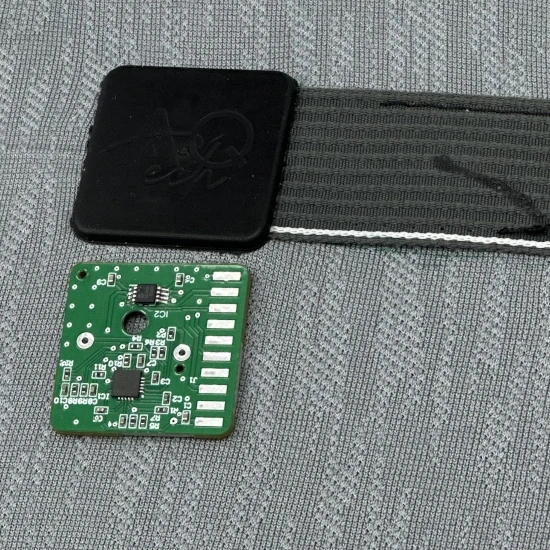
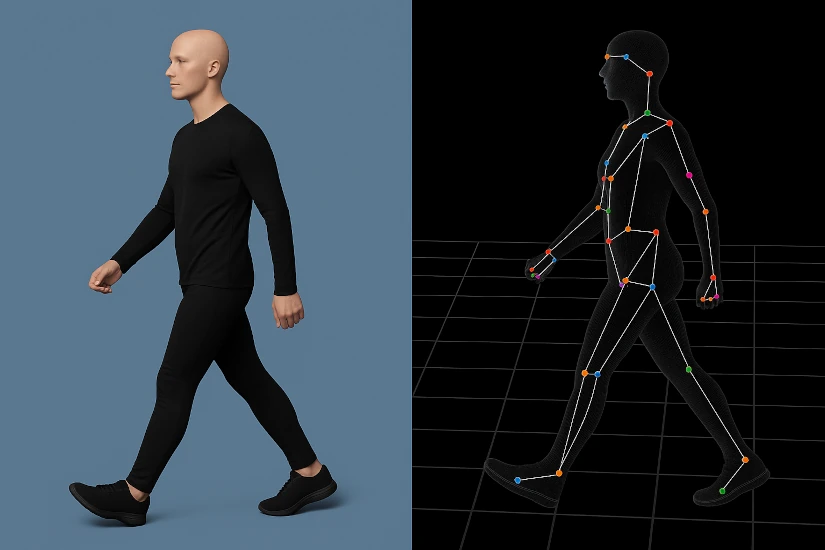
IMU sensors embedded in the garment enable precise biomechanical analysis without markers or cameras. Used for MSD prevention in industry, sports gesture analysis or postural medical monitoring, they pair with our embedded signal processing to deliver data directly usable inside the client application.
- + Segmental MEMS IMU: accelerometer / gyro / magnetometer
- + Multi-sensor synchronisation for instrumented garments
- + Accurate biomechanical positioning
- + Embedded or in-app signal processing
Vibration and impact sensors
Detection of micro-impacts, tremors and vibration signatures.
Vibration and impact detection inside a garment or PPE unlocks specific applications: muscle analysis (tremor, fatigue), sports fatigue assessment, airbag triggering or active protective clothing. Our architectures combine high-sensitivity MEMS accelerometers and flexible vibrating fibres according to the target frequency range and geometry.
- + High-sensitivity accelerometers
- + Flexible vibrating fibres
- + Muscle analysis (tremor, fatigue)
- + Impact detection for sport & PPE
Flexion, elongation & deformation sensors
Measurement of articulated movements and textile deformation.
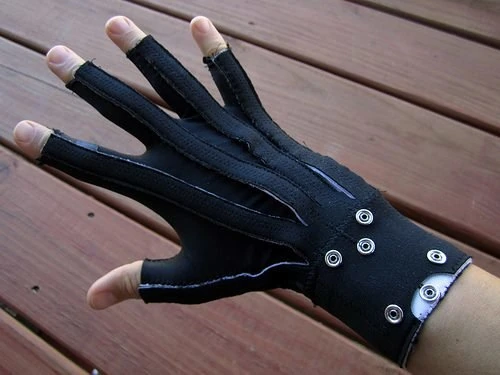
Flexion and elongation sensors integrated into a garment measure joint angles (knee, elbow, spine) and the deformation of the textile structure. Used in rehabilitation, sports analysis or PPE control, these sensors are tailored to repeated stretching under real conditions, with controlled signal drift over time.
- + Stretchable piezoresistive fibres
- + Stretch-sensing prints
- + Sports or occupational gesture analysis
Other bio-physical measurements
Advanced sensors for complex measurements on the human body.
Some projects require less conventional measurements: skin hydration level, electrodermal response (GSR - stress, alertness, thermal comfort) or local muscle pressure. We develop these specific architectures by adapting materials and integration processes to each use case, with the same washability and robustness requirements.
- + Humidity / sweating (capacitive & resistive)
- + GSR / EDA (skin conductance)
- + Pressure / muscle compression
Conductive materials
Electrodes, conductive inks, sensor yarns and fibres selected for each use case.
Measurement & calibration
ECG/EMG benches, IMU calibration, pressure & flexion - systematic in-house validation.
Textile integration
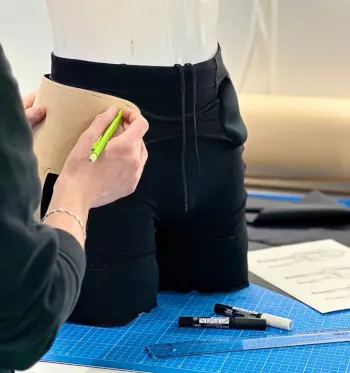
Sewing, laminating, silicone overmoulding, multi-material assembly for each architecture.
Embedded electronics
Low-power modules, high-precision ADCs, firmware and signal processing.
Our resources dedicated to textile sensors
AQ-Tech runs a complete laboratory to design, test and validate textile sensors: physiological measurement benches (ECG, EMG, respiration), technical embroidery and conductive printing tools, IMU calibration, pressure testing and advanced measurement equipment. A unique environment to develop industrialisable washable textile sensors - from proof of concept to certified pre-series.

Projects delivered with textile sensors
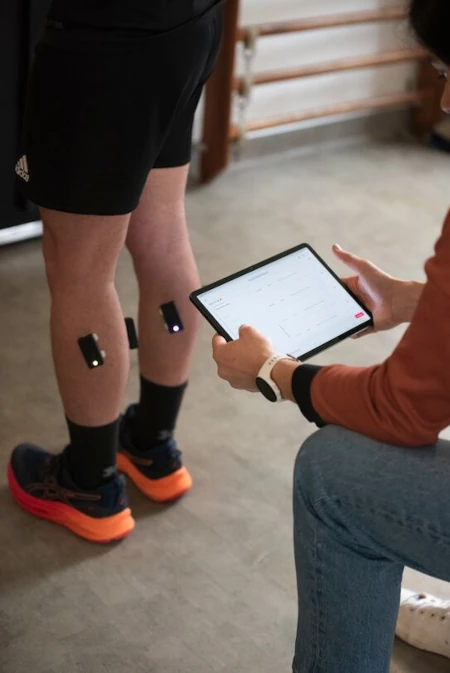
Léonard (formerly Optimergo)
Léonard EMG sensor module for industrial ergonomics and sports performance: embedded electronics and textile-electrode integration engineered by AQ-Tech.
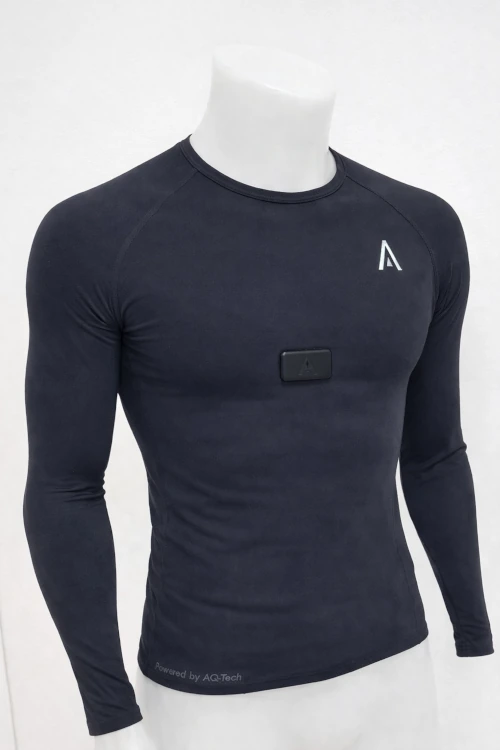
T-Shirt Monitoring
AQ-Motion, a modular textile measurement platform: ECG, EMG, IMU and GPS sensors integrated into the garment to measure physiological signals and motion in the field.
Our expertises serving your textile sensors
At AQ-Tech, the development of integrated textile sensors relies on the convergence of three disciplines: technical textile for conductive materials, integration processes and washability; embedded electronics for acquisition, signal processing and connectivity; and mechanical engineering for the structural durability of connections and robustness against use-related stresses.
This cross-disciplinary integration allows us to design textile sensors that last over time - signal reliability, washing endurance and industrialisability. Our applications cover medical (class I and II MD, clinical monitoring), performance sport (gesture analysis, recovery, injury prevention) and industry (MSDs, ergonomics, smart PPE).
The full development of a connected garment - from measurement to data display - is led by our Smart Textile division, in coordination with our prototyping and validation and pre-series manufacturing services. For complete connected garments, see our connected garment development page.
AQ-Tech's Smart Textile expertise
The other pages of our Smart Textile division
Textile sensors fit into a complete development chain: e-textile architecture, actuators, product integration, prototyping and industrialisation — stages we all master in-house.
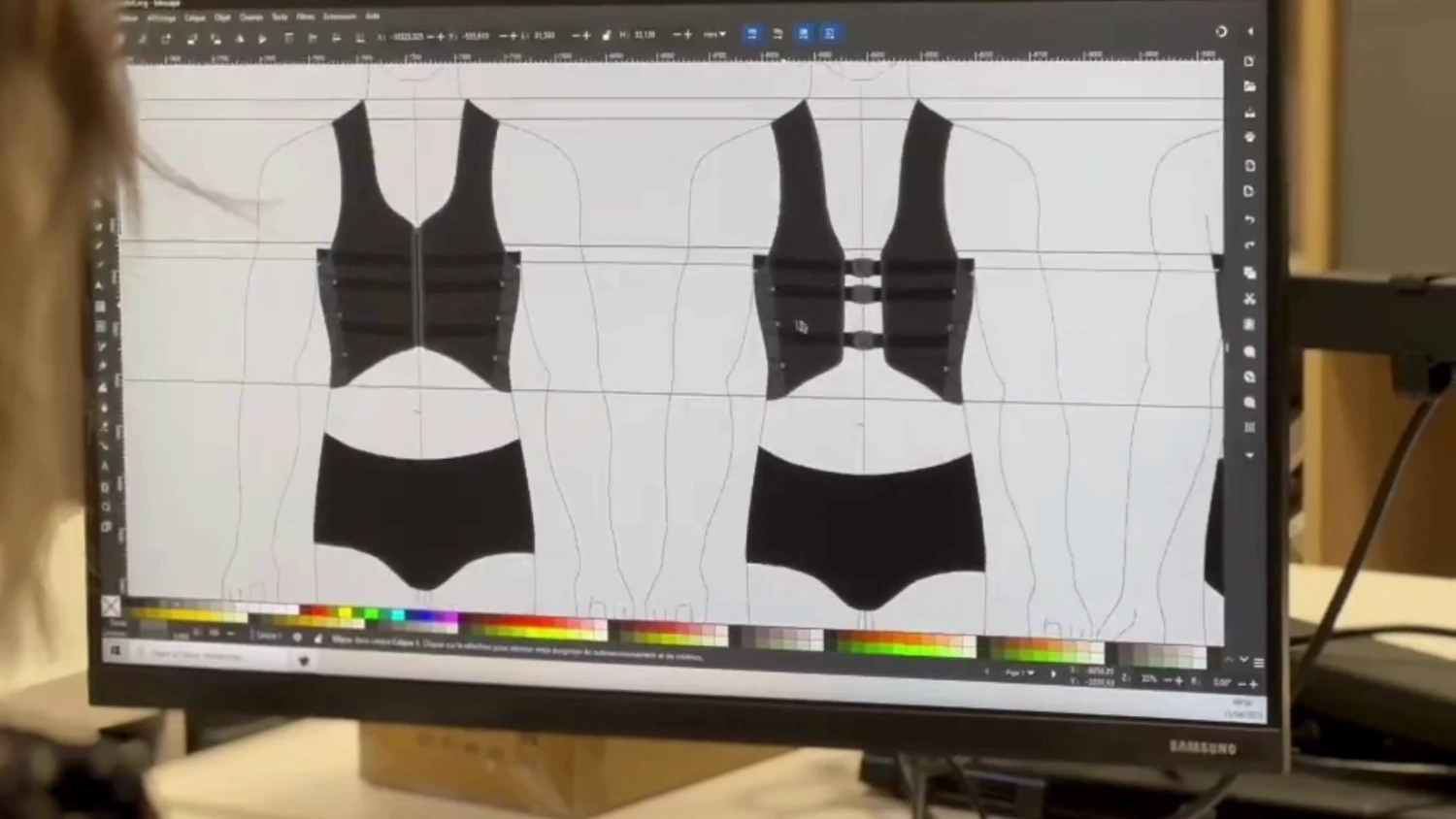
Connected garment development
E-textile architecture, functional pattern-making and integration of active components into the garment.
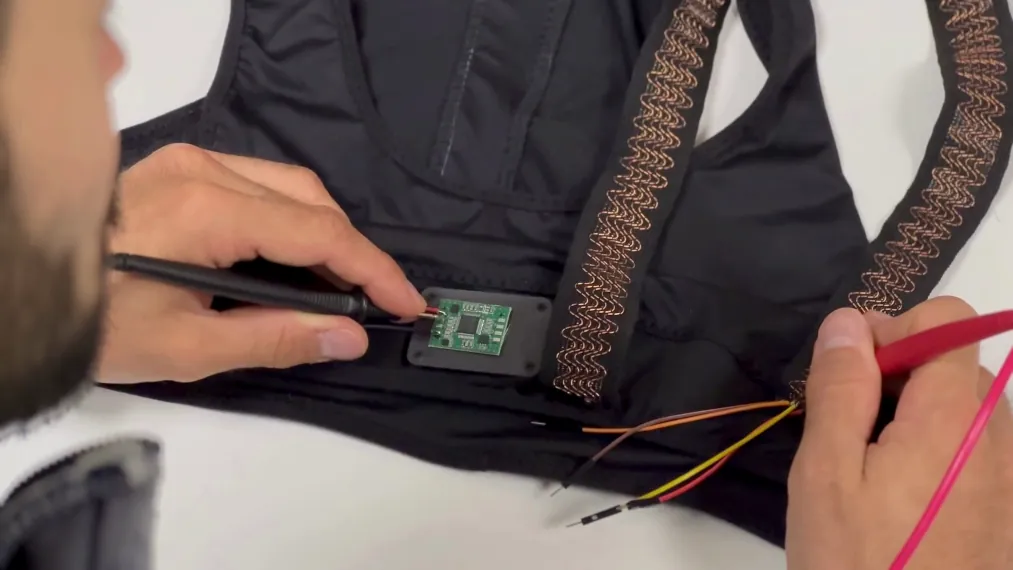
Textile actuators
Haptic vibration, EMS, textile heating and lighting to close the sensor → action loop.
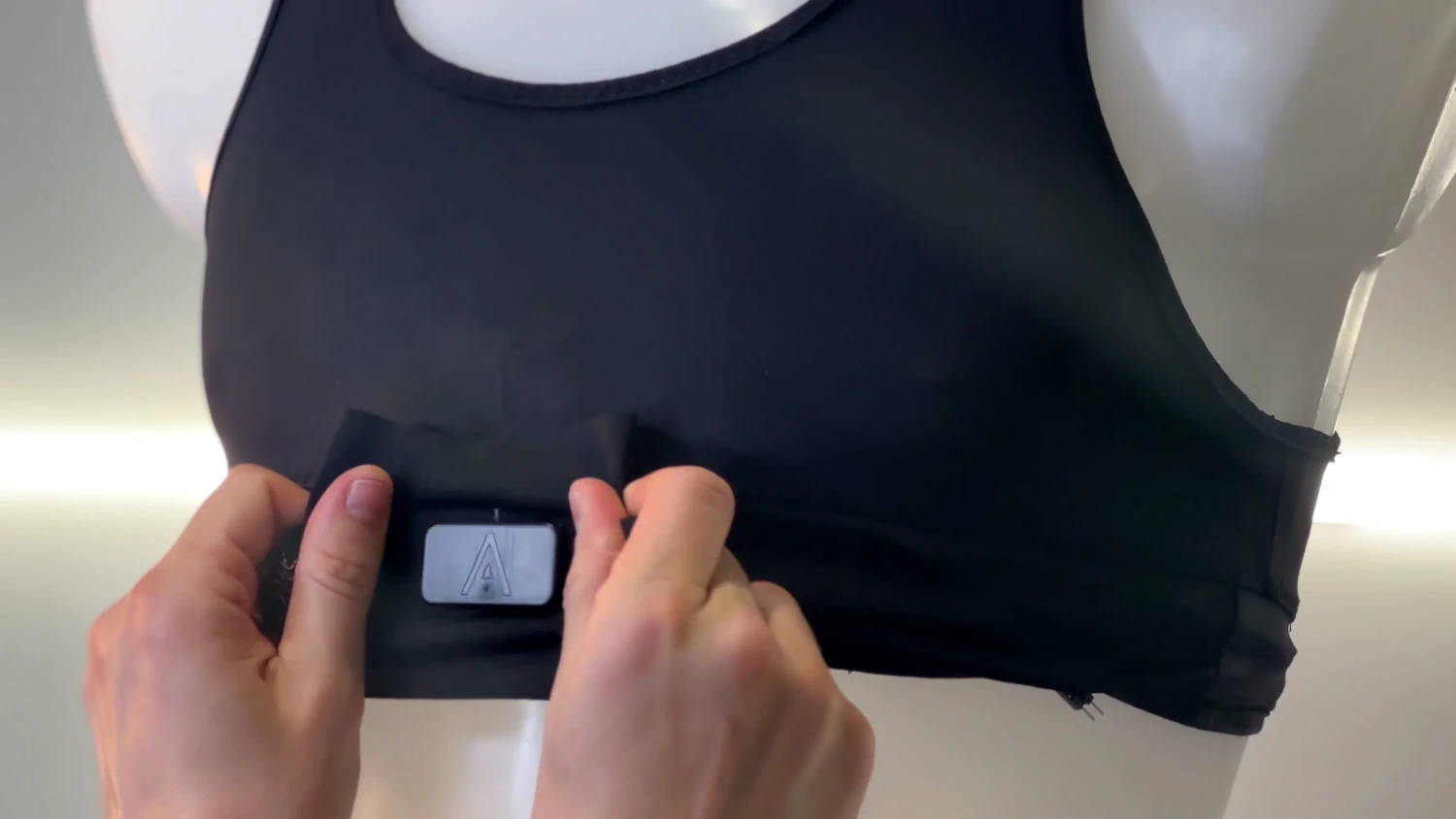
Smart textile product integration
Overmoulding, washable connectors and soft mechatronics to move from sensor to finished product.
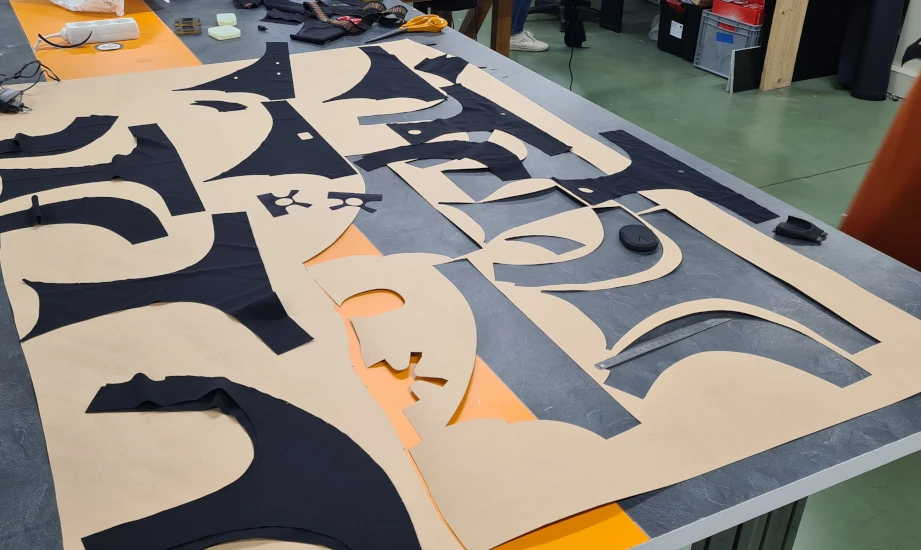
Prototyping & validation
Functional prototypes, signal testing (ECG/EMG/IMU), washing campaigns and iterations toward pre-series.
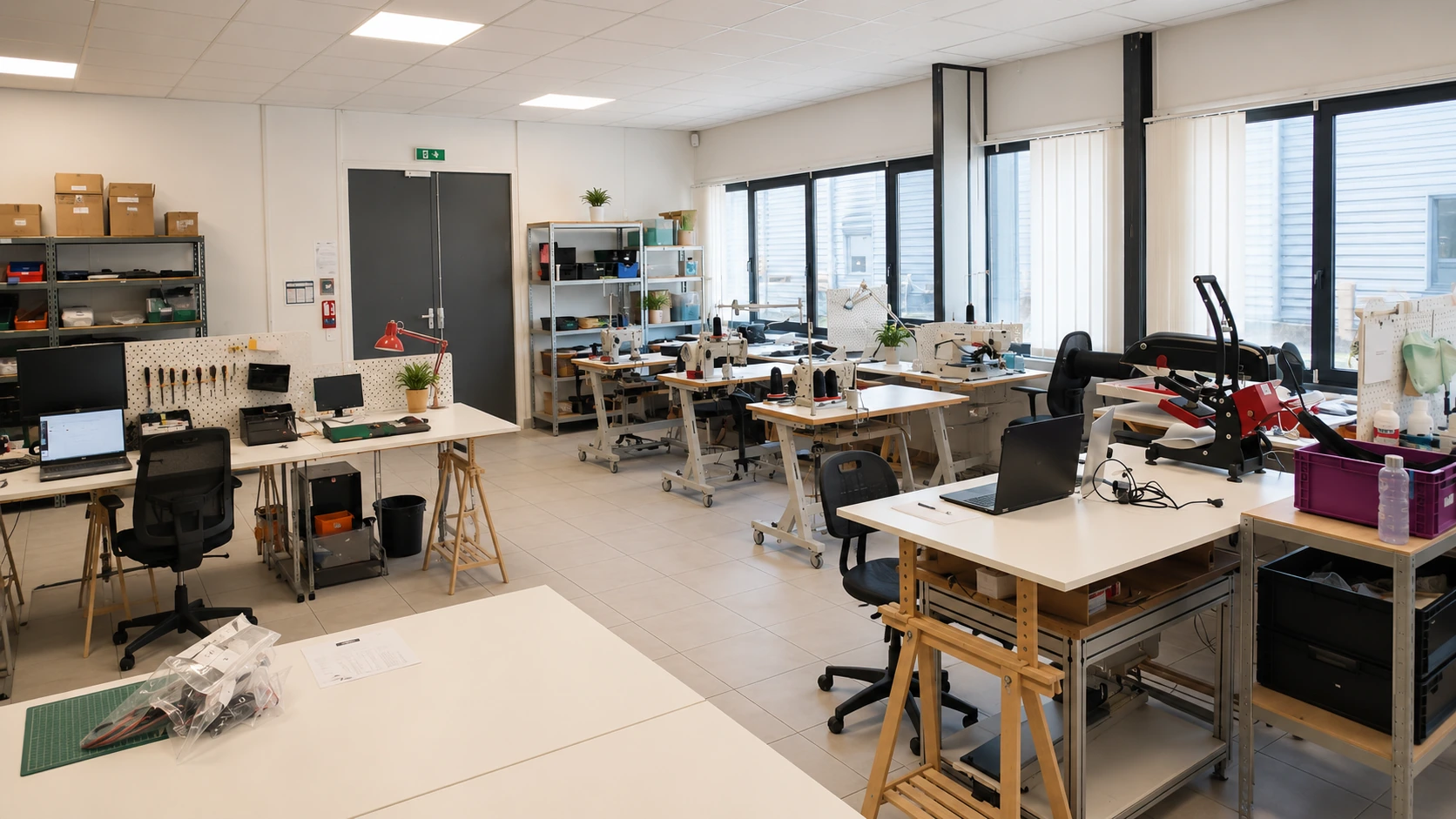
Smart textile industrialisation
Reproducible processes, quality control and CE/MDR documentation for series manufacturing.
Frequently asked questions - Integrated textile sensors
What types of sensors can you integrate into a textile?
ECG/EMG electrodes, respiration sensors (thoracic and abdominal), skin temperature measurement, IMU (accelerometer, gyroscope, magnetometer), flexion/elongation sensors, vibration and impact, muscle pressure, hydration and skin conductance (GSR/EDA). Each type involves specific materials, integration processes and electronic architecture - we set out a technical scope with you right from the start.
Are your textile sensors washable?
Yes. Washability is a constraint built in from the design phase - selection of conductive materials, encapsulation techniques (silicone overmoulding, sealed lamination) and textile connector protocols. We validate each architecture with repeated wash cycles (ISO 6330 or equivalent). The results - signal resistance before/after washing, mechanical integrity - are part of the validation file.
Do you also develop the electronics associated with the sensors?
Yes, that is one of our differentiators. We develop the acquisition modules (AFE, high-precision ADC), embedded firmware, signal processing and connectivity (BLE, ANT+, proprietary). The textile engineer and the electronics engineer work together from the start - placement, wiring and mechanical integration constraints are solved alongside measurement performance.
Can multiple signals be measured on the same garment?
Absolutely. We build synchronised multi-sensor architectures: ECG + IMU + respiration + temperature on the same garment, with independent acquisition channels. Time synchronisation of the signals is handled by firmware. This type of architecture is used notably in sports monitoring and wearable medical devices.
What accuracy do your textile ECG or EMG sensors reach?
Accuracy depends on the application, electrode placement and use conditions (motion, perspiration, contact pressure). Under controlled conditions, our textile ECG electrodes reach signal quality comparable to reference devices. For class II medical applications, we support the clinical validation tests and the build-up of the MDR technical file.
What are the typical timelines to develop a textile sensor?
For a first functional prototype: 4 to 8 weeks depending on complexity (sensor type, washability constraints, associated electronic module). For a multi-sensor architecture validated with firmware: 3 to 4 months. Industrial pre-series (50 to 200 units with quality documentation) typically requires 5 to 7 months in total.
Do you handle medical or PPE certifications?
For medical devices, we support you in preparing the MDR technical file (EU 2017/745), biocompatibility tests (ISO 10993) and clinical validation. For PPE with integrated sensors, we manage CE PPE requirements (EU regulation 2016/425). In both cases, these constraints are anticipated from the design phase to avoid costly rework at the end of development.

Let's develop your textile sensors together
AQ-Tech designs, integrates and industrialises your textile sensors for sport, medical, industry or professional devices - including the electronic module, firmware and washability validation. Reply within 48h.