


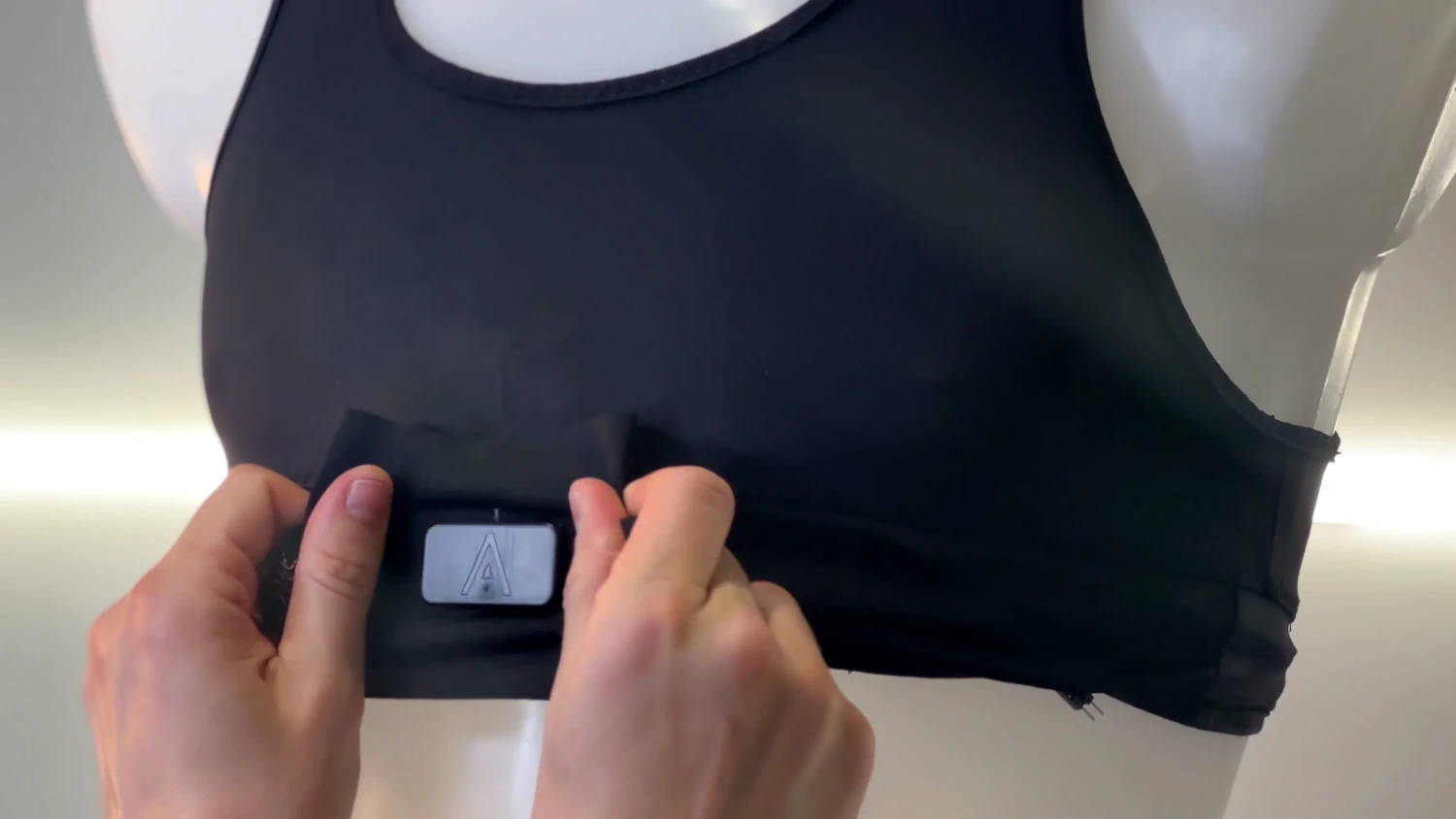

Smart textile product integration
Connectors, overmolding & multi-sensor architecture for connected garments

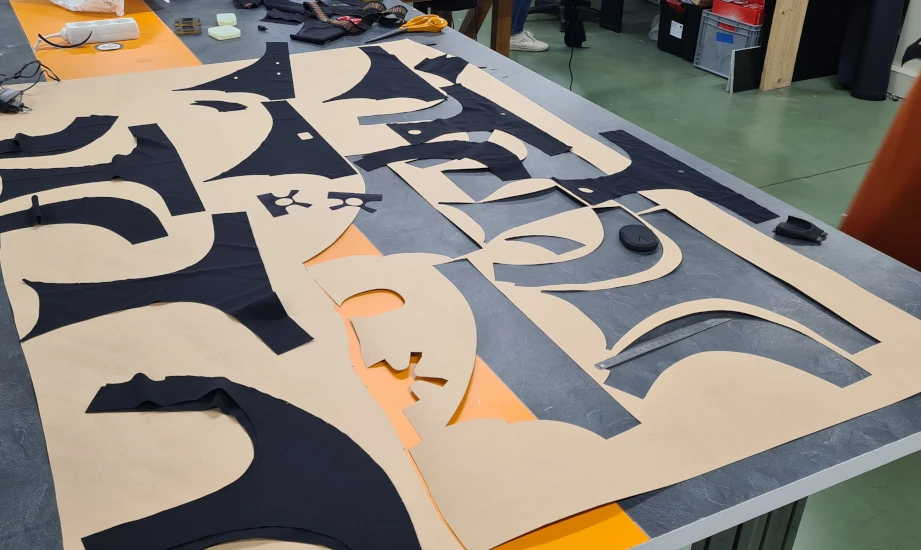
Controlled integration for reliable, industrializable smart textile products
Integration is the most critical phase of a smart textile project. This is where design trade-offs become real constraints: the soft/rigid transition between textile and electronics, the durability of connectors under washing, the signal stability under deformation. An integration issue undetected during design becomes exponentially more expensive to fix in production.
At AQ-Tech, we combine technical textile, embedded electronics and soft mechanics to design robust, washable and comfortable products. Textile and electronic connectors, sensor architecture, overmolding, encapsulation, removable modules, soft mechatronics — we develop complete solutions, ready for reliable production.
This mastery of integration is at the heart of projects such as the Optimergo (industrial EMG garment) or the Monitoring T-Shirt (ECG + breathing sport/medical), where every textile–electronics interface has been validated for washability, durability and pre-series repeatability.
Our smart textile integration expertise
A multidisciplinary integration combining textile, electronics, mechanics and industrial reliability.
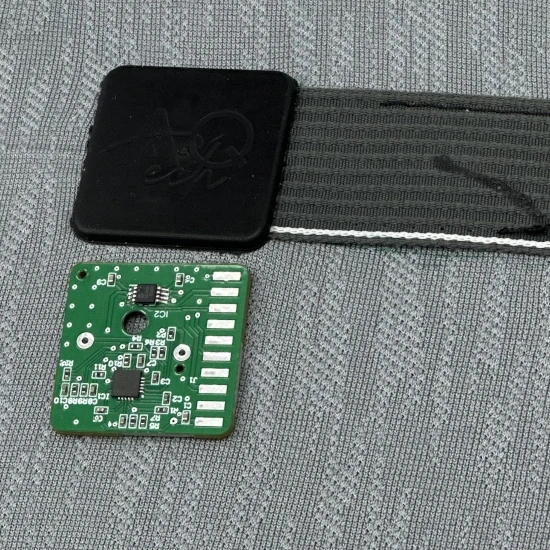
Textile–electronics connectors & interfaces
The soft/rigid transition is the major challenge of smart textile integration.
The connection between a conductive textile track and a rigid electronic component is the most critical point of a smart garment: this is where breaks, resistance drift and washing failures concentrate. We develop tailored connector solutions (multilayer pads, overmolding, removable connectors) for a long-lasting reliable interface.
- + Soft or overmolded textile connectors
- + Multilayer pads and connection zones
- + Adapted conductive yarns and ribbons
- + Anti-pull-off mechanical integration
- + Validated washable & robust solutions
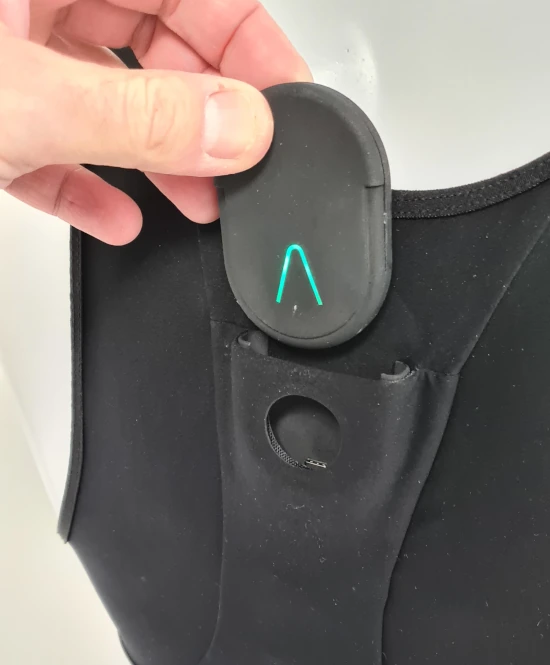
Embedded electronics & removable modules
Miniaturized, robust electronics suited to textile constraints.
Electronics integrated into a garment must be miniaturized so as not to interfere with wear, sealed to resist washing and sweat, and low-power for sufficient autonomy. We design removable modules to ease maintenance and washing, with flexible enclosures or soft mechatronics depending on the desired level of integration.
- + Removable ECUs and low-power modules
- + BLE, IMU, ECG, breathing, temperature…
- + Flexible enclosures & soft mechatronics
- + Embedded signal processing
- + Modular architecture for multi-sensor
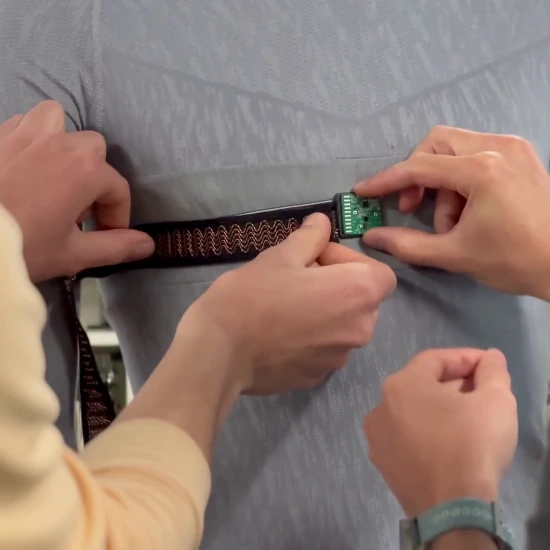
Textile architecture & sensor networks
A holistic vision to connect and synchronize multiple sensors on a single garment.
Beyond an isolated sensor, multi-sensor architectures require managing track routing, communication buses and the time synchronization of signals. We design these topologies considering comfort, minimal wiring and inter-sensor compatibility — an essential condition to obtain consistent data on the moving body.
- + Communication buses and reduced wiring
- + Multi-sensor topologies (hub, bus, star)
- + Inter-sensor compatibility: IMU / ECG / breathing / pressure
- + Real-time synchronization
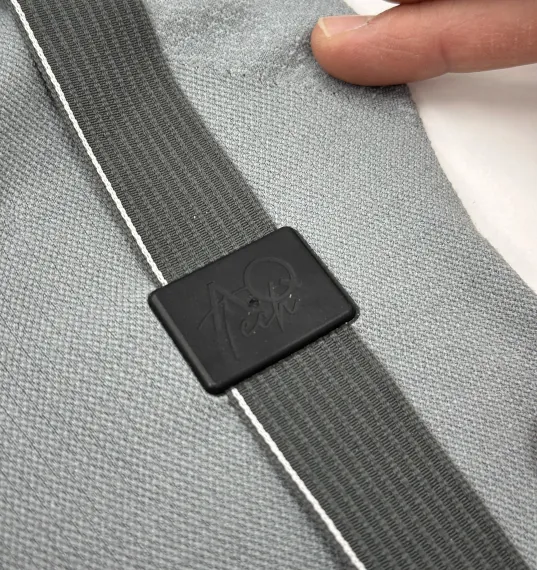
Overmolding, encapsulation & washability
Protect, seal and reinforce sensitive zones for real-world use.
Overmolding and encapsulation are the key techniques for making textile–electronics interfaces durable. Soft silicone, TPU, low-pressure or potting resin — each technology offers a different level of mechanical protection, sealing and wearing comfort. We systematically validate washability (30 to 60°C) and resistance to abrasion and perspiration.
- + Low- and high-pressure overmolding, soft and rigid
- + Multilayer encapsulation and specific resins
- + Anti-pull-off reinforcements
- + Validated 30–60°C washability
- + Abrasion / sweat / motion resistance
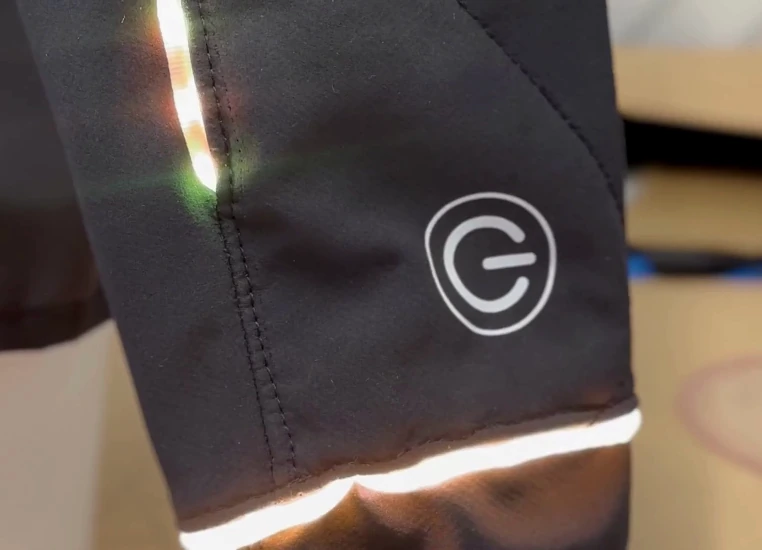
Ergonomics, comfort & user validation
A smart textile product must be invisible, comfortable and maintain measurement accuracy.
An electronic module technically well integrated but poorly positioned on the body generates discomfort and degraded measurements. We validate the ergonomics of each integration with worn test sessions, in real conditions of use, to ensure both freedom of movement and signal quality simultaneously.
- + Use validation in real conditions
- + Product ergonomics and embedded HMI
- + Optimal sensor positioning
- + Long-duration comfort & freedom of movement
Overmolding & encapsulation
Silicone, TPU, low pressure — multilayer encapsulation for sensitive zones and guaranteed washability.
Embedded electronics
Removable modules, BLE, IMU, bio-physical sensors — miniaturized for wearing comfort.
Textile integration
Sewing, lamination, embroidery, sensor architecture and printed electronics.
Soft mechatronics
Flexible enclosures, soft interfaces, textile connectivity — for invisible integration.
Our resources dedicated to smart textile integration
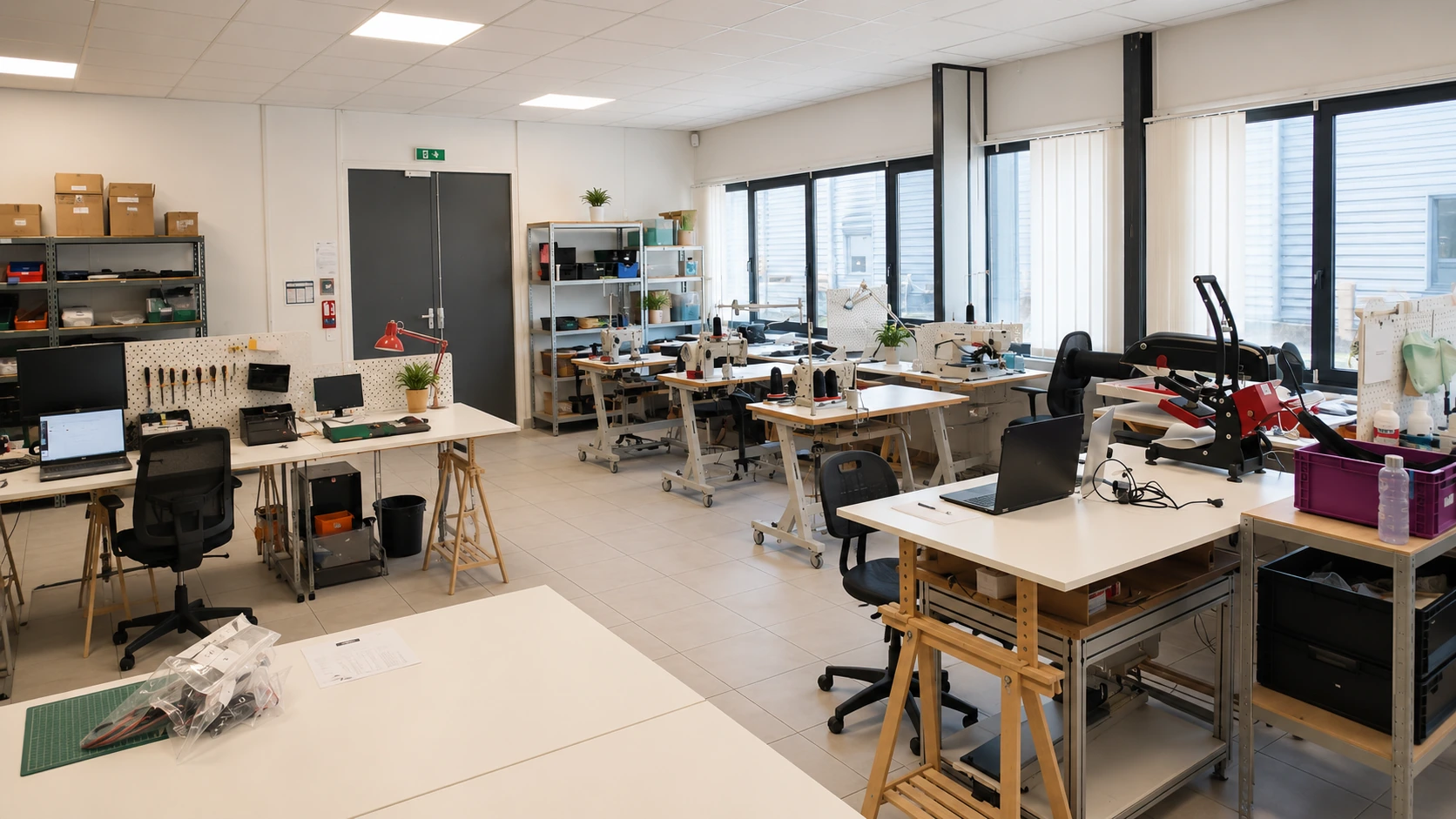
AQ-Tech combines a textile lab, an electronics workshop, a mechatronics hub and advanced testing facilities to ensure a reliable and reproducible e-textile integration. A unique ecosystem for your smart textile products — from proof of concept to industrial pre-series.

Smart textile integrations delivered
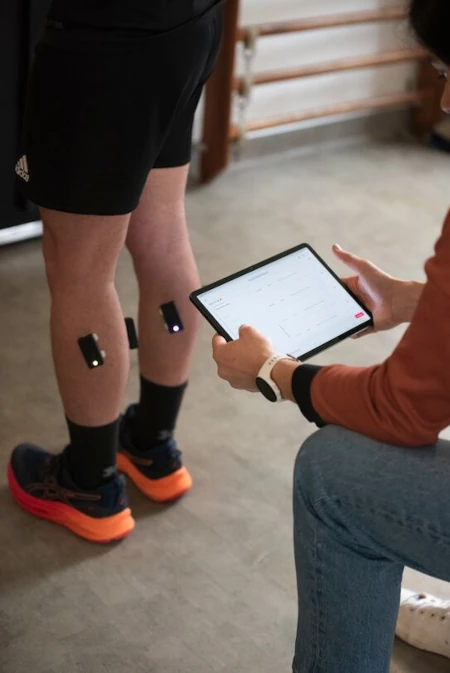
Léonard (formerly Optimergo)
Léonard EMG sensor module for industrial ergonomics and sports performance: embedded electronics and textile-electrode integration engineered by AQ-Tech.
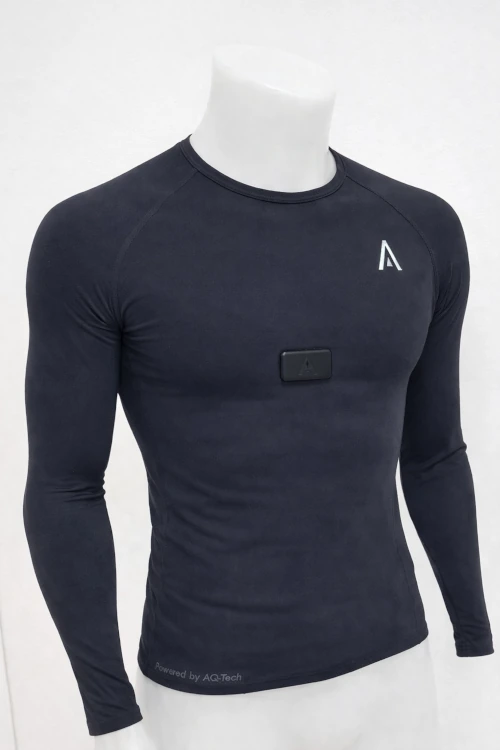
T-Shirt Monitoring
AQ-Motion, a modular textile measurement platform: ECG, EMG, IMU and GPS sensors integrated into the garment to measure physiological signals and motion in the field.
AQ-Tech's Smart Textile ecosystem
The stages surrounding product integration
Integration sits at the heart of the smart textile cycle: it follows the development phase, builds on our sensors and actuators, and directly precedes prototyping then industrialization.
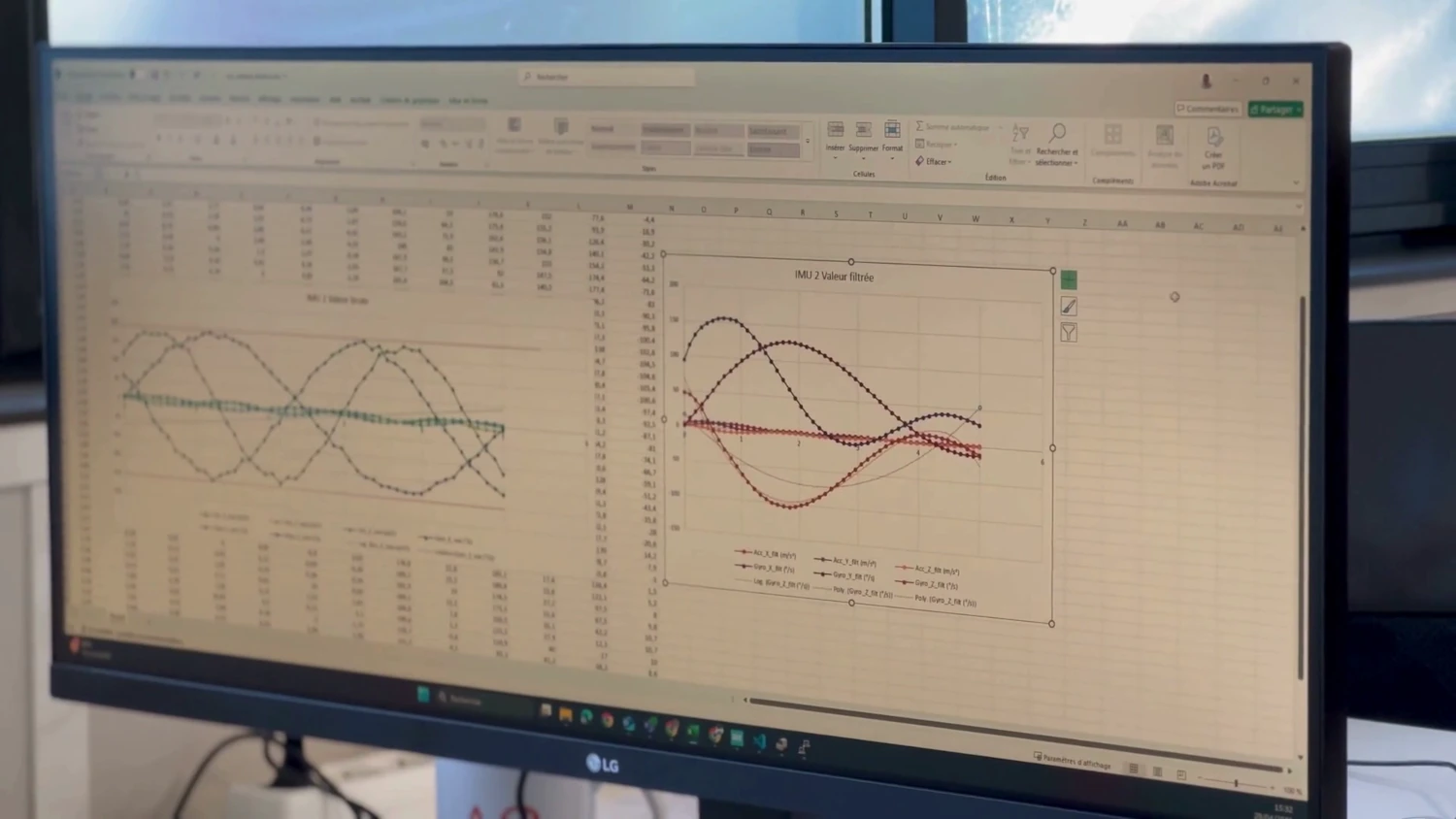
Integrated textile sensors
ECG/EMG electrodes, IMU, respiration, temperature and flex sensors integrated into the textile.
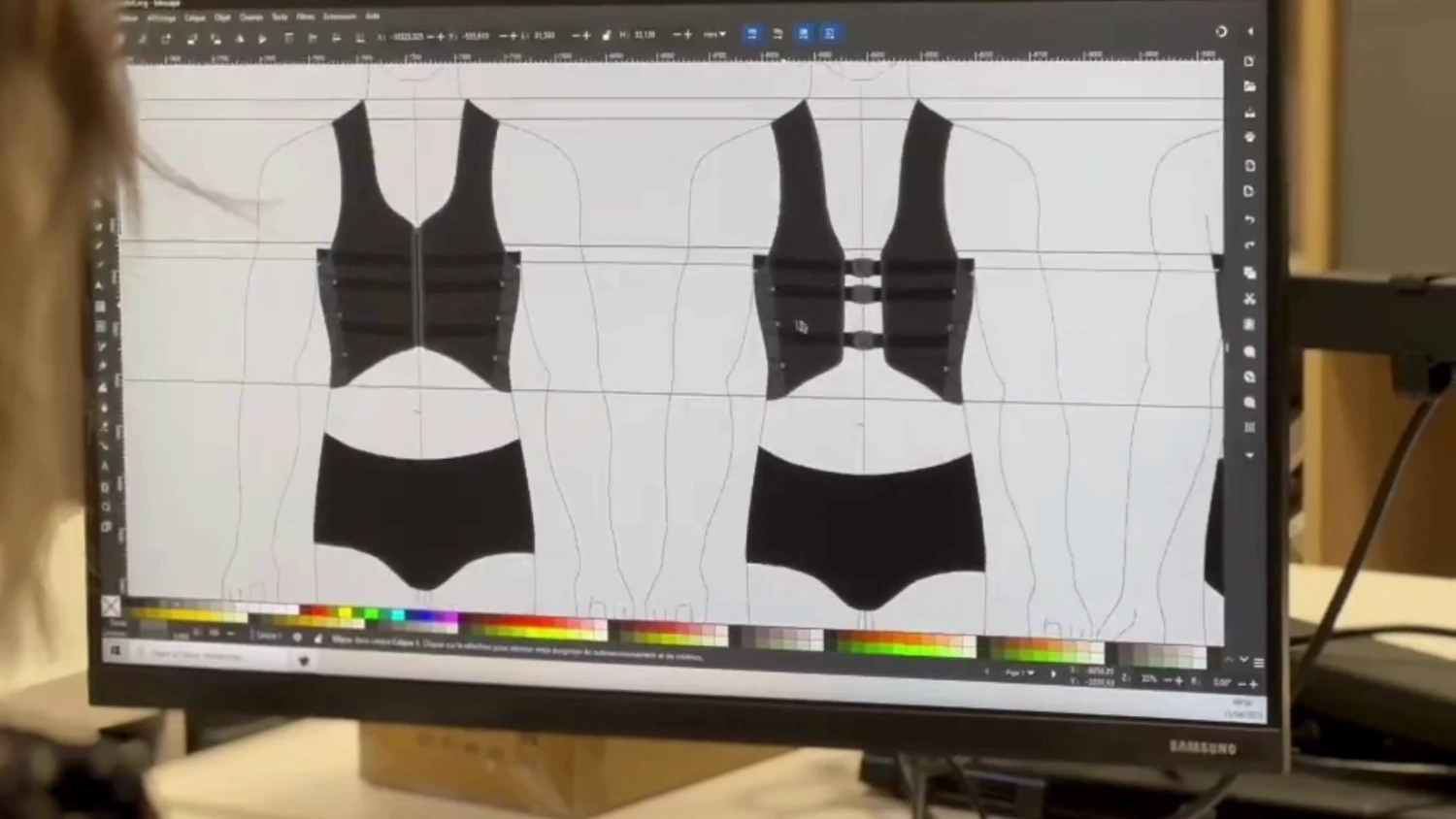
Connected garment development
E-textile architecture, functional pattern-making and integration of active components in the garment.
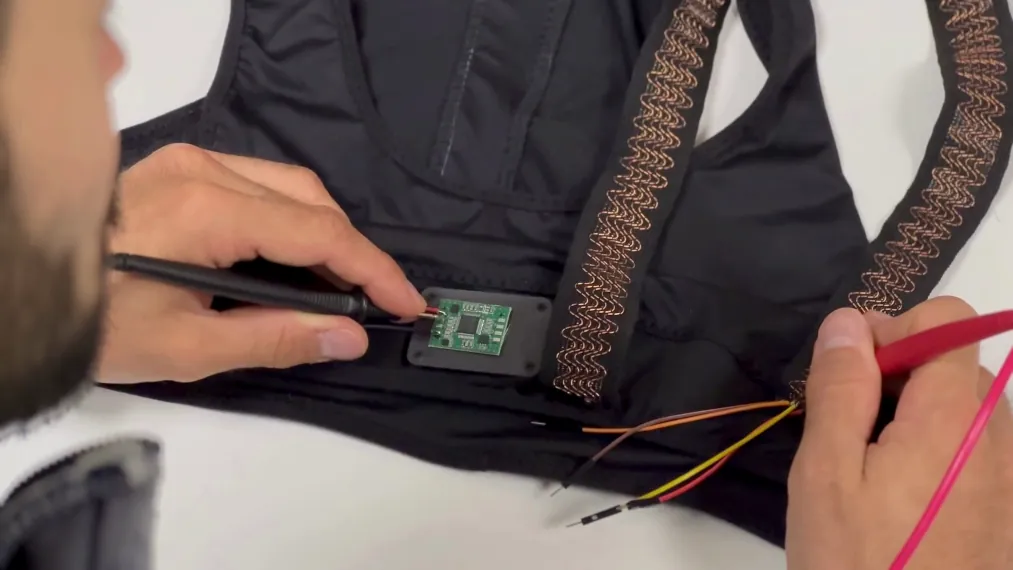
Integrated textile actuators
Haptic vibration, EMS, textile heating and light output to close the sensor → action loop.
Prototyping & validation
Functional prototypes, signal testing (ECG/EMG/IMU), washing campaigns and iterations toward pre-series.
Smart textile industrialization
Reproducible processes, quality control and CE/MDR documentation for series production.
Our expertise serving your e-textile integration
Smart textile product integration at AQ-Tech mobilizes technical textile (conductive materials, washable assemblies), embedded electronics (modules, firmware, connectivity) and mechanics (soft enclosures, anti-pull-off interfaces) — all mastered in-house.
The application field covers sport (performance garments with physiological sensors), medical (class I and II MD, wearable monitoring) and industry (smart PPE, MSD prevention). For products integrating actuators, our textile actuators page covers heating, haptics and EMS.
Find the full cycle on our Smart Textile hub, from e-textile design through to industrialization and pre-series manufacturing.
Frequently asked questions — Smart textile product integration
What does a successful smart textile integration look like?
A successful integration ensures that the electronic signal remains reliable over time, that the connectors withstand washing and mechanical stress, and that the user does not perceive the presence of electronics while wearing. These three conditions — performance, durability and comfort — must be achieved simultaneously, which requires mastering textile, electronics and mechanics within the same team.
Can you integrate several sensors into a single garment?
Yes. We deliver synchronized multi-sensor architectures: ECG + IMU + breathing + temperature in a single garment, with one central processing module. Time synchronization and the management of electromagnetic interference between sensors are handled at firmware and hardware architecture level.
Do you also develop the connectors and electronic modules?
Yes, systematically. We design the textile connectors, the overmolding, the electronic modules and the flexible enclosures — in-house. The textile engineer and the electronics engineer work together on the same integration: placement, wiring and washability constraints are solved at the same time as measurement performance.
Can smart textile products be washed?
Yes. Our integrations are tested to withstand 30–60°C washing cycles thanks to encapsulation and overmolding solutions tailored to each critical interface. We document the results (signal resistance before/after, mechanical integrity) in the validation file delivered with each prototype.
What is the difference between textile integration and e-textile development?
E-textile development covers the upstream phase: defining the global architecture, selecting technologies, positioning sensors and designing tracks. Product integration is the execution phase: turning this architecture into a physical garment, with the connectors, overmolding, electronic modules and functional validations. The two phases are complementary and naturally follow on from one another in our projects.
Let's develop your smart textile product together
AQ-Tech supports you from idea to final product — e-textile integration, embedded electronics, sensor architecture, soft mechatronics and industrialization. Reply within 48h.