



Smart textile prototyping
From concept to wearable prototype: functional validation & full testing

Rapid, reliable prototyping geared toward industrialization
Prototyping is the stage where design hypotheses become wearable realities. A smart textile prototype at AQ-Tech is not a demo mock-up: it is a functional product, tested in real conditions, designed to be reproduced. Each iteration aims to validate signal performance, wearing comfort, washability and mechanical robustness at the same time.
We build complete instrumented textile prototypes: integrated sensors, actuators, embedded electronics, connectors, textile structures and multi-material assemblies. Our in-house workshops allow us to chain iterations quickly — in days rather than weeks — with the same textile, electronics and mechanical engineers who handled the design.
This approach comes directly from projects such as Optimergo (5 EMG prototyping iterations in industry) or the T-Shirt Monitoring (3 versions of ECG + respiration prototyping before clinical validation).
Our Smart Textile prototyping services
From the first concept to functional testing — full prototyping for your connected textiles, focused on validation and industrialization.
Instrumented textile prototypes
Manufacturing complete prototypes integrating sensors, actuators and connectors.
Our prototypes are not limited to embedding sensors in a fabric: they integrate the entire chain — electrodes or IMU, conductive tracks, overmolding, electronic module and connectivity. Each prototype is designed to be worn in the real conditions of use, not just tested in the lab. This requirement drives every integration decision we make.
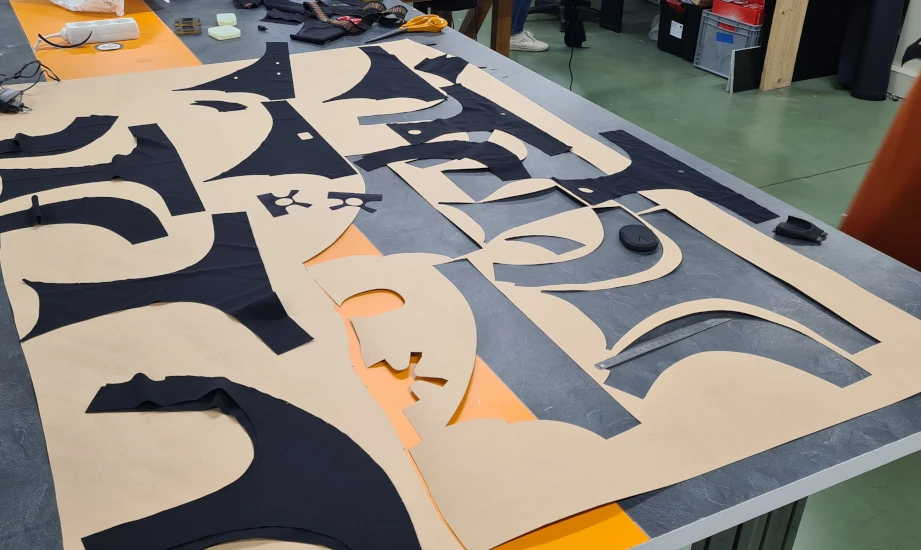
- + Technical textile assembly (sewing, laminating, panels)
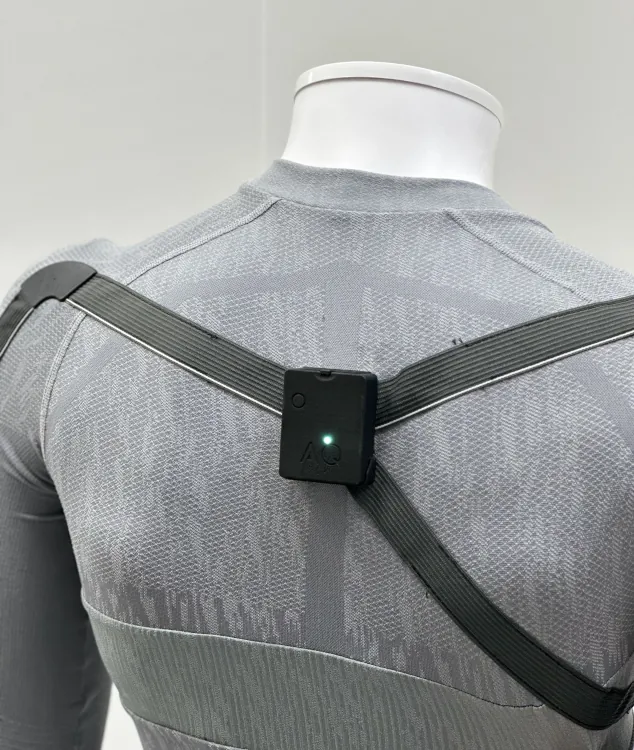
- + Integration of physiological and mechanical sensors
- + Flexible and miniaturized electronic modules
- + Washable and robust connectors
Textile & electronics assembly
Clean, durable and reliable integration of electronic components into textile.
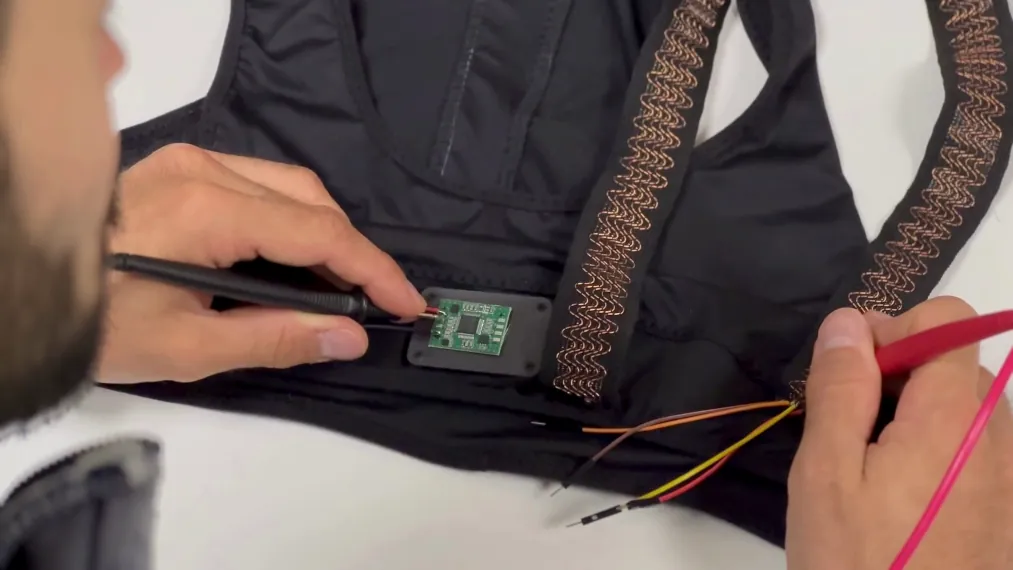
Smart textile assembly requires skills that are rarely combined: textile sewing and laminating, SMD electronic assembly, silicone/TPU overmolding and interconnect testing. Our in-house workshop holds all of these capabilities, which makes it possible to iterate on integration with no lost time between disciplines and to quickly identify failure causes.
- + Silicone/TPU overmolding of components
- + Conductive textile interconnects
- + Textile–electronics–soft materials assembly
- + Wear and washing test laboratory
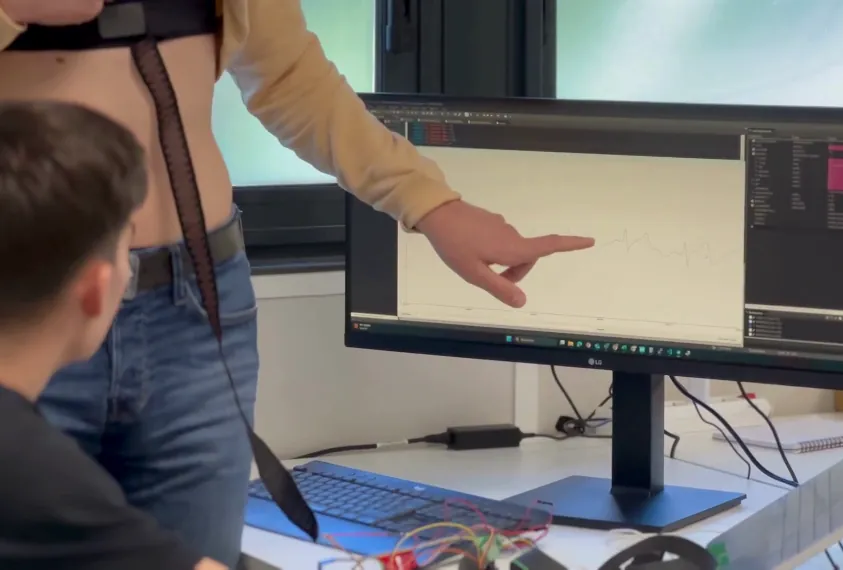
Functional tests & validation
Full check of signal, performance and comfort in use.
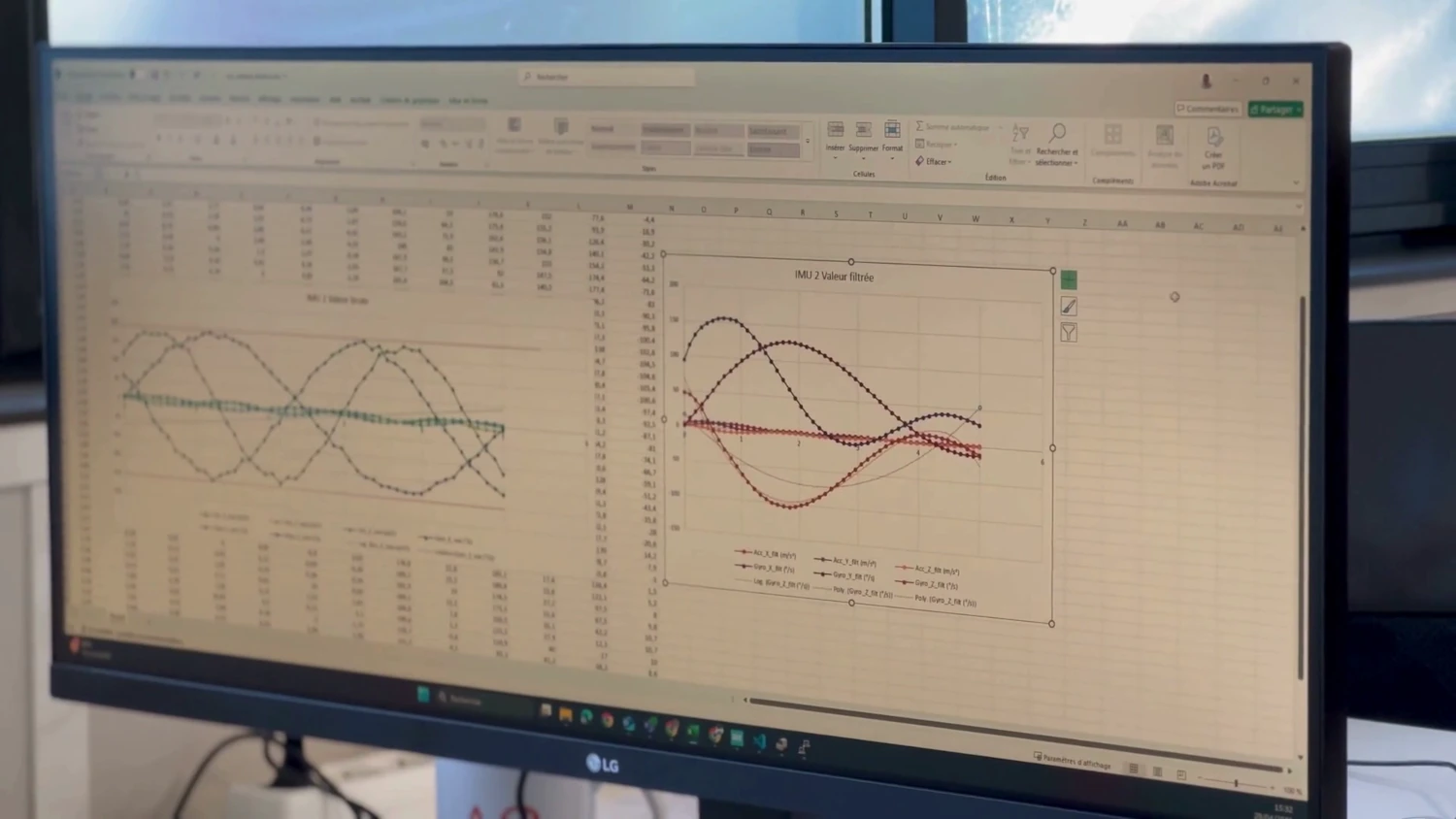
Each prototype goes through a battery of functional tests before being considered validated. Signal tests (ECG, EMG, IMU) are run in static then in dynamic conditions (movement, effort, sweat). Durability tests (washing, flex, traction) round out the validation to prepare the move to pre-production without surprises.
- + ECG / EMG / IMU / respiration measurements in real conditions
- + Vibration, light, heating, EMS tests
- + Comfort / kinematics / ergonomics analysis
- + Long-term tests: robustness, washing, mechanical stress
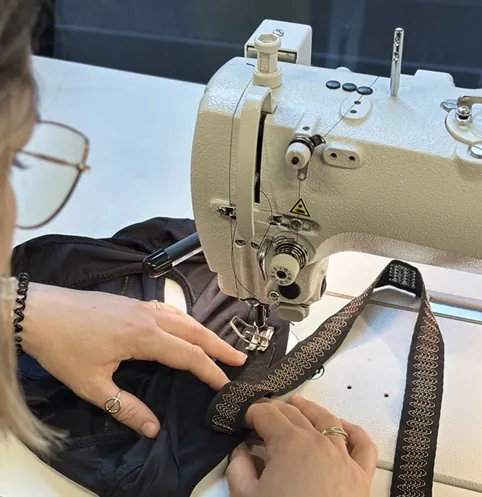
Rapid iterations & optimization
Continuous improvement of technical performance and ergonomics.
The ability to iterate quickly is one of the most tangible benefits of how we are set up. The engineer who designed the textile architecture is the same one who tests the prototype and identifies the causes of signal drift. The result: each iteration is targeted, documented and fed straight back into the next version — with no translation delay between disciplines.
- + Textile, mechanical and electronic adjustments
- + Signal quality optimization
- + Comfort and mobility improvement
- + Preparation of pre-production versions
Smart Textile lab
Sewing, laminating, overmolding, multi-material integration — full in-house workshop.
Prototype workshop
Build of instrumented prototypes with sensors and actuators, ready to be worn.
Embedded electronics
Assembly, low-power drivers, firmware and data acquisition for each prototype.
Tests & validation
Signal, comfort, endurance, washing and mechanical reliability — full validation before pre-production.
Our resources dedicated to Smart Textile prototyping
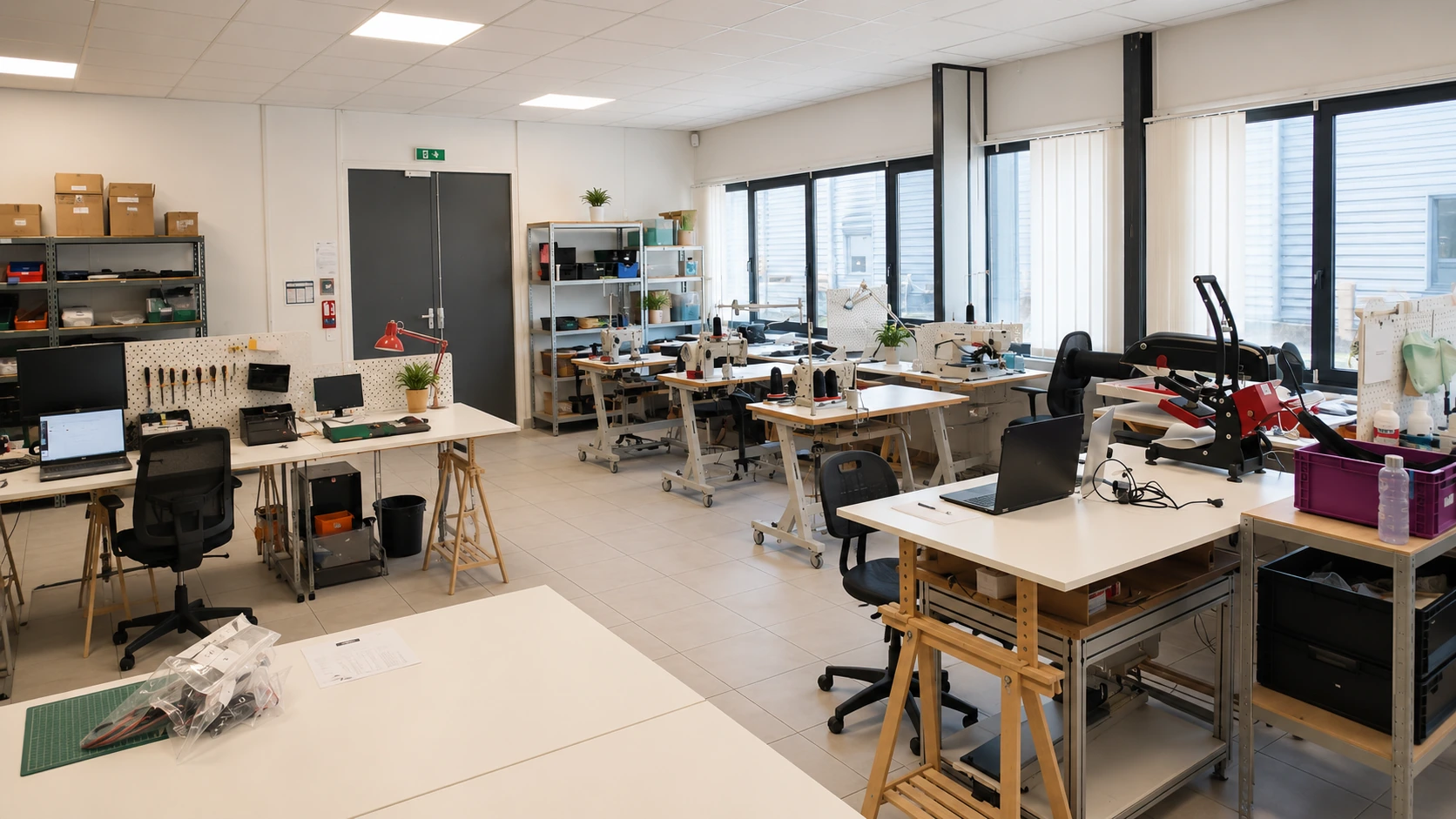
AQ-Tech has a complete platform to develop, assemble and validate smart textile prototypes: sewing and laminating workshops, overmolding equipment, electronic assembly stations, functional test benches and measurement tools. This textile + electronics + mechatronics combination lets us deliver wearable prototypes that are robust and close to industrial conditions.

Smart textile prototypes built
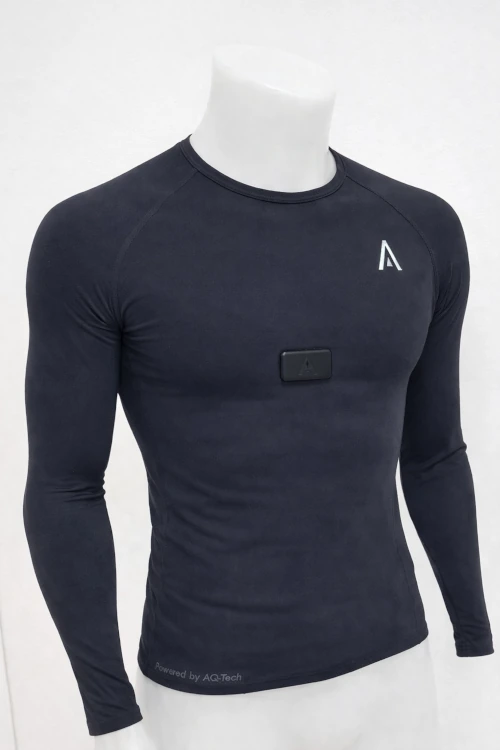
T-Shirt Monitoring
AQ-Motion, a modular textile measurement platform: ECG, EMG, IMU and GPS sensors integrated into the garment to measure physiological signals and motion in the field.
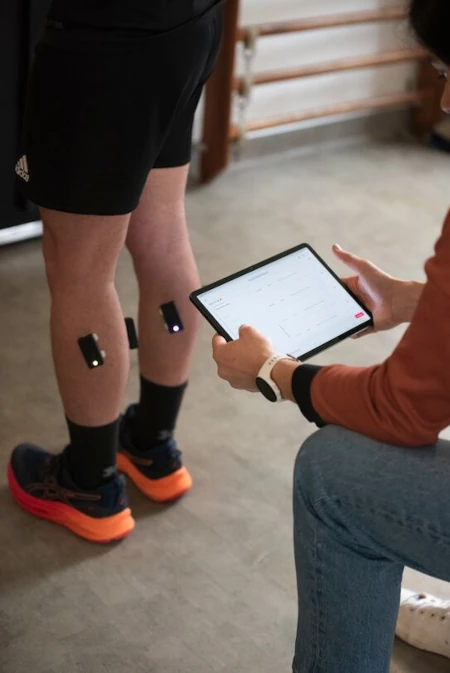
Léonard (formerly Optimergo)
Léonard EMG sensor module for industrial ergonomics and sports performance: embedded electronics and textile-electrode integration engineered by AQ-Tech.
AQ-Tech's Smart Textile ecosystem
The stages that frame prototyping
Prototyping validates product integration and directly prepares industrialization. It builds on our sensors, actuators and e-textile architectures — every step mastered in-house.
Integrated textile sensors
ECG/EMG electrodes, IMU, respiration, temperature and flex sensors integrated into the textile.
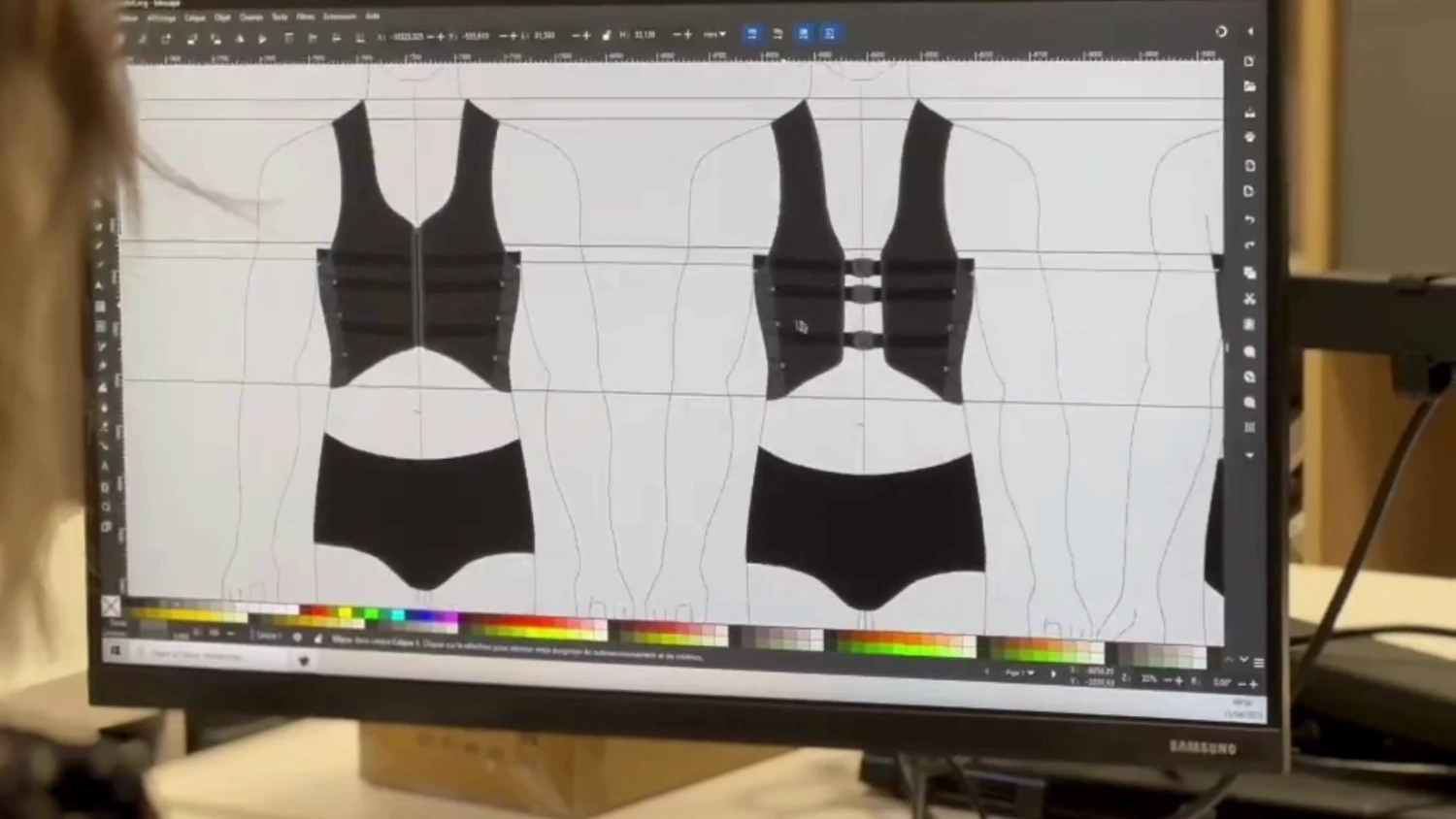
Connected garment development
E-textile architecture, functional pattern-making and integration of active components in the garment.
Integrated textile actuators
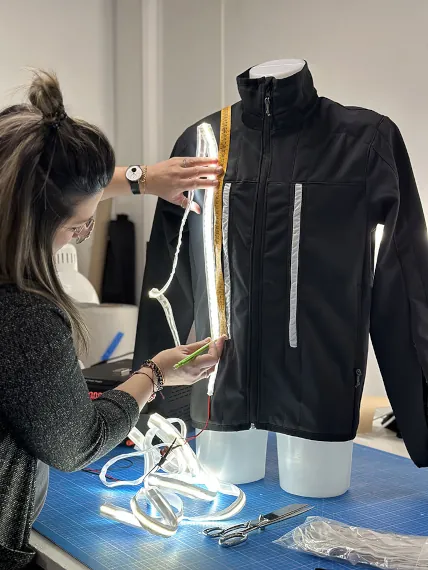
Haptic vibration, EMS, textile heating and light output to close the sensor → action loop.
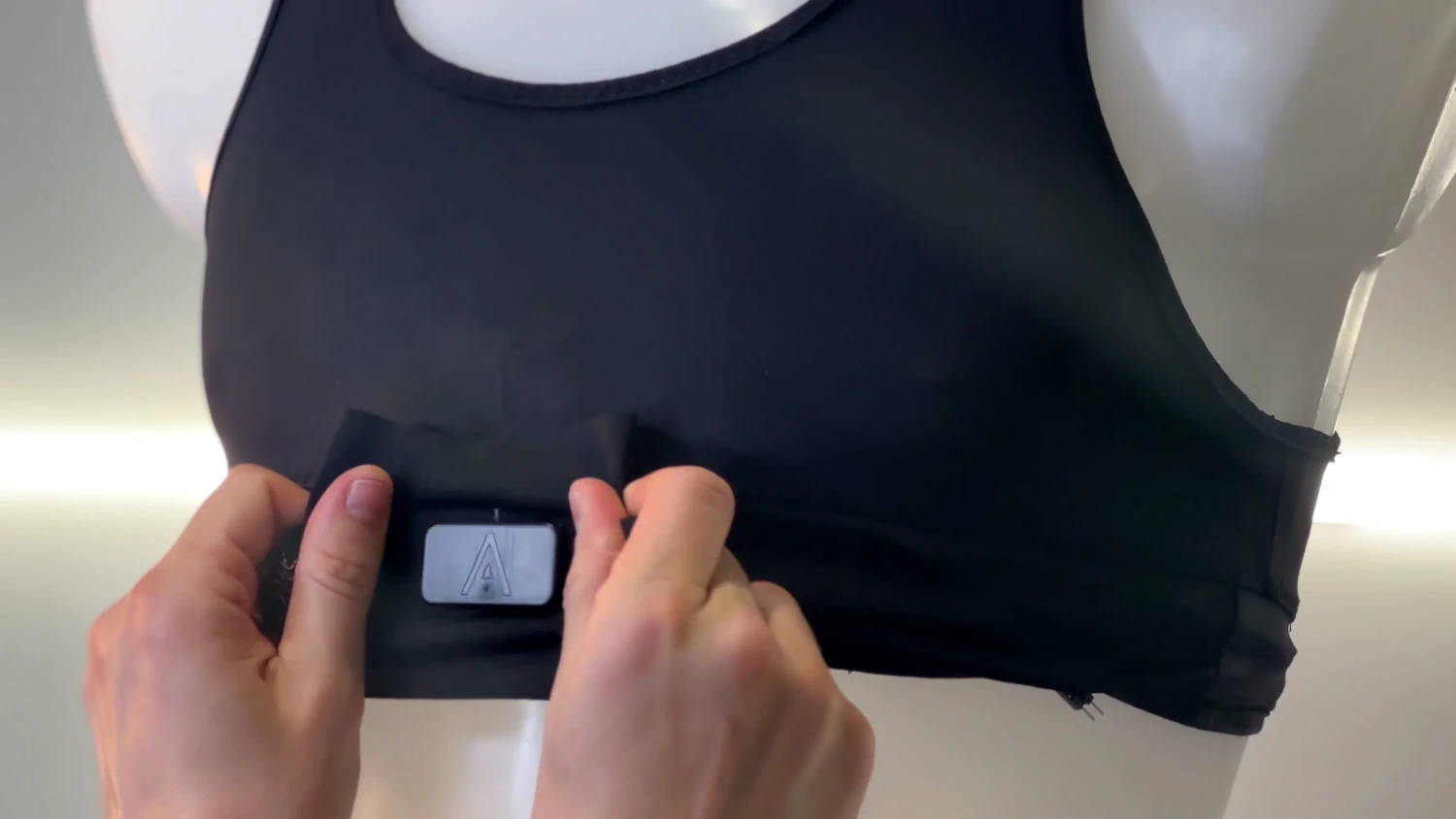
Smart Textile product integration
Overmoulding, washable connectors and flexible mechatronics to move from sensor to finished product.
Smart textile industrialization
Reproducible processes, quality control and CE/MDR documentation for series production.
Our expertise supporting smart textile prototyping
Smart textile prototyping at AQ-Tech brings in technical textile for conductive and washable assemblies, embedded electronics for measurement modules and test firmware, and mechanics for interface robustness. All three disciplines are mastered in-house.
Our prototypes cover every type of sensor — ECG, EMG, IMU, respiration — and actuator — haptics, heating, EMS. Target sectors are sports, medical and industry.
Prototyping fits into the full cycle of our Smart Textile division, from e-textile design through to industrialization and pre-production manufacturing.
Frequently asked questions — Smart Textile prototyping
What is the Smart Textile prototyping phase for?
Prototyping makes it possible to validate the textile architecture, sensor integration, supporting electronics and use ergonomics together — before committing industrialization costs. A poorly validated prototype leads to costly rework during pre-production. Our approach targets convergence in 2 to 4 iterations on a stable, tested and documented version.
Do you build wearable, testable prototypes?
Yes, systematically. We develop real instrumented garments or accessories, ready to be tested in the field: comfort, measurement quality, washing, mechanical robustness, real-world use. A lab-only prototype is not enough to validate a smart textile — only a prototype worn in the target conditions reveals the real problems.
How many iterations are typically needed?
Depending on complexity, 2 to 4 prototyping loops are needed to converge on a version validated both technically and ergonomically. The number depends heavily on the maturity of the initial brief and washability constraints. We plan these iterations from the start, with validation criteria defined ahead of time for each phase.
Can you then support industrialization?
Yes. Once the prototype is validated, we prepare the pre-production: process definition, technical files, tooling and quality controls. We support you all the way to series manufacturing with your partners or ours, with full continuity between the prototyping team and the industrialization team.
What are the lead times for a first smart textile prototype?
For a first functional wearable prototype (integrated sensors + electronic module + base firmware): 4 to 8 weeks depending on complexity. For a validated multi-sensor version with washability and ergonomics tests: 2 to 4 months. These lead times depend on brief maturity and component availability. We provide a detailed schedule from the start.

Let's develop your smart textile prototype together
AQ-Tech builds your smart textile prototypes and connected garments — from sensor/electronics integration to full functional testing. Reply within 48h.