


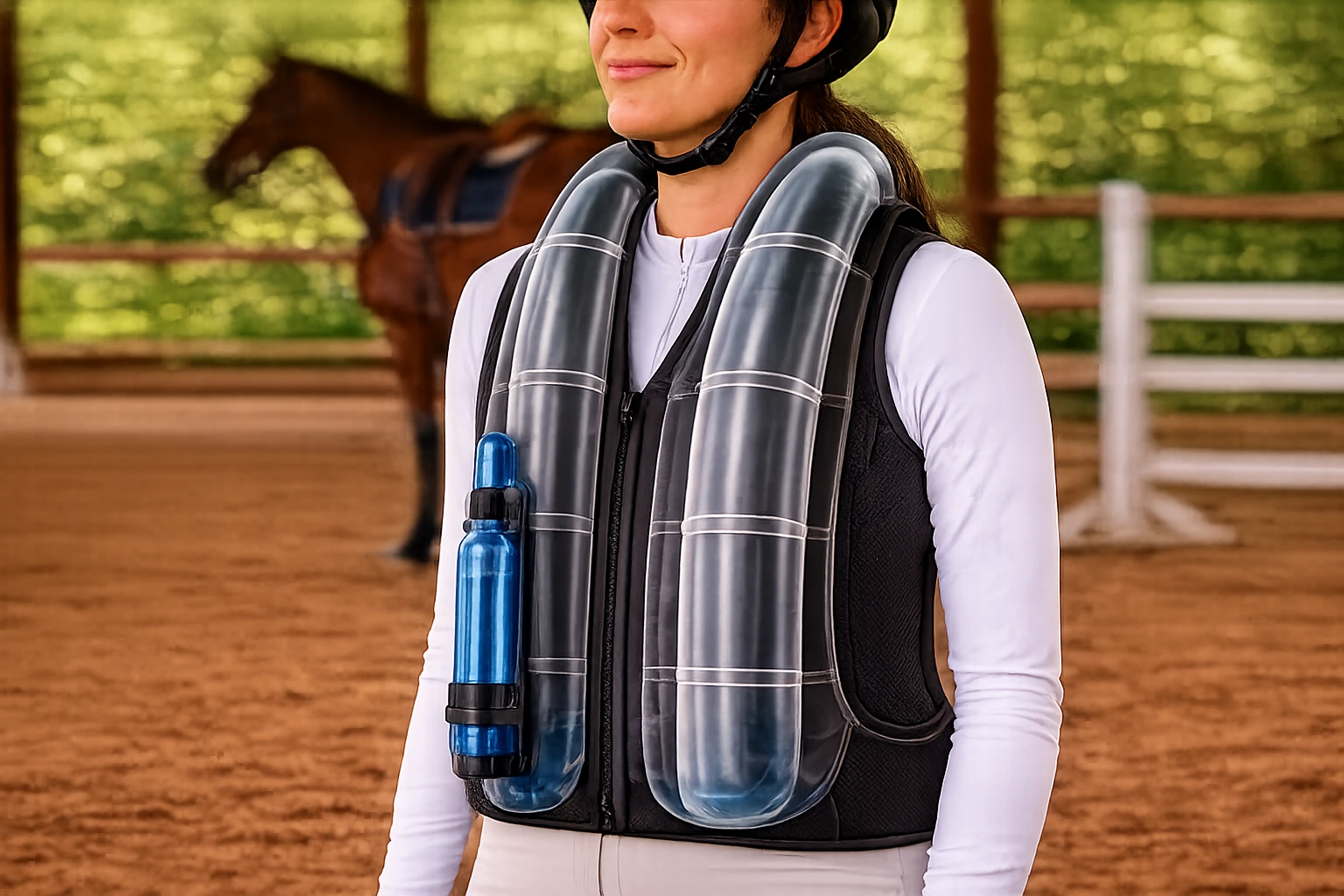

Wearable airbag design & manufacturing
Detection, gas generator, inflatable bladder & HF welding - 20 years of wearable airbag expertise

What is a wearable airbag?
A wearable airbag is a personal protective device built into a garment - vest, jacket, trousers or belt - that inflates within a few tens of milliseconds to absorb an impact. Unlike a car airbag fixed to a vehicle, it moves with the body: it must be lightweight, soft, reliable on deployment and comfortable to wear every day.
Designing a wearable airbag requires combining three disciplines rarely mastered together: technical textile for the airtight inflatable envelope, embedded electronics for fall or impact detection, and mechanical engineering for the gas generator and pressure resistance. This is exactly the intersection AQ-Tech covers in Annecy (Haute-Savoie, France), from technical brief to certified pre-series.
We develop wearable airbags for equestrian, motorcycle, cycling, industrial PPE and defense.
How does a wearable airbag work?
An airbag protects by deforming. At the moment of impact, the inflated bladder comes between the body and the obstacle: it is the pressure rise of the gas inside the bladder that absorbs the impact energy. By deforming in a controlled way, the airbag progressively decelerates the body and spreads the force over a larger area and a longer duration - reducing the forces transmitted. The whole performance of a wearable airbag therefore lies in a perfectly orchestrated functional chain: detect the accident, generate the gas and maintain the protection volume. Every link is designed, integrated and validated in-house at AQ-Tech.
01 - Fall detector
Activate the airbag at the exact moment of the accident.
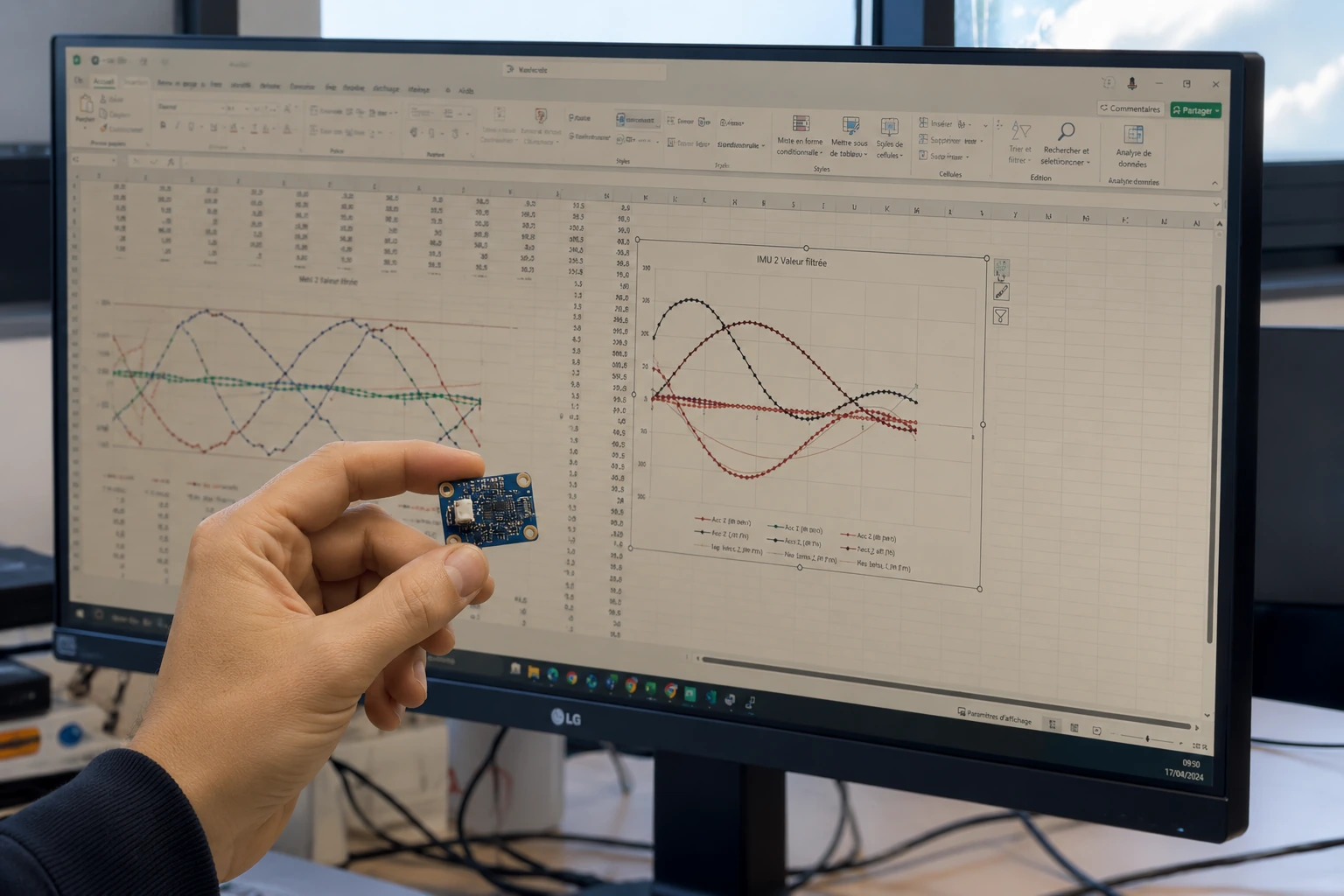
The detector triggers inflation as soon as a fall or impact is identified. It can be mechanical, via a lanyard linking the wearer to a fixed point (saddle, motorcycle) that releases the system on ejection; or electronic, through motion tracking sampled several hundred times per second and analyzed by highly complex algorithms able to tell a genuine fall from normal movement.
- + Mechanical detection via lanyard
- + Electronic detection via inertial measurement unit (IMU)
- + Motion tracking several hundred times per second
- + Fall / normal-motion discrimination algorithms
02 - Gas generator
Deliver the gas as fast as possible to reach the effective pressure.
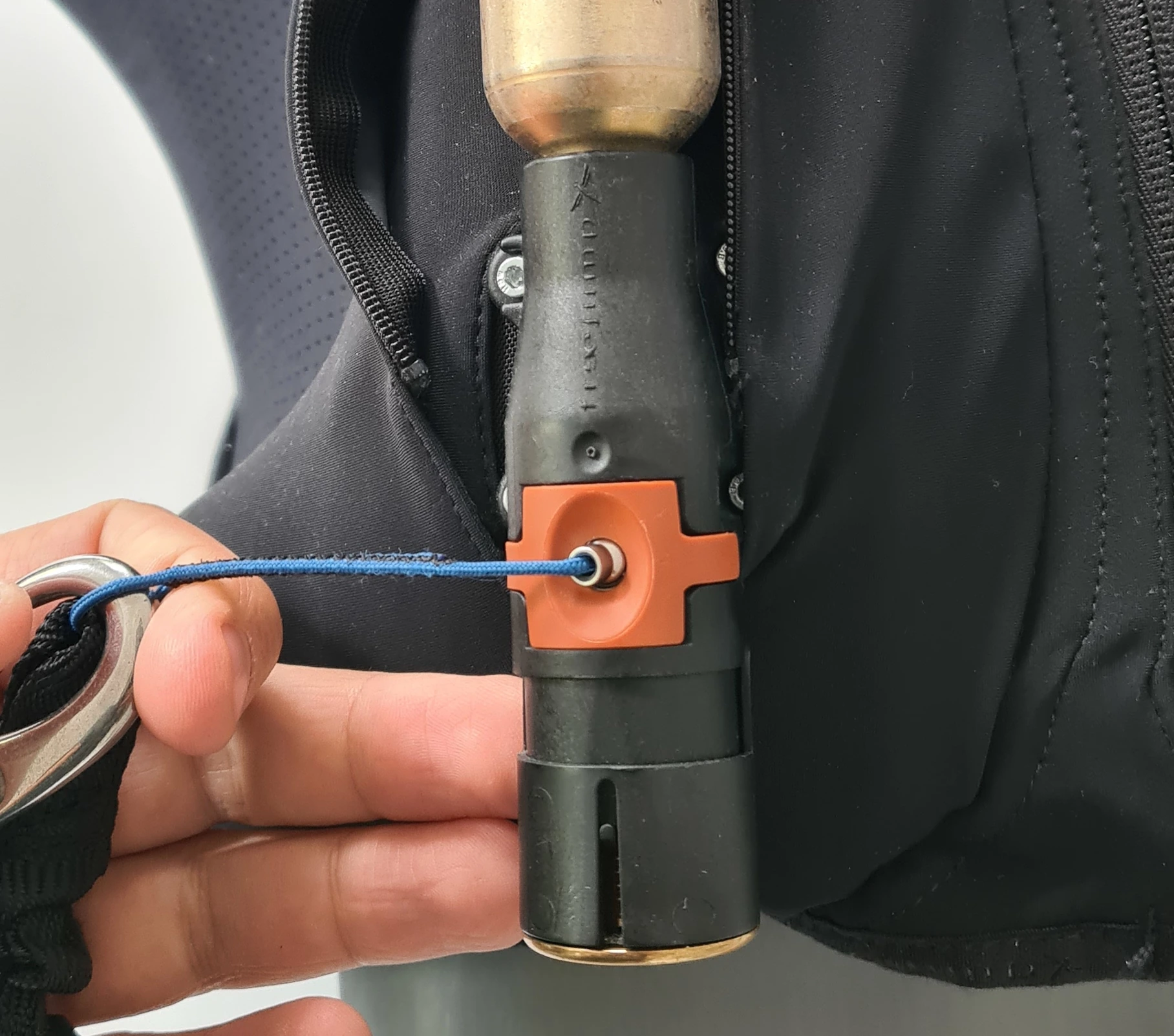
Once triggering is decided, the generator must fill the bladder within a few tens of milliseconds to reach the pressure at which the airbag actually becomes protective. It can be mechanical - a spring system that punctures a gas cartridge - or electrically triggered, most often via a pyrotechnic charge that releases a large volume of gas almost instantly.
- + Mechanical generator: spring + gas cartridge
- + Electrically triggered generator (pyrotechnic charge)
- + Flow sized to quickly reach the effective pressure
- + Full inflation within a few tens of milliseconds
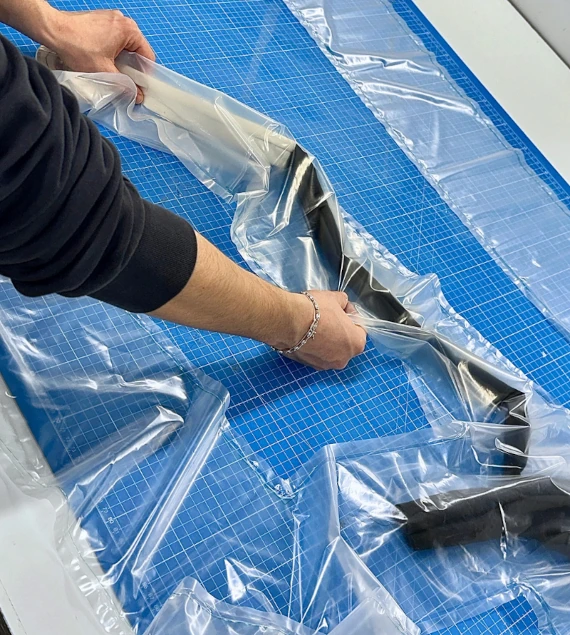
03 - The inflatable bladder
Guarantee the protection volume and hold the pressure.
The bladder is the airtight envelope that contains the gas and defines the protection volume. It must inflate very fast and keep its shape under pressure. It is often built in two layers: an inner PU bladder (polyurethane) for airtightness, and an outer technical-textile sleeve that takes up the pressure load and maintains the inflated shape. The whole assembly is HF (high-frequency) welded, ensuring airtight, pressure-resistant seams.
- + Inner PU bladder for airtightness
- + Outer textile sleeve to hold the pressure load
- + Definition of the volume and protection zones
- + HF-welded assembly, fast inflation and shape retention
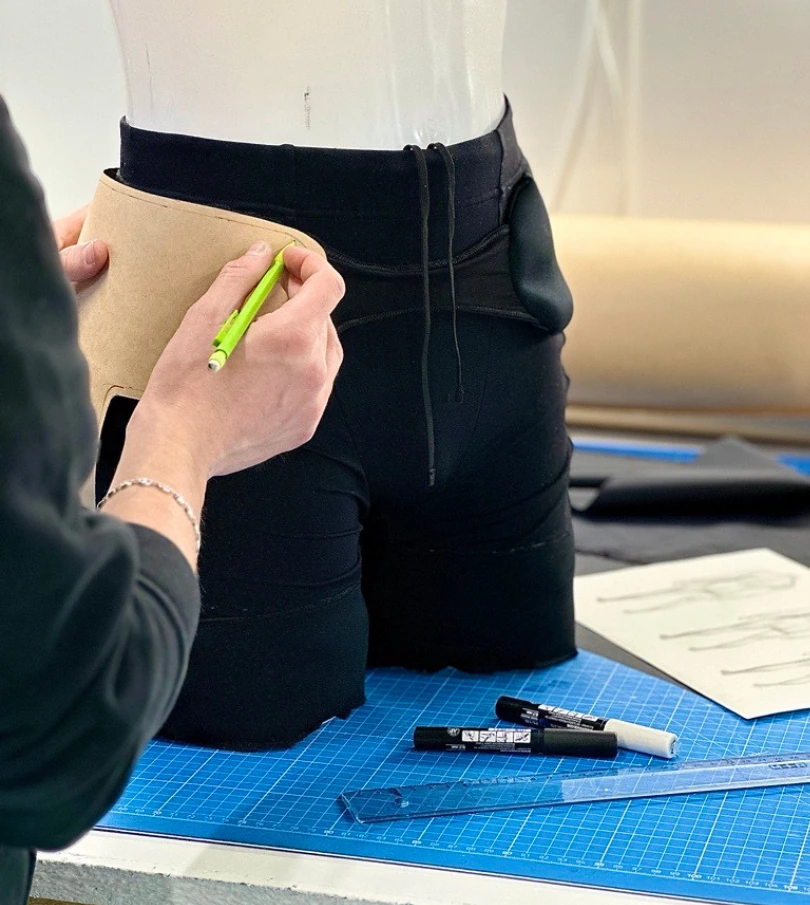
04 - Textile integration
Position the airbag, protect it and engineer the product for industrialization.
Textile integration ensures the airbag is correctly positioned on the body and holds up over time - resistance to abrasion, washing and everyday stresses. We design this integration so the final product makes no compromise: design, weight, comfort, robustness, and of course engineered for industrialization from the very start.
- + Precise airbag positioning on the body
- + Durability over time: abrasion, washing, in-use stresses
- + Design, weight, comfort and robustness trade-offs
- + Integration engineered for industrialization
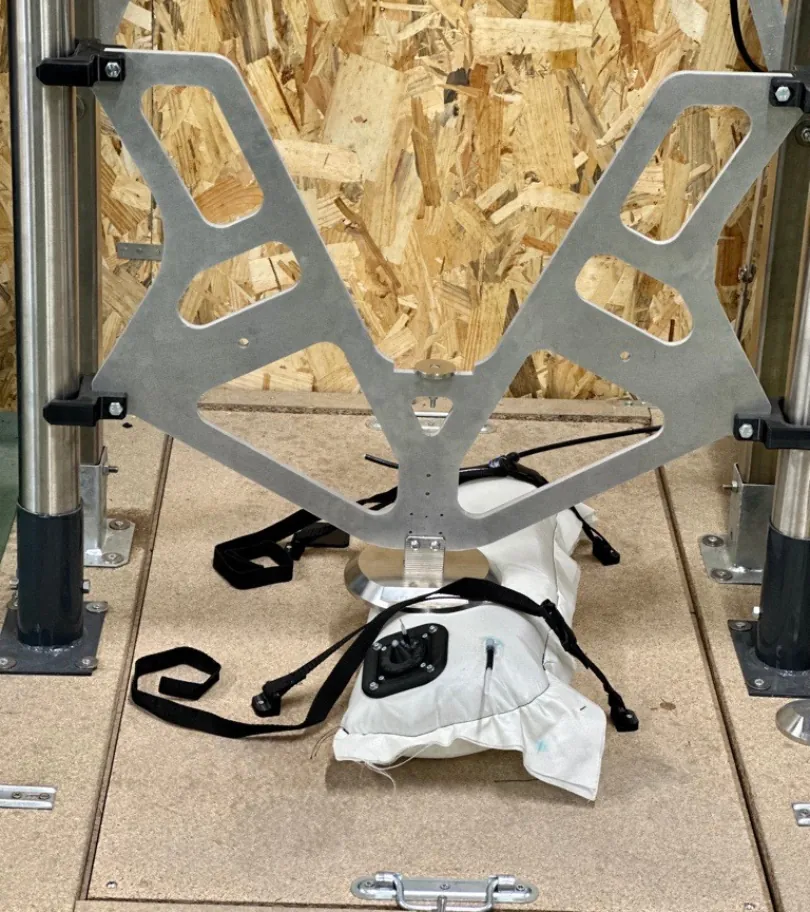
05 - Certification
Validate fast in-house, certify with our partner laboratories.
A wearable airbag is PPE that must meet performance standards: inflation time, absorption level and robustness. We are equipped in-house to test our developments - which lets us reach the lab and validate our designs quickly, before taking the certification phase in hand with our partner laboratories.
- + PPE: performance requirements (inflation time, absorption, robustness)
- + In-house test benches to validate designs fast
- + Rapid iterations before lab testing
- + Certification driven with our partner laboratories
Target absorption level
Energy to dissipate defined by fall height, speed, mass and the body zone to protect.
Transmitted forces
Volume and pressure calibrated to keep the forces transmitted to the body under acceptable thresholds.
CE / PPE certification
CE/PPE file and applicable product standards - NF S72-800 (equestrian), EN 1621-4 (motorcycle).
Validation & testing
Drop tower, pressure bench, high-speed camera and endurance campaigns.
Absorption level & certification
The target absorption level depends on the energy to dissipate: a horse fall, a motorcycle ejection and a bicycle fall mobilize neither the same volumes nor the same pressures. We define an absorption target for each use case, then verify that the airbag dissipates that energy while keeping the forces transmitted to the body under acceptable thresholds.
These performances are validated in our test laboratory and formalized in the CE/PPE certification file, according to the applicable product standards - NF S72-800 (equestrian), EN 1621-4 (motorcycle). The same team designs, triggers and measures: no loss of information between design and validation.
A reference player in wearable airbags
AQ-Tech is a reference player in wearable airbags. This expertise runs deep: our founder, Alexandre Quarrey, has been developing wearable airbags for 20 years - well before founding AQ-Tech in 2019 - from trigger design to the industrialization of motorcycle and equestrian vests. That field experience shapes every project we take on.
We master the entire chain, with no middleman: detection, triggering, gas generator, inflatable bladder, HF welding, mechanical validation and certification. Mechanical engineering, technical textile and embedded electronics work within the same team - the cross-disciplinarity a wearable airbag inherently demands.
From the first functional prototype to the finished product, we can take charge of the full cycle - including series production in our 500 sqm French workshop, and its industrial transfer beyond our in-house capacity. A single partner, from concept to delivered product.
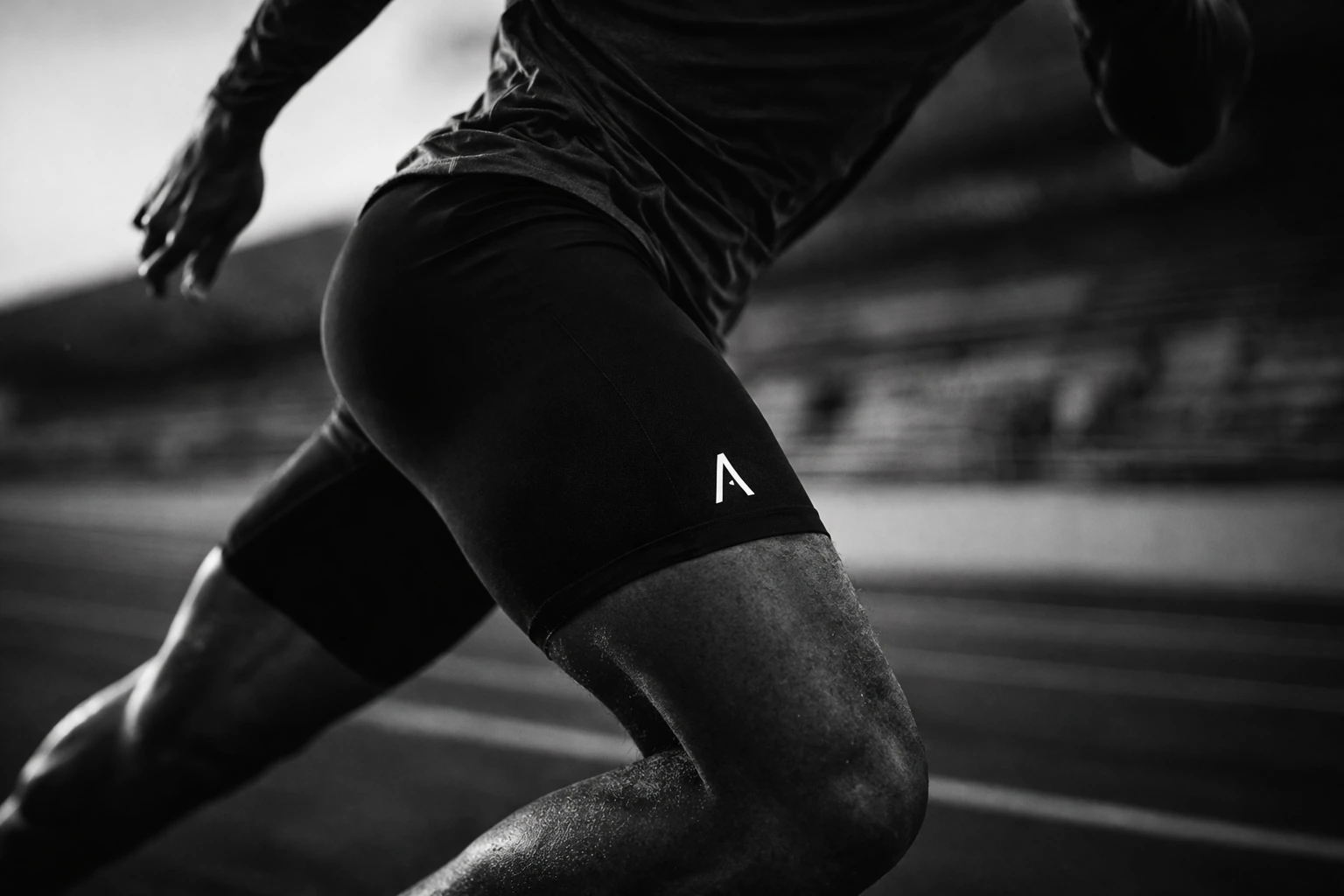
Wearable airbags we have developed
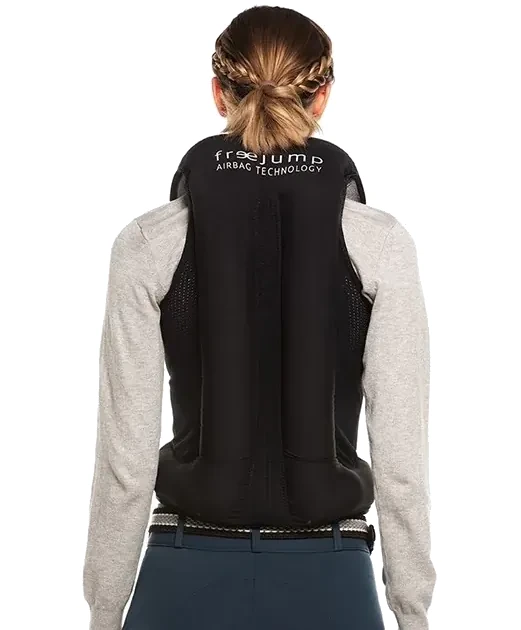
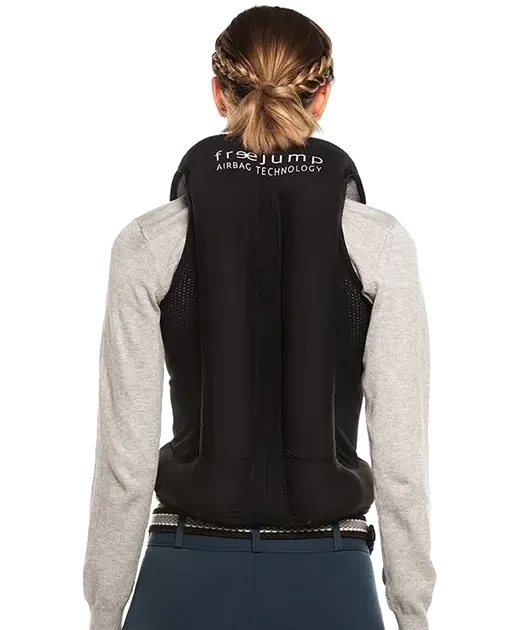
FreeJump
FreeJump equestrian wearable airbag vest: HF-welded inflatable textile structure, CO2 inflation system and sensor-triggered deployment engineered by AQ-Tech.
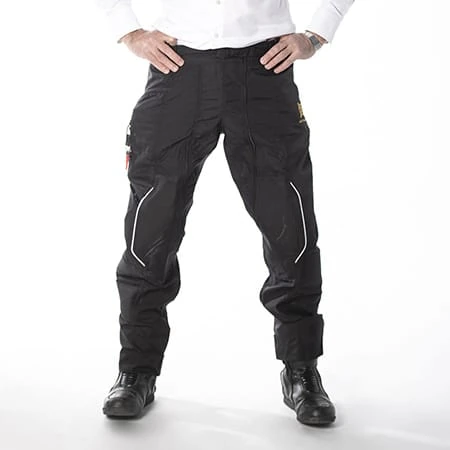
CX-Air Dynamics
CX-Air Dynamics motorcycle airbag pants: wearable inflatable system for riders, textile and triggering electronics designed and assembled by AQ-Tech.
Which sectors do we design wearable airbags for?
Our wearable airbags equip demanding products where deployment reliability is non-negotiable: sports and protective equipment (equestrian vests, motorcycle airbags, cycling jackets), defense and law enforcement (wearable protection, rapid deployment), and connected industrial PPE.
The wearable airbag is part of our broader offer of technical inflatable systems, which also covers pneumatic compression devices and complex inflatable structures. For the sensing and intelligent triggering side, we rely on our Smart Textile division and our embedded electronics.
Frequently asked questions about wearable airbags
What is a wearable airbag?
A wearable airbag is a personal protective device built into a garment (vest, jacket, trousers, belt) that inflates within a few tens of milliseconds to absorb an impact during a fall or crash. It protects by deforming: the pressure rise of the gas inside the bladder dissipates the impact energy. It combines an airtight inflatable textile envelope, a fall detector (mechanical or electronic) and a gas generator. It is used in equestrian sports, motorcycling, cycling, industrial PPE and defense.
Which manufacturer designs and manufactures wearable airbags?
AQ-Tech, an engineering design house and workshop based in Annecy (Haute-Savoie, France), is a reference player in wearable airbags, backed by 20 years of expertise - including the Freejump equestrian airbag vests and the CX-Air Dynamics motorcycle airbag trousers. We master the entire chain in-house: fall detection, triggering, gas generator, HF (high-frequency) welding, mechanical validation and certification - through to the finished product.
How does a wearable airbag trigger?
Two main approaches exist. Mechanical triggering uses a lanyard that links the wearer to a fixed point (saddle, motorcycle) and releases the system on ejection - no battery, extremely robust, proven on equestrian vests. Electronic triggering relies on an inertial measurement unit (IMU) whose motion is sampled several hundred times per second and analyzed by complex algorithms that detect the fall to deploy the airbag before impact. The choice depends on the use case, the accident kinematics and the certification constraints.
Do you develop the fall-detection algorithms and the electronics?
Yes, it is at the very core of what we do. We design the embedded electronics (inertial measurement unit, control board, firmware) and the fall-detection algorithms in-house, analyzing motion several hundred times per second to tell a genuine fall from normal movement. Sensors, signal processing and triggering logic are all developed and then validated on the bench and in real conditions.
Mechanical or pyrotechnic generator: which inflation system?
The generator has a single purpose: deliver the gas as fast as possible to reach the effective pressure. The mechanical system uses a spring that punctures a gas cartridge - simple, refillable and very reliable. The electrically triggered system, most often pyrotechnic, releases a large volume of gas almost instantly, for ultra-fast deployment. We size the generator (volume, flow, pressure, inflation time) according to the protected zone and the impact scenario.
How is the inflatable bladder designed?
The bladder is the airtight envelope that contains the gas and guarantees the protection volume. It is often built in two layers: an inner PU bladder (polyurethane) for airtightness, and an outer technical-textile sleeve that takes up the pressure load and maintains the inflated shape. It must inflate very fast and keep its geometry under pressure - we assemble it by HF (high-frequency) welding and validate it through airtightness and overpressure tests.
What absorption level and certification for a wearable airbag?
The target absorption level depends on the energy to dissipate - fall height, speed, mass, body zone. We define an absorption target per use case, then validate that the airbag dissipates that energy while keeping the forces transmitted to the body under acceptable thresholds (drop tower, pressure bench, high-speed camera). These performances are formalized in the CE/PPE certification file, according to the applicable product standard for the target market - NF S72-800 for equestrian, EN 1621-4 for motorcycle.
Can you produce the series of the finished product?
Yes. Beyond development, we manufacture the pre-series and small-series of the finished product in-house (10 to 500 units) in our Annecy workshop: HF welding, assembly, quality control and unit testing. Above 500 units, we organize the transfer to our European industrial partners with a complete manufacturing file and maintained quality oversight.
Can you handle certification?
Yes. We validate the performance - inflation time, absorption level, robustness - on our in-house benches, then drive certification with our partner laboratories, according to the applicable product standard (NF S72-800 for equestrian, EN 1621-4 for motorcycle) and CE/PPE marking.

Let's design your wearable airbag together
AQ-Tech supports you from concept to the finished product: detection, gas generator, inflatable bladder, HF (high-frequency) welding and validation. Response within 48 hours.