


Smart textiles, also called intelligent textiles or connected fabrics, sit at the crossroads of traditional textiles and electronics. These advanced materials embed sensors, actuators, conductive fibres or communication elements, enabling a garment or technical textile to react to its environment, capture data or interact with the wearer.
Wearing clothes that can measure your heart rate, detect an impact or light up on demand may sound futuristic, yet it is already a reality. Textile technologies are evolving fast, and a growing number of solutions now make it possible to embed intelligence at the heart of the fibres.
Table of contents:
- 1. What is a smart textile?
- 2. The different types of smart textiles
- 3. Real-world applications
- 4. Conclusion
1. What is a smart textile?
A smart textile is a fabric designed to deliver additional functionality, often electronic, without compromising comfort, flexibility or lightness. The goal is to embed sensors or electronic systems directly into the material, rather than adding rigid enclosures on top of it.
Early experiments in the 1980s consisted of inserting small electronic circuits into garments, but the materials were stiff and fragile. Today, advances make it possible to integrate conductive yarns, electronic inks or optical fibres directly into the textile structure. This opens the door to garments that can communicate, measure, illuminate or protect.
At AQ-Tech, we work on solutions combining textile, electronics and mechanics to create soft, robust, manufacturable products. Our teams integrate the electronics into the fabric from the design stage, ensuring reliability, comfort and washability.
A major challenge for smart textiles is durability: washing, perspiration, folding and weather exposure put embedded circuits to the test. The goal is therefore to deliver textiles that are intelligent, robust and long-lasting at the same time.
2. The different types of smart textiles
Smart textiles can be classified according to the function they perform. Three main families are usually distinguished:
a. Sensing textiles
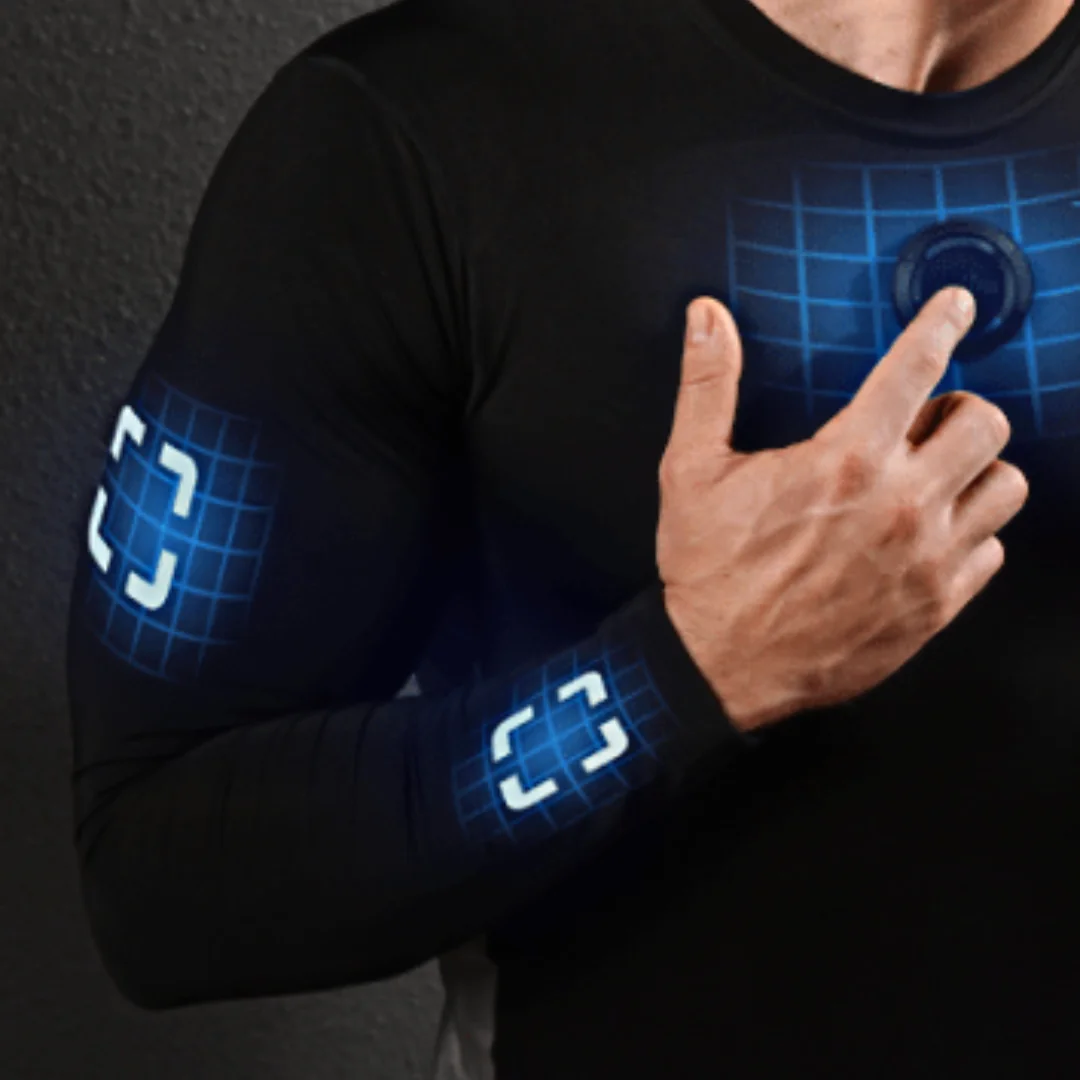
They measure physical or physiological parameters: temperature, humidity, heart rate, respiration, muscle activity or movement. These textiles underpin many applications in the medical sector or in sports and wellness.
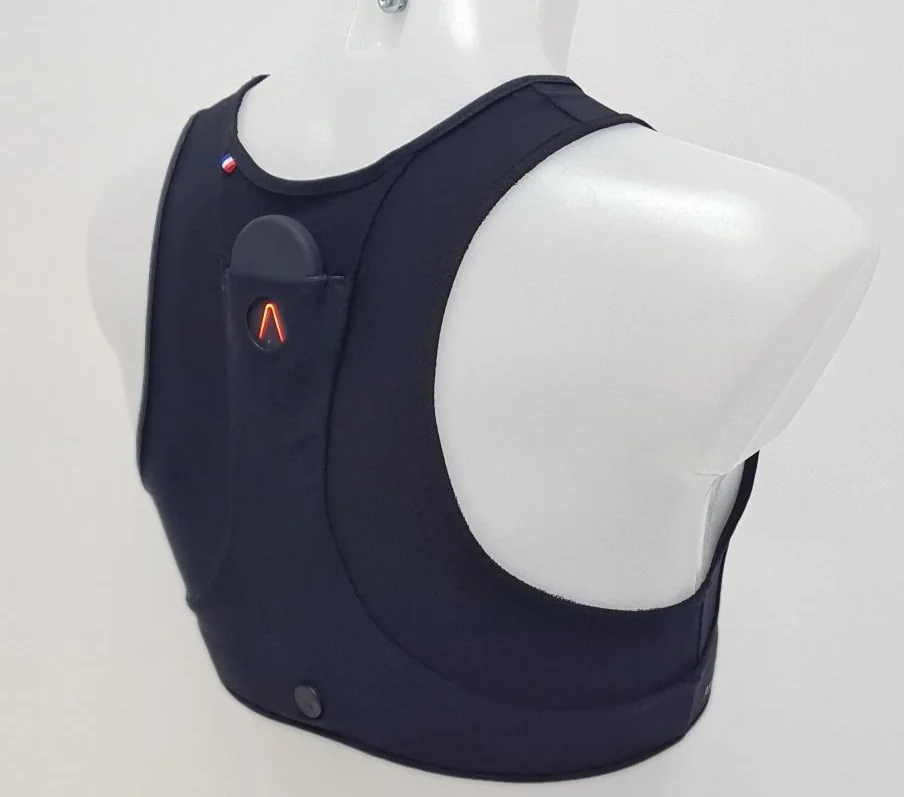
Examples include sports chest straps and t-shirts fitted with electrodes that track heart rate or posture.
b. Actuating textiles
They react to a stimulus to produce an action: lighting, vibration, shape change or compression. These textiles appear in light-emitting garments, heated textiles or medical devices able to apply localised pressure.
Some projects go even further, with fibres that can contract, generate heat or even release active substances onto the skin.
c. Conductive textiles
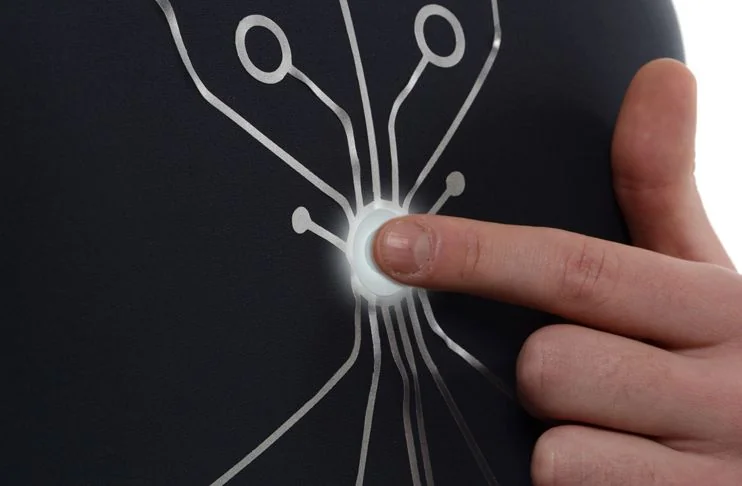
These textiles embed conductive tracks or yarns to carry power and data inside the fabric itself. This is achieved using woven metallic fibres or conductive inks printed onto the textile. It enables sensors and actuators to be connected without rigid wiring.
One interesting innovation is the connected zip, where the zipper itself becomes a switch that activates or deactivates a system depending on its position.
 Example of a connected zip used as a textile switch.
3. Real-world applications
a. Health and wellness
In healthcare, smart textiles make it possible to monitor physiological parameters continuously without disturbing the patient: temperature, breathing, heart rate, hydration, muscle activity, and more. Applications range from post-operative monitoring and rehabilitation to early detection of pathologies.
Some therapeutic textiles also deliver controlled compression or monitor wound healing directly inside the dressing. This approach opens up new opportunities for telemedicine and preventive healthcare.
b. Safety and protection
Smart textiles also play a role in safety and PPE. Embedding light strips, position sensors or impact sensors improves the safety of lone workers, first responders or military personnel. These systems can signal a fall, locate a user or indicate a change in direction.
c. Performance and sport
In sport, connected textiles measure an athlete's movement, force or muscular fatigue. Their lightness and elasticity let them track the gesture without hindering performance. The resulting data offers precise training follow-up and allows programmes to be adjusted in real time.
d. Industry and innovation
Beyond garments, smart textiles find uses in industry: monitoring of soft structures, integration into seats and automotive interiors, or technical inflatable devices. These applications often combine several functions: pressure sensors, connectivity and resilient materials.
4. Conclusion
Smart textiles open up a vast field of innovation. Still emerging, these technologies are becoming more accessible thanks to component miniaturisation, conductive-ink printing and mastery of textile integration. Tomorrow, our clothing, sportswear, medical devices and industrial equipment will be able to communicate, measure and interact with their environment.
At AQ-Tech, we develop and integrate these solutions within our Smart Textile unit, from concept to prototype and then through to industrialization and series manufacturing.
Do you have an innovative textile project? Get in touch with our team and let's explore together how to make it intelligent.