



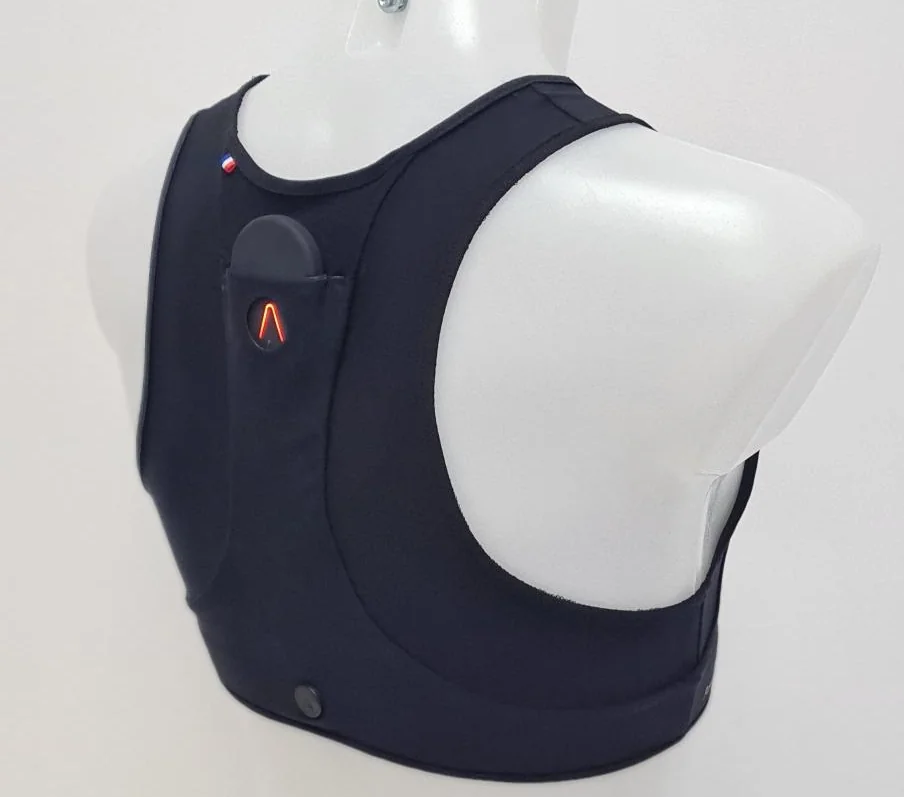
In 2025, smart textiles are gaining momentum — products that sit at the crossroads of textile comfort and electronic precision. This combination promises major innovations and opens the door to new technical opportunities across many sectors — from medical to industry, including high-level sports.
But what exactly is a smart textile? What are its applications, its limits and its real challenges? Let's look at what is possible — or not — today, and what the future holds.
What is a smart textile?
Smart textiles (or e-textiles) are textile-based products, such as garments or accessories, into which electronic technologies are integrated. They thus become capable of sensing, reacting or communicating with their environment.
These products combine:
- the comfort, flexibility and breathability of textile,
- the precision, intelligence and processing power of electronics.
They are therefore highly technical and highly complex products, since they require mastery of several disciplines: textile, electronics, mechanics and often design.
At AQ-Tech, we see specific markets emerging where these technologies make the most sense and offer real value.
Discover in detail our Smart Textile expertise and how we turn these technologies into reliable, industrialisable products.
The main application fields
Medical
In this field, smart textile is not limited to tracking daily activity like connected watches already do. We are talking here about embedded medical monitoring solutions, capable of measuring precise physiological signals for disease tracking, rehabilitation or relapse prevention.
This can range from post-operative home follow-up to remote monitoring of chronic conditions, with sensors integrated directly into the garment. The goal: to make monitoring continuous, discreet and comfortable for the patient.
Our teams support several projects in connected health. Discover our capabilities in rapid prototyping to validate your medical textile concepts.
Performance sports
In sports, smart textile aims to analyse and improve the movements, forces and postures of athletes, during training as well as in competition. Every gesture counts, and only an embedded system can precisely measure real indicators in varied conditions, far from a biomechanics lab.
These products help, for example:
- to limit injuries caused by muscle overuse;
- to detect postural imbalances;
- to analyse the forces applied during a sport gesture.
We work with players in sport and biomechanics to design robust, accurate intelligent textile products. Learn more about our intelligent textile expertise hub.
Industry and safety
In the industrial sector, smart textiles aim less at "robotising" the operator than at monitoring their postures and efforts to prevent injury risks (MSDs, locking, muscle fatigue, etc.).
Our solutions are designed to integrate into demanding and durable environments. Discover our know-how in industrialisation of connected textile systems.
Architecture of a smart textile product
An e-textile product is above all a combination of several technologies: textile, electronics, mechanics and sometimes even software. Each of these disciplines must coexist in a single system to guarantee both comfort, precision and durability.
These technologies can be grouped into three main families: sensors, actuators and integration.
Sensors
To measure a physiological or mechanical signal, you need sensors capable of translating physical parameters into usable data. In smart textile, we mainly use:
• Electrodes
They make it possible to measure weak electrical signals such as ECG (cardiac activity), EMG (muscle activity) or bio-impedance. At AQ-Tech, we use different types of electrodes depending on the need:
- Dry electrodes, gel-free, for comfortable and long-lasting use;
- "Gecko" electrodes with an adhesive effect to avoid parasitic movement between skin and textile;
- Soft polymer electrodes, printed or directly integrated into the fabric weave.
Each type of measurement requires a specific choice of electrode, positioning and electronic processing.
• Motion sensors (IMU)
IMUs (Inertial Measurement Units) combine accelerometer, gyroscope and magnetometer. They make it possible to measure the position, speed and acceleration of the body in space. By positioning several IMUs on the right body segments, it becomes possible to compute joint angles, analyse the full kinematics of a movement and identify asymmetries.
• Other textile sensors
Depending on the application, the following can also be integrated:
- Stretch sensors to track posture or joint flexion;
- Pressure or perimeter sensors, for example through inductive plethysmography, widely used for respiratory monitoring in the medical field.
Actuators
Smart textile is not limited to sensing — it can also act and interact with the user. We integrate, for example:
- Localised vibrating elements to deliver a tactile signal (postural alert, direction cue, sport feedback, etc.);
- Light elements for signalling or visualisation;
- and in some cases, electrostimulation electrodes able to activate specific muscles in a targeted way.
These functions make it possible to create a smart feedback loop: the textile becomes a system able to measure, process and respond to the user.
Integration
Integration is probably the biggest challenge in smart textile. All these components must fit into a textile without compromising comfort, accuracy or the product's manufacturability.
This involves many technical choices:
- How to connect the components (connectors, conductive yarns, woven ribbons, printed films, etc.)?
- How to protect sensitive areas (encapsulation, overmoulding, lamination)?
- How to preserve the flexibility, washability and aesthetics of the product?
The goal is to achieve a robust, repeatable and durable solution while remaining comfortable and pleasant to wear.
Textile-electronics integration is at the heart of our trade. Visit our production workshop to discover our in-house manufacturing and assembly capabilities.
Smart textile technical challenges
Turning an idea into a marketable product requires going much further than a simple functional prototype. While many technologies are now accessible, moving to an industrial, reliable and robust product remains a real challenge.
The current smart textile challenges focus mainly on three axes: industrialisation, robustness and repairability.
Industrialisation
Without an industrialisable product, even the best idea remains a concept. It is therefore essential to use technologies compatible with industrial assembly processes, while controlling cost and repeatability.
At AQ-Tech, we work on the standardisation of textile-electronics integration processes to ease assembly, maintenance and production scale-up.
Robustness and washability
A technical product should not mean a fragile product. The components used in smart textile often remain sensitive to bending, stretching or moisture, which limits their lifespan.
Washability is one of the biggest challenges: each wash cycle subjects the product to significant mechanical and chemical stresses. The aim is to design a system able to withstand these constraints without compromising performance or comfort.
With this in mind, at AQ-Tech we develop soft encapsulation and overmoulding methods tailored to textile constraints.
Repairability and durability
Protecting the electronic components often goes through encapsulation, but this approach makes repairs difficult or even impossible. In case of failure, it is often the whole product that has to be replaced.
Yet, within a sustainability and circular economy approach, it becomes essential to design repairable, modular and recyclable smart textiles.
At AQ-Tech, we integrate disassembly and partial replacement solutions from the design stage to extend product lifespan and reduce their environmental footprint.
These topics are at the heart of our innovation approach. We address them within our Exploration & Innovation hub to develop tomorrow's solutions.
Conclusion
Smart textiles represent today one of the most promising paths for product innovation. They combine the flexibility of textile with the precision of electronics, opening the way to new applications in health, sport, industry and many other fields.
But to move from concept to a reliable and industrialisable product, you need to master every step of development: design, prototyping, testing, industrialisation and integration.
At AQ-Tech, we know how to combine textile, electronics and mechanical technologies to bring intelligent, robust, production-ready products to life.
We are constantly looking for new processes, materials and components to push the reliability and performance of our solutions even further.
From feasibility to production launch, AQ-Tech supports its clients at every step of development.
Would you like to develop a smart textile product or simply discuss the feasibility of a project? Contact us to talk it over with our engineering team.
À lire aussi
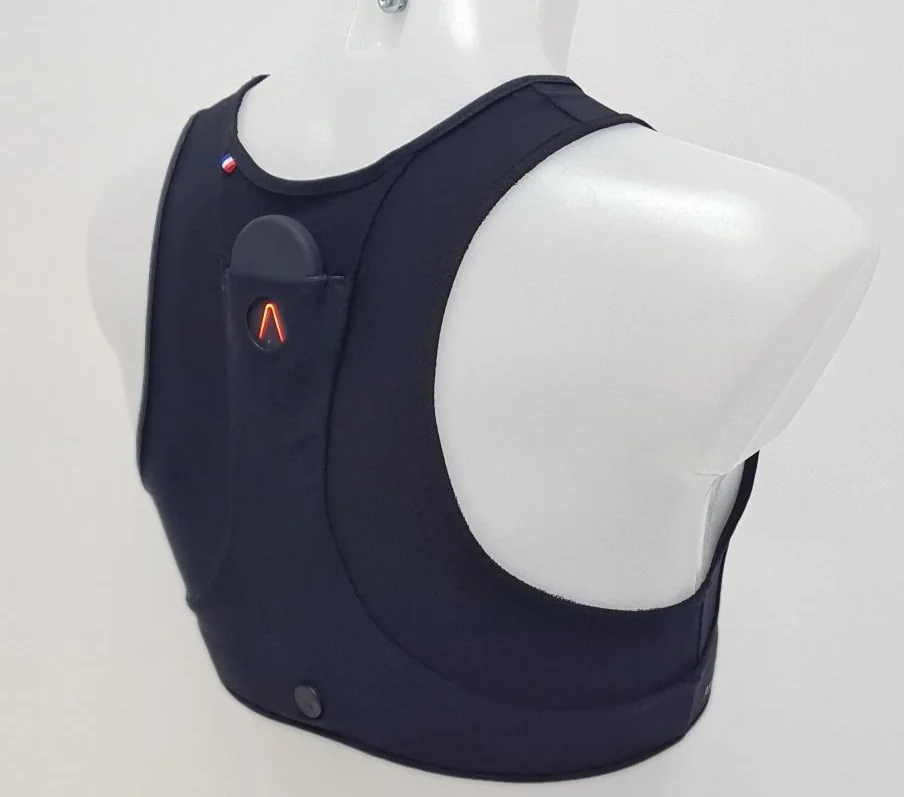
Smart-Textile : comprendre les défis à venir en 2025
Smart Textile : enjeux techniques (intégration, lavabilité, autonomie) et applications émergentes. Vision d'un expert français du domaine.
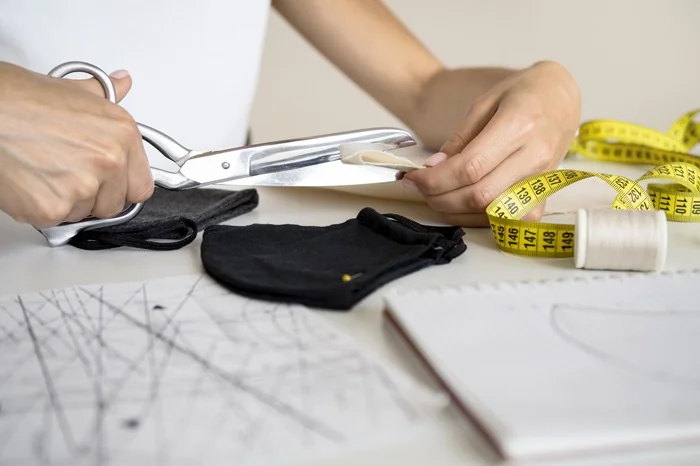
Comprendre les Grandes Étapes de Développement d’un Produit Textile
Développement produit textile : du sourcing matière au prototype validé, en passant par patronage, assemblage et tests. Roadmap complète.
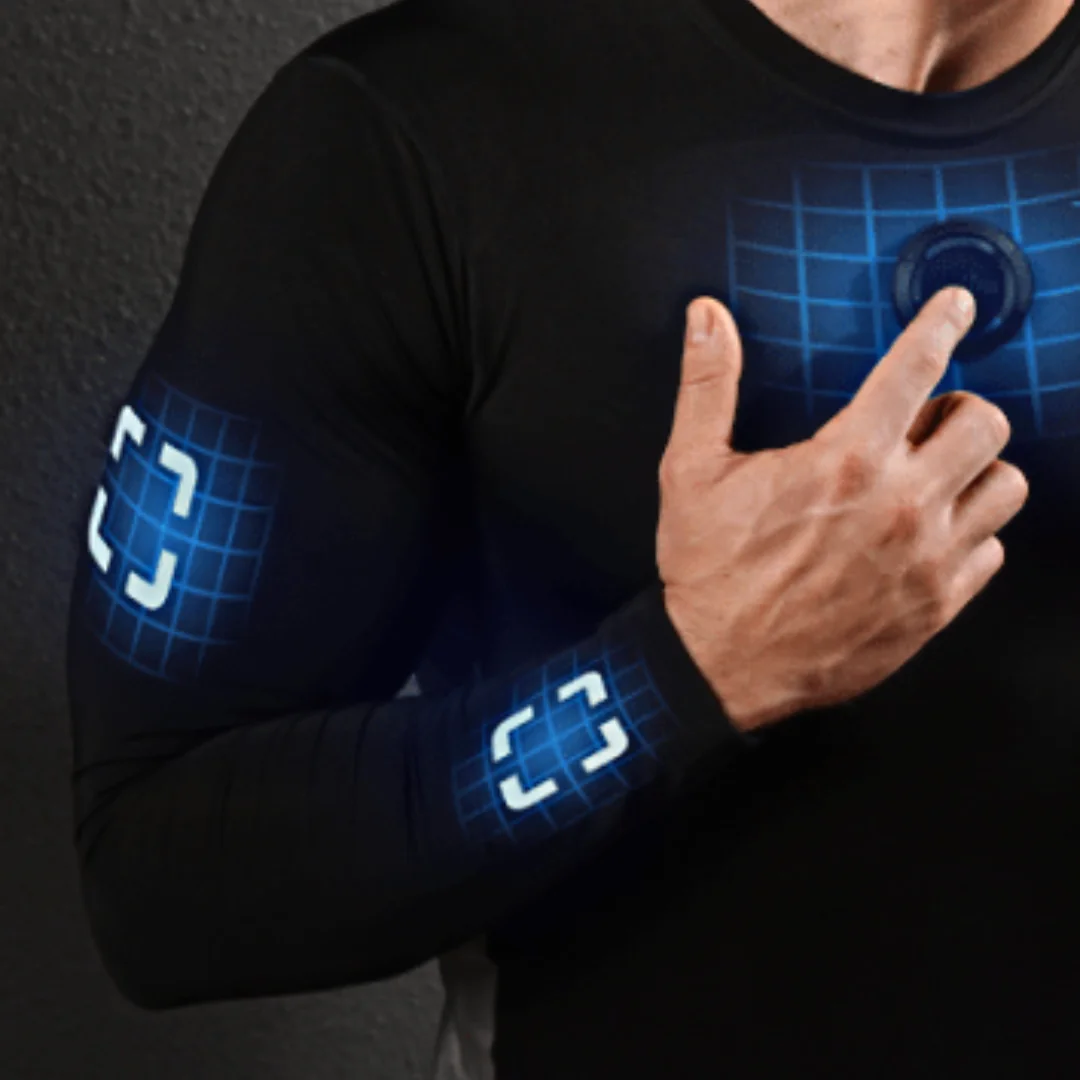
Le Défi Majeur du Smart Textile : Concevoir et Développer un Produit dans son Intégralité (étapes à suivre)
Concevoir un produit smart textile complet : intégrer capteurs, actionneurs et électronique dans un vêtement lavable. Étapes et écueils à éviter.

Un projet en tête ?
Notre équipe est prête à discuter de votre projet d'innovation textile technique. Réponse sous 48 h.

180 route des prés rollier, ZAC de Bromines, 74330 Sillingy
