


You are developing an innovative product and want to make sure it cannot be copied or reproduced? Protecting product innovation is a critical step in product development - and one that is too often overlooked. In a world where technology is just a click away, an unprotected idea can be exploited by others before it ever reaches the market.
At AQ-Tech, an engineering design house specialised in mechanical engineering, embedded electronics and technical textiles, we work with clients on these sensitive questions every day - with one founding principle: your IP stays yours, we never compete with your brand. Here is a clear, complete overview of how to effectively protect your innovation: patents, global strategy, confidentiality and practical good habits.
1. Protecting innovation: a global strategy, not just a patent
Protecting an innovation goes far beyond filing a patent. It is a strategic process that combines legal, contractual, technical and behavioural actions. Many project owners assume that a single filing with the patent office is enough, but the reality is far more subtle - especially when you are building IP for product development rather than a pure software invention.
Think broader than a single patent
A product is the sum of many ideas: architecture, design, processes, components, suppliers, software choices, materials. Some of these elements are not patentable; others can hardly be protected without compromising the underlying trade secret. Your strategy must therefore match the very nature of your innovation.
A concrete example: if you have spent months finding a specialised supplier for a specific component, it would be risky to disclose its name or part number publicly. Likewise, proprietary algorithms or manufacturing processes should not appear in a technical file shared with a customer or distributor.
In short, the first reflex for protection is to control information flow. Disclosing as little as possible and contractualising the rest is often far more effective than a poorly drafted or ill-suited patent.
The key role of non-disclosure agreements (NDAs)
Each time a third party gains access to your technical data, drawings, prototypes or CAD files, it is essential to put in place an NDA (Non-Disclosure Agreement). This document binds both parties not to exploit or disclose the information received. It is a simple, low-cost tool - and yet, it is too often skipped.
A well-drafted NDA should clearly specify:
- The information covered by confidentiality;
- The duration of protection;
- The persons authorised to access it;
- And the consequences in case of breach.
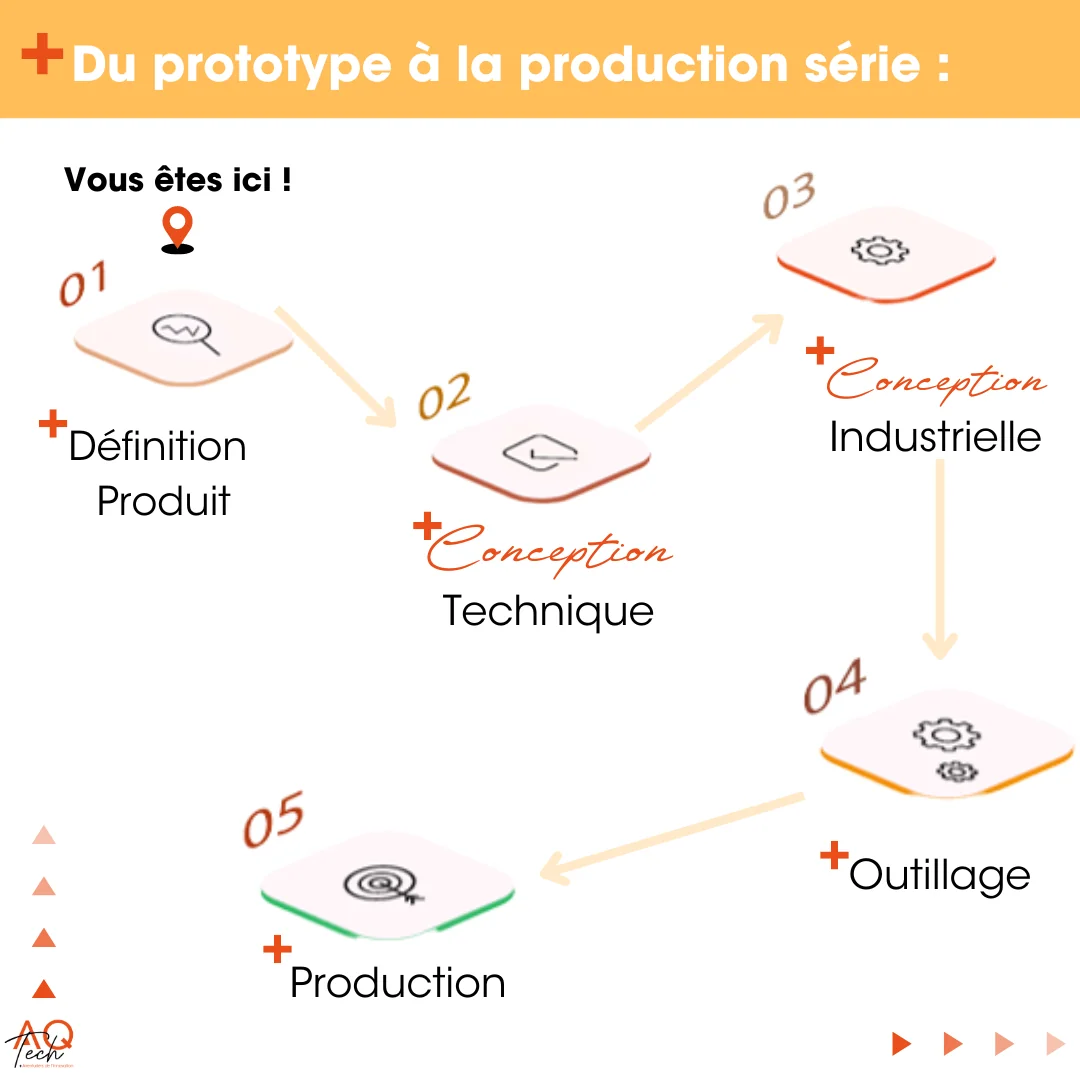
This kind of contract can also cover preliminary discussions with your prototyping or industrialization partners.
2. Patents: a powerful but complex tool
Patents are often seen as the "silver bullet" for protecting an invention. In reality, they are a very powerful tool - but one with real limits and costs.
Drafting the patent
A patent is a complex legal text describing the invention in enough detail to prove its novelty and applicability. Poor drafting can make it invalid or impossible to defend. We strongly recommend engaging a qualified patent attorney for this step.
A single patent is not always enough either. Some companies file several patents around a single product to cover different aspects: mechanics, electronics, design, software, and so on. This is what we call a patent portfolio strategy.
Associated costs
In Europe, the official filing fees for a patent are only a few dozen euros, but the real cost includes:
- Professional drafting: 2,000 to 6,000 EUR;
- Prior art search: around 500 EUR;
- International filing (PCT route): several thousand euros;
- Annual renewal fees in every country where the patent is maintained.
These costs add up quickly, which is why it is essential to choose your priority geographies based on your target market and go-to-market strategy.
The actual level of protection
A patent protects against direct copy, but it does not shield you from every threat. Competitors can sometimes develop close alternative solutions without infringing your claims. And enforcing your rights often requires long, expensive proceedings - especially against larger players with deeper pockets.
+ AQ-TIPS
- Have your patents drafted by an experienced professional.
- Build the cost of IP protection into your funding plan from day one.
- Never disclose publicly before you have filed.
3. Trade secrets and key know-how
Not everything can - or should - be patented. Some information is more valuable when it stays secret. This is the case for internal processes, chemical formulations, proprietary algorithms or industrial sourcing.
Trade secret protection rests on three pillars:
- The information must be confidential (not in the public domain);
- It must have economic value;
- And reasonable measures must be in place to keep it secret (restricted access, NDA clauses, secure storage).
In practice, this means: avoid printing supplier names on shared drawings, restrict access to source files, prepare simplified versions for external communication, and generalise technical schematics intended for customer presentations.
A concrete case: communicating around a prototype
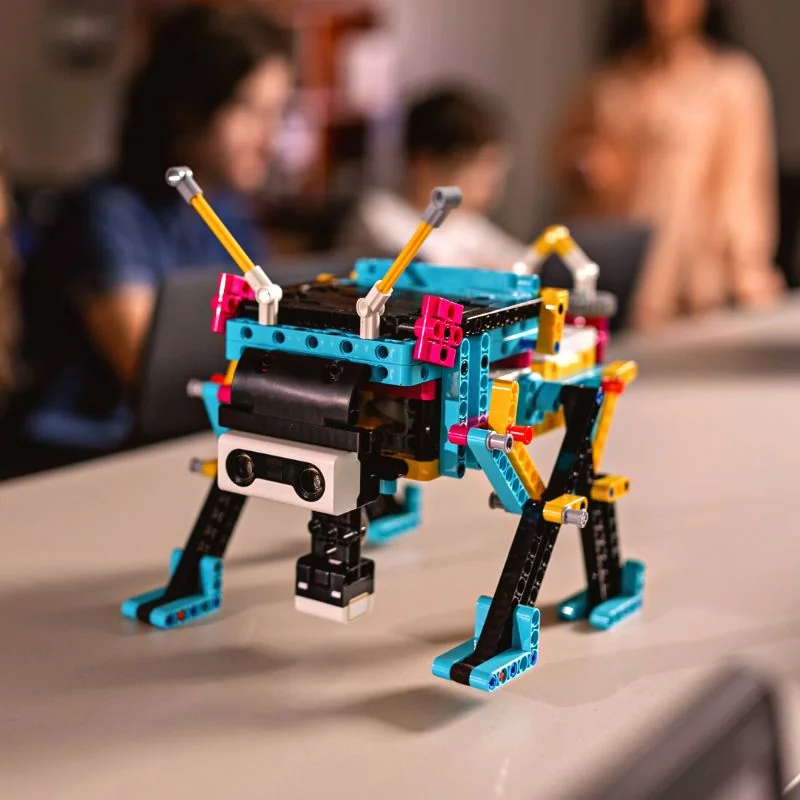
During the prototyping phase, it is tempting to share photorealistic 3D renders. Yet these images often contain sensitive information (precise geometries, fasteners, material choices). It is safer to use simplified or illustrative renders, without dimensions or internal details, to avoid information leaks.
+ AQ-TIPS
- Never share your real CAD files outside the inner circle of trust.
- Protect the key information: suppliers, processes, BOMs.
- Use simplified renders for client-facing communications.
4. Traceability and proof of prior art
An innovation can be protected even without a patent, provided you can prove its creation date. In France, the Soleau envelope lets you deposit dated technical documents with the national IP office to certify authorship of an idea. It does not grant exclusive rights, but it provides solid legal evidence. Equivalent mechanisms exist in most jurisdictions (e.g. WIPO PROOF successors, notary deposit, USPTO Provisional Patent Application).
More modern options also exist: qualified electronic signatures or blockchain-based timestamping can record your creations and ensure their traceability.
At AQ-Tech, we systematically archive design steps, prototype revisions and client exchanges. This documentary rigour acts as indirect protection in case of dispute - and reinforces our promise that your IP stays yours.
+ AQ-TIPS
- Record every design iteration and proof of conception.
- Use modern timestamping solutions (blockchain, qualified e-signature).
- Never leave an innovation without a written or digital trail.
5. Balancing protection and collaboration
Protection should not become a brake on innovation. Excessive secrecy can slow development, especially in collaborative projects or European consortia. The right balance is simple: share what is necessary, protect the rest.
In R&D projects involving several partners, consortium agreements typically define IP ownership, data-sharing rules and the commercial exploitation of results. AQ-Tech has taken part in many such projects, always ensuring that each partner keeps full control of its own technology.
Finally, well-protected innovation is not only a safety net - it is also a powerful economic lever. A patent, a unique know-how or an exclusive design increases the value of your business and makes partnerships, licensing or fundraising rounds significantly easier.
In short
Protecting your product innovation is first and foremost about anticipating and structuring your approach. Combine:
- A legal strategy (patents, trademarks, design rights, Soleau or equivalent);
- Robust non-disclosure agreements;
- A clear trade-secret policy;
- Rigorous management of data and technical documents;
- And smart, controlled communication around the product.
At AQ-Tech, we help our clients innovate with peace of mind by building IP protection into our engineering design house and product industrialization workflows from day one - because an innovation only has value if it is well protected, and because we believe your IP must stay yours. Talk to our team about your next product.