


From blank page to object: bringing an innovative concept to life
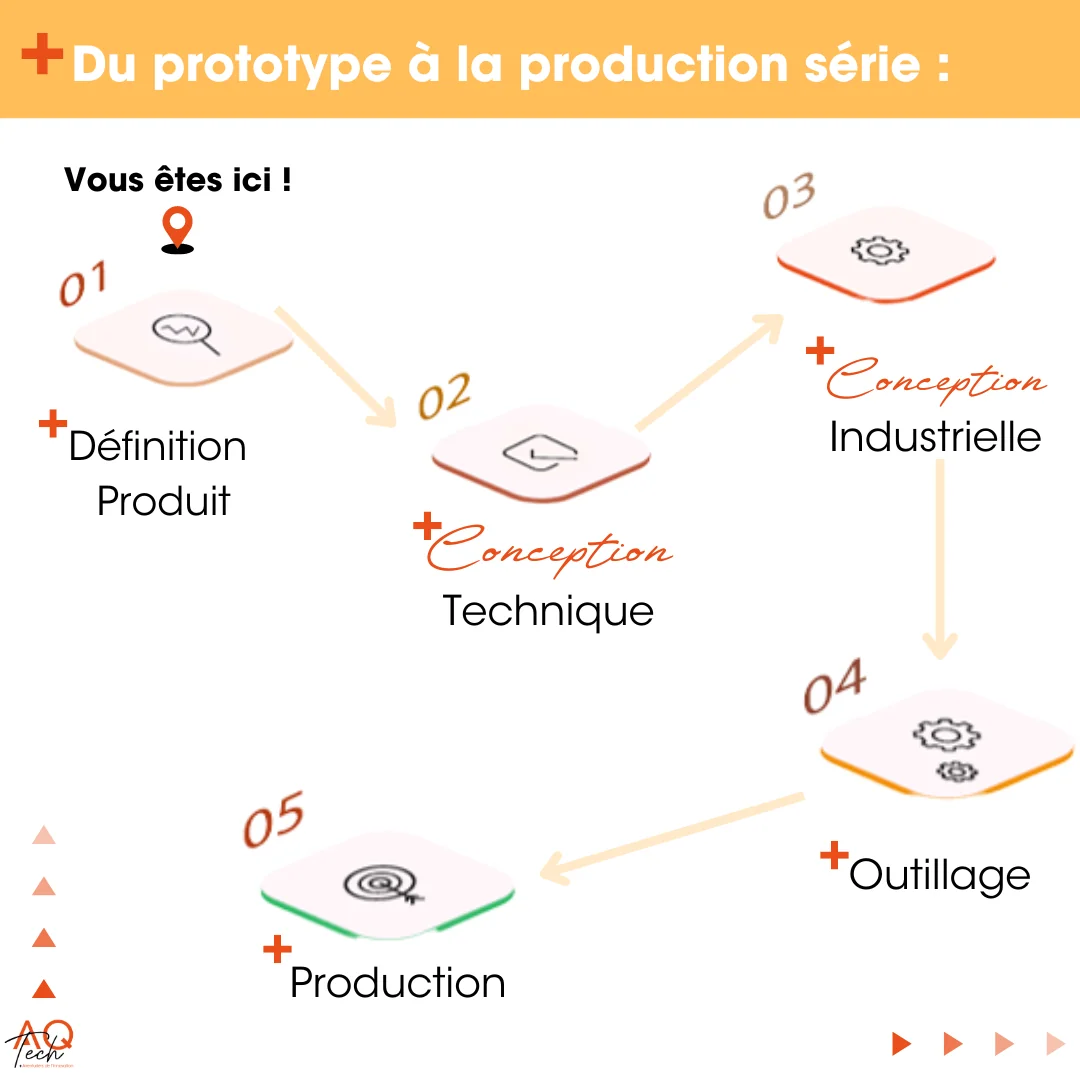
You believe in your idea. To turn it into reality and confront it with the field, rapid prototyping is the key. Whether you need a mock-up, a demonstrator or a functional prototype, every project calls for a tailored approach. Here are the 4 essential steps to efficiently transform your concept into a tangible product.
For wearable products — connected garments, textile airbags, soft exoskeletons — the prototyping phase is even more critical: the interaction between embedded electronics, technical textile and compact mechanics reveals roadblocks that no simulation can fully expose.
1. Define the objective of your prototype
A prototype must always answer a clear objective. Ask yourself: why do we need a prototype, what do we want to validate? Each project phase has its own prototype: aesthetic, technical or functional.
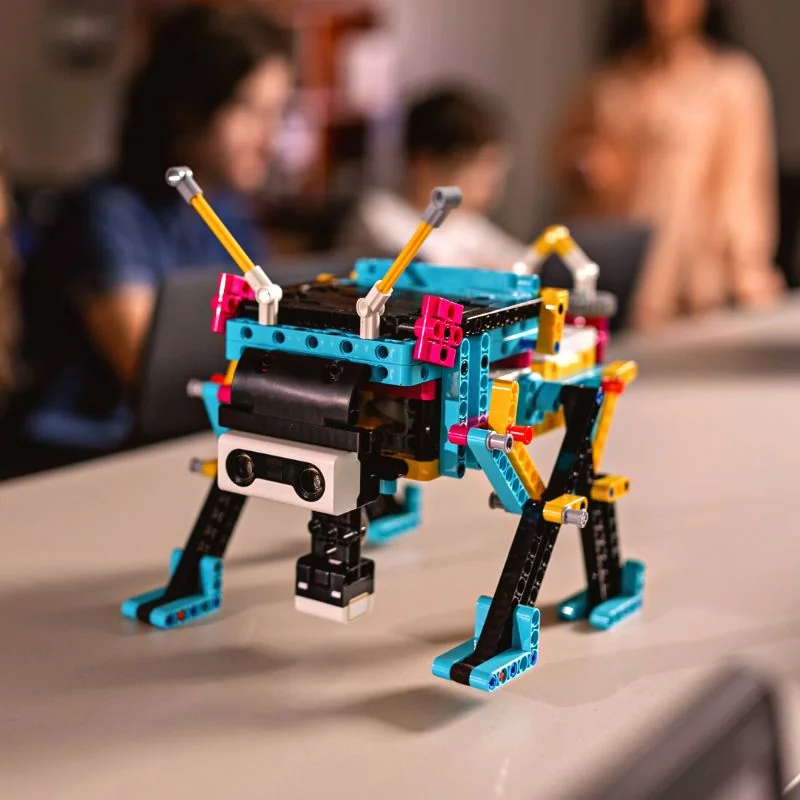
- At the start, a 3D mock-up tests the shape or lifts a technological roadblock.
- Mid-project, a look-like prototype validates worn ergonomics and comfort.
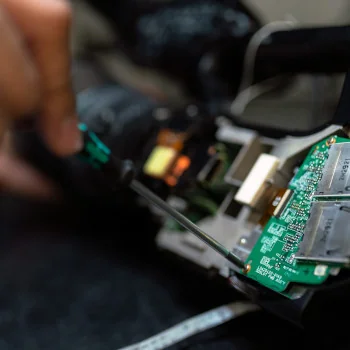
- At project end, a works-like functional prototype validates mechanical and electronic performance and washability.
Pinpointing your need precisely allows you to define the right type of prototype and a relevant specification.
+ AQ-TIPS
At AQ-Tech, we recommend the SMART method:
- Specific: clearly defined
- Measurable: quantifiable
- Acceptable: shared by the team
- Realistic: achievable
- Time-bound: with a clear deadline
2. Write a clear specification
Once the objective is set, you have to formalize it. The specification guides your partner in designing a prototype that meets your expectations while leaving room for creativity.
State the essential constraints (weight, footprint, finish) but let your partner propose suitable technical solutions and materials. An overly rigid specification kills innovation.
For smart textile products, the specification must also frame washability (number of cycles, temperature), connectivity (BLE, Wi-Fi, LoRa), battery autonomy and any targeted certification (CE PPE, MDR class I/IIa).
3. Design and materialize your ideas
The specification is ready: time to design! From 3D modelling to electronic integration, every detail counts. The goal: a faithful, functional and optimized prototype, born from our expertise in mechanics, electronics and technical textile.
+ AQ-TIPS
Our watchword: iteration. Release a first version quickly, test it, improve it and start over. This is the key to agile, efficient development. Several iterations help refine design, mechanics or electronics until reaching the ideal version.
3.1 Focus: 3D printing
3D printing has revolutionized prototyping. Several technologies exist:
- FDM: fused deposition modelling, fast and cost-effective.
- SLA: stereolithography for smooth, aesthetic parts.
- SLS / MJF: powder sintering for accurate, robust parts.
Depending on your needs, these parts can be sanded, painted or varnished for a finish close to the end product.
3.2 Focus: textile & wearable prototyping
For worn prototypes, 3D printing is not enough. You must combine HF welding, technical stitching, multi-layer lamination and flexible electronics integration. Our Annecy workshop can produce functional textile prototypes in 2 to 4 weeks, with washability and robustness testing in the loop.
4. Test, learn and iterate
Testing your prototype is essential. The first versions are never perfect, and that is normal. The goal is to identify what needs improvement and adjust the concept.
For a wearable, testing includes: real-world trials (movement, perspiration), wash campaigns (25 to 100 cycles), signal measurements (ECG/EMG/IMU quality), battery endurance and mechanical robustness to impact.
+ AQ-TIPS
Carefully list improvements after each test and record them in the specification to keep track of the path travelled.
Conclusion
Rapid prototyping is a decisive step in product development. For technical textile and wearable products, the stakes are amplified: the interaction between soft materials, embedded electronics and compact mechanics multiplies the iteration loops required — and that is precisely where the leap from concept to industrializable product is decided.
AQ-Tech has structured a dedicated offer for wearable product prototyping: a 500 sqm Fab Lab integrating 3D printing, HF welding, an electronics workshop and test benches. From idea to validated worn prototype in 4 to 8 weeks depending on complexity.