


How to Choose the Right Industrial Partner in Plastics Manufacturing
Selecting the right plastic injection partner is one of the most strategic decisions in a product’s life cycle. The right partner ensures quality, efficiency, and smooth industrialization; the wrong one can lead to costly delays and poor results. Below are key guidelines from AQ-Tech to help you make the right choice.
1. Understand the different industrial roles
In the world of plastics, there are several key players. Understanding who does what will help you select the right fit for your needs:
- The mold maker (toolmaker) designs and manufactures the injection mold, tailored to your part geometry.
- The molder (injection partner) operates the injection presses to produce the parts using your mold.
- Integrated molders handle both mold manufacturing and part production — ideal for startups or small-volume projects.
Some suppliers offer “carcass molds”, where the external mold structure remains their property while only the cavity (your part geometry) is customized. This approach reduces costs but limits flexibility for future changes.
For small or mid-complex projects, AQ-Tech generally recommends working with an integrated partner. It simplifies logistics, reduces iteration time, and makes the fine-tuning phase much easier.
2. Made in France or Made in China?
Globalization has made it possible to produce molds and parts almost anywhere, but the trade-offs remain significant. Chinese suppliers can deliver good quality, often at half or even a quarter of the European price. However, local production still offers major advantages in terms of communication, logistics, and technical reactivity.
Before deciding, ask yourself:
- Does the cost difference justify transportation, lead time, and coordination complexity?
- How will the origin of production affect your brand image or sustainability strategy?
- How will you handle support, adjustments, or disputes from afar?
- Do you plan to bring the mold back to Europe later for ongoing production?
Many hybrid models exist. You can manufacture the mold in Asia and perform the injection in Europe, or have a partner abroad manage both tooling and molding. Whatever the configuration, it’s vital to define clear responsibilities, ownership, and adjustment procedures in your contract.
3. Technical expertise and process capability
Not all molders are equal. Each company has its own domain of excellence. Verify whether your potential partner has experience producing parts similar to yours — for example:
- Medical or aerospace-grade components,
- Overmolded assemblies,
- Micro or thin-wall parts,
- Complex shapes with inserts or sliding cores,
- Light-colored or transparent parts requiring special handling.
A qualified supplier should not only execute but also advise you on design and materials. The best industrial partners are those who proactively suggest improvements — optimizing wall thickness, reducing cycle time, or preventing defects through rheological simulation.
4. Quality and traceability
Quality management should be at the center of your collaboration. Reliable manufacturers document and monitor every step of the process: material batches, injection parameters, inspection reports, and dimensional checks.
Define a clear quality protocol together. Identify the critical dimensions to measure, the sampling frequency, and the acceptable tolerances. This not only ensures part conformity but also strengthens mutual trust between client and supplier.
Keep in mind that quality control has a cost. It is often intensive at the beginning (for the first batches), then progressively optimized as the production stabilizes and confidence increases.
5. Visit, compare, and clarify expectations
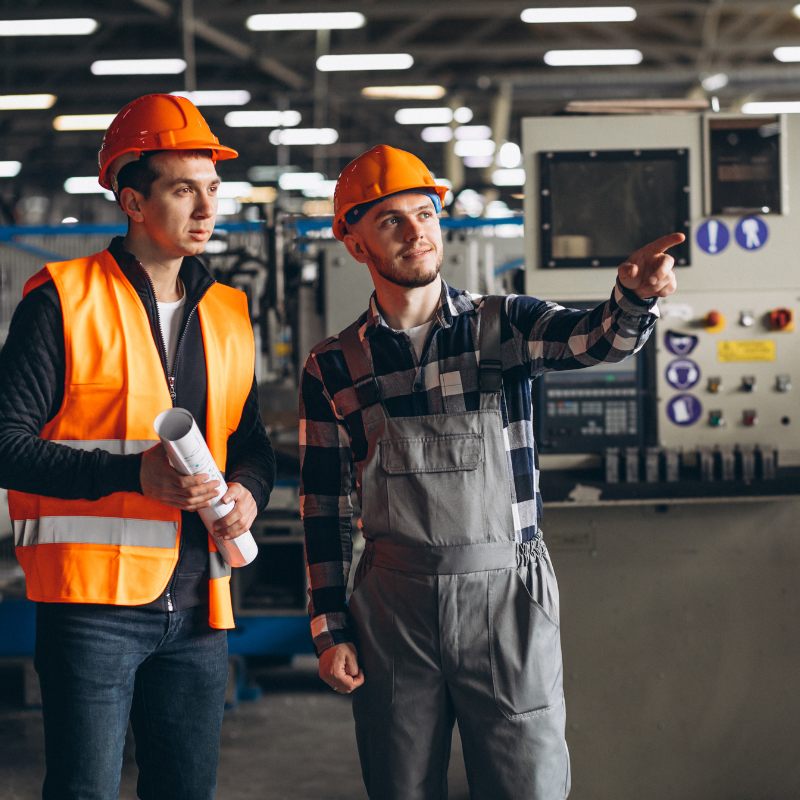
Whenever possible, visit your potential supplier’s facility. Observing their equipment, cleanliness, and organization provides invaluable insight into their reliability. Meeting the team in person also helps you establish a stronger, more transparent relationship.
Be cautious: a high price doesn’t always mean high quality. Some manufacturers operate under demanding aerospace or automotive standards that may be excessive — and costly — for your project. The key is alignment, not over-specification.
Compare several quotes, review what’s included (mold trials, fine-tuning, maintenance), and clarify delivery conditions, guarantees, and intellectual property rights before signing.
Key takeaways
- For simple projects, choose an integrated molder-toolmaker.
- Weigh the pros and cons of local vs overseas manufacturing — cost vs control.
- Validate your partner’s technical experience in similar parts or industries.
- Define a documented, balanced quality protocol.
- Visit and compare facilities whenever possible.
At AQ-Tech, we help companies structure their industrialization strategy and select the right partners for long-term success. To discuss your project with our experts, contact us — we’ll help you find the perfect balance between performance, reliability, and cost.