
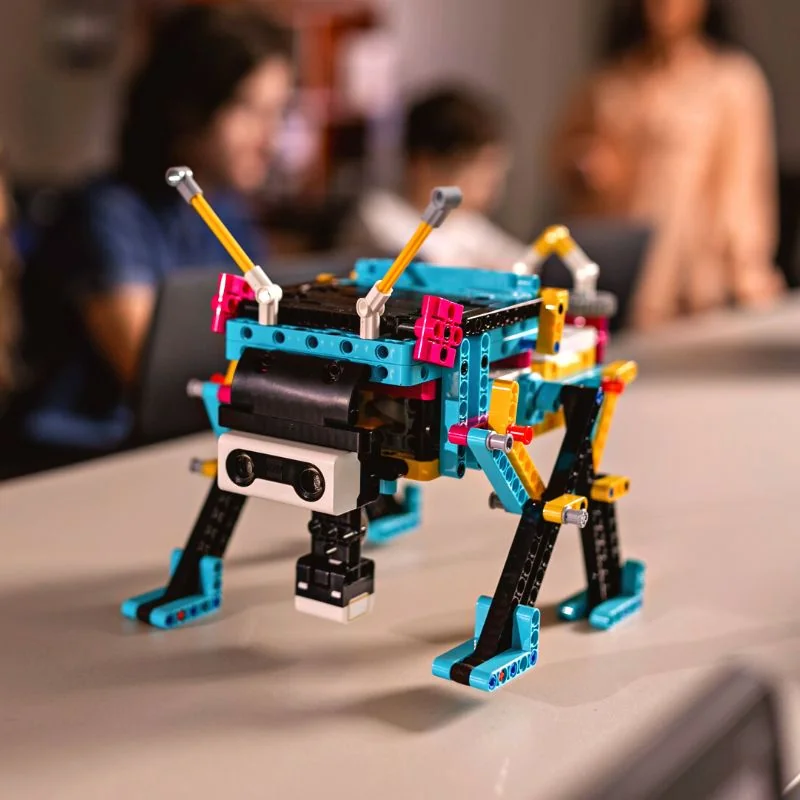

In any physical product development project, the word prototype comes up again and again. Yet behind that single term lie very different realities. Many teams call "a prototype" anything that is not yet industrialised. In practice, each phase of development calls for a specific type of prototype, with its own objectives, tools and constraints.
For technical textiles and wearable products, the topic is particularly rich: you must prototype in parallel the textile carrier, the embedded electronics and their soft interface. Let's review the main prototype types in product development and the role they play in turning an idea into a wearable industrial product.
1. The stages of product development
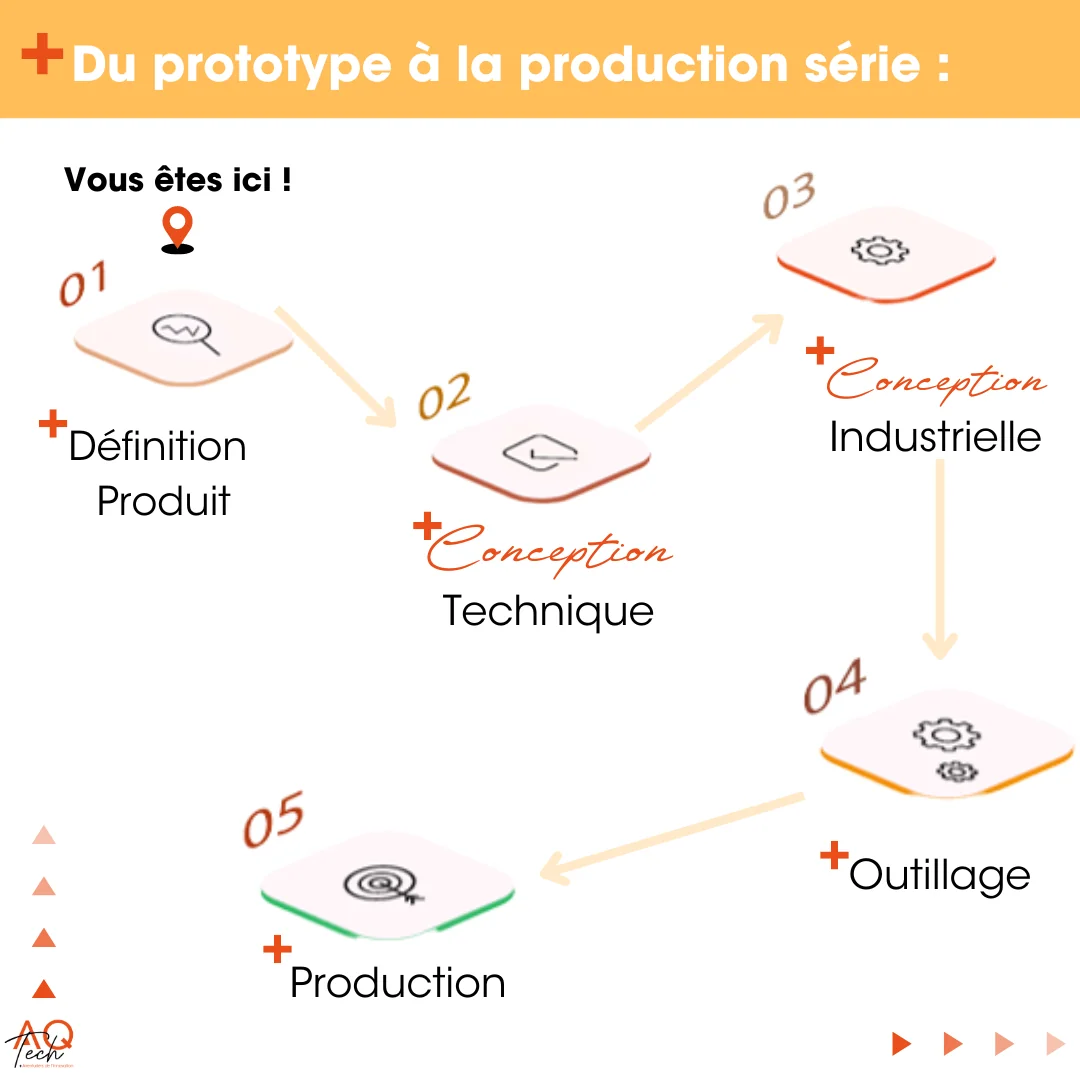
Product development is not a simple "Idea → Prototype → Market" path. It is a structured process:
- Idea → Technical study → POC → Product development → Validation → Engineering design → Industrialisation → Production
Each stage matches a different prototype, built to validate a specific aspect: technical feasibility, design, on-body ergonomics, washability, or manufacturing process.
2. The POC (Proof of Concept)
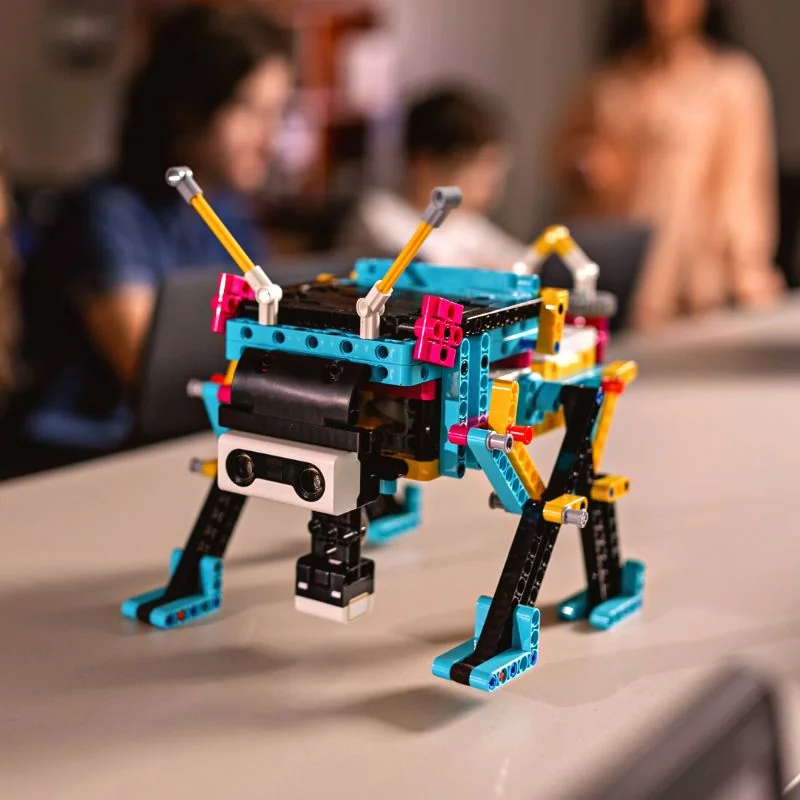
The POC is the very first prototype, the one that validates the technical feasibility of an idea. The goal: prove that the technology or concept works, even in a rough form.
On a wearable, the POC can be an electronic module on Arduino connected to textile electrodes taped on, or a simple inflatable chamber HF-welded without any textile cover. Not pretty, but it proves the function.
This "mock-up" prototype is often built with fast means — 3D printing, gluing, off-the-shelf electronic modules, first HF welds — and helps identify the first technical constraints.
3. The functional prototype (works-like)
Once feasibility is confirmed comes the functional prototype. This phase aims at faithfully simulating the final product: design, on-body ergonomics, interactions, performance. It is the true use-case prototype.
For a wearable, the work focuses on:
- The ergonomic textile pattern (body fit, friction zones, openings)
- The integration of electronics in a dedicated pocket or welded module
- The textile-to-electronics connection (snaps, HF welding, conductive yarns)
- The first washability tests (5-10 evaluation cycles)
Several versions are made, tested and corrected in our prototyping and testing workshop until a satisfactory result is reached.
4. The look-like prototype
Often underestimated, the look-like prototype reproduces the final visual rendering (shape, colours, finish) without necessarily being functional. It is useful for sales presentations, user comfort tests and marketing validation.
On a wearable, this is typically a garment sewn with the right textiles, fitted with a painted 3D-printed enclosure simulating the real electronics.
5. The engineering prototype
The engineering prototype corresponds to the design-for-manufacturing phase. Each part is redesigned according to final processes: plastic injection for the enclosure, HF welding for the inflatable chambers, final PCB, conductive yarns integrated into the textile pattern.
The goal: deliver a prototype that is identical to the final product in material, geometry and finish. It validates the last adjustments before final tooling is produced.
6. The pre-series
After the engineering prototype comes the pre-series: the first parts produced with the final tooling. They are used to test the production line, check conformity and validate the product before launch.
On a wearable product, the pre-series also enables certification testing (CE PPE, MDR), clinical trials for medical devices, and 25-100 cycle wash campaigns. AQ-Tech produces these pre-series in its Annecy workshop (10 to 500 units).
7. Summary
- POC: validate technical feasibility.
- Functional prototype (works-like): validate use and mechanics.
- Look-like prototype: validate aesthetics and comfort.
- Engineering prototype: prepare manufacturing.
- Pre-series: validate real production + certifications.
At AQ-Tech, we support our clients from concept to series, adapting the level of prototyping to each step to guarantee a mature, robust and manufacturable product — especially on technical textile products where iterations are numerous.