


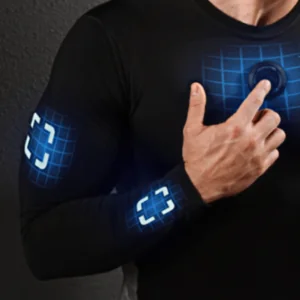
Developing a complete and reliable smart textile product is a major challenge. To succeed, you need a 360° vision of the design process — combining textile, electronics, mechanics and software into a coherent, comfortable and durable whole. These technical worlds, often seen as separate, must here work hand in hand.
In this article, AQ-Tech walks you through the key steps to design an industrial smart textile product: connected, flexible, washable and ready for industrialization.
1. Have a complete vision of the product
The first condition for success is to have an overall vision of the product, from its use to its manufacturing. Understanding how each component interacts — sensors, threads, textiles, electronic housing, firmware — makes it possible to take consistent decisions right from the start.
Goal: choose the best technical solutions according to the identified needs, in order to obtain a high-performance, reliable and industrially viable product.
2. Make the right technology choices
a) Integrating connectivity into the fabric
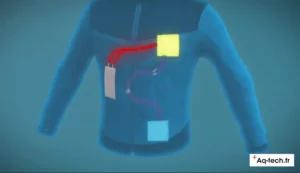
One of the first smart textile challenges is to integrate connectivity. Several approaches exist: embroidery, weaving, or conductive printing. The choice depends on the type of product, the flexibility required and the desired level of integration.
- Embroidery: simple to implement and robust, but creates visible extra thickness and limits circuit complexity.
- Weaving: allows fine and durable integration of conductive threads within the textile structure itself, but remains poorly suited to complex layouts.
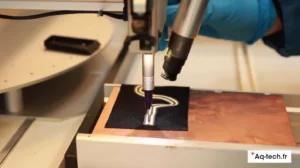
- Conductive inks: used in printed electronics, they offer high design freedom. However, fabric flexibility can raise durability issues — hence the value of special elastic inks.
In most cases, the optimal solution is a combination of technologies: a hybrid textile architecture tailored to the final application.
b) Integrating sensors
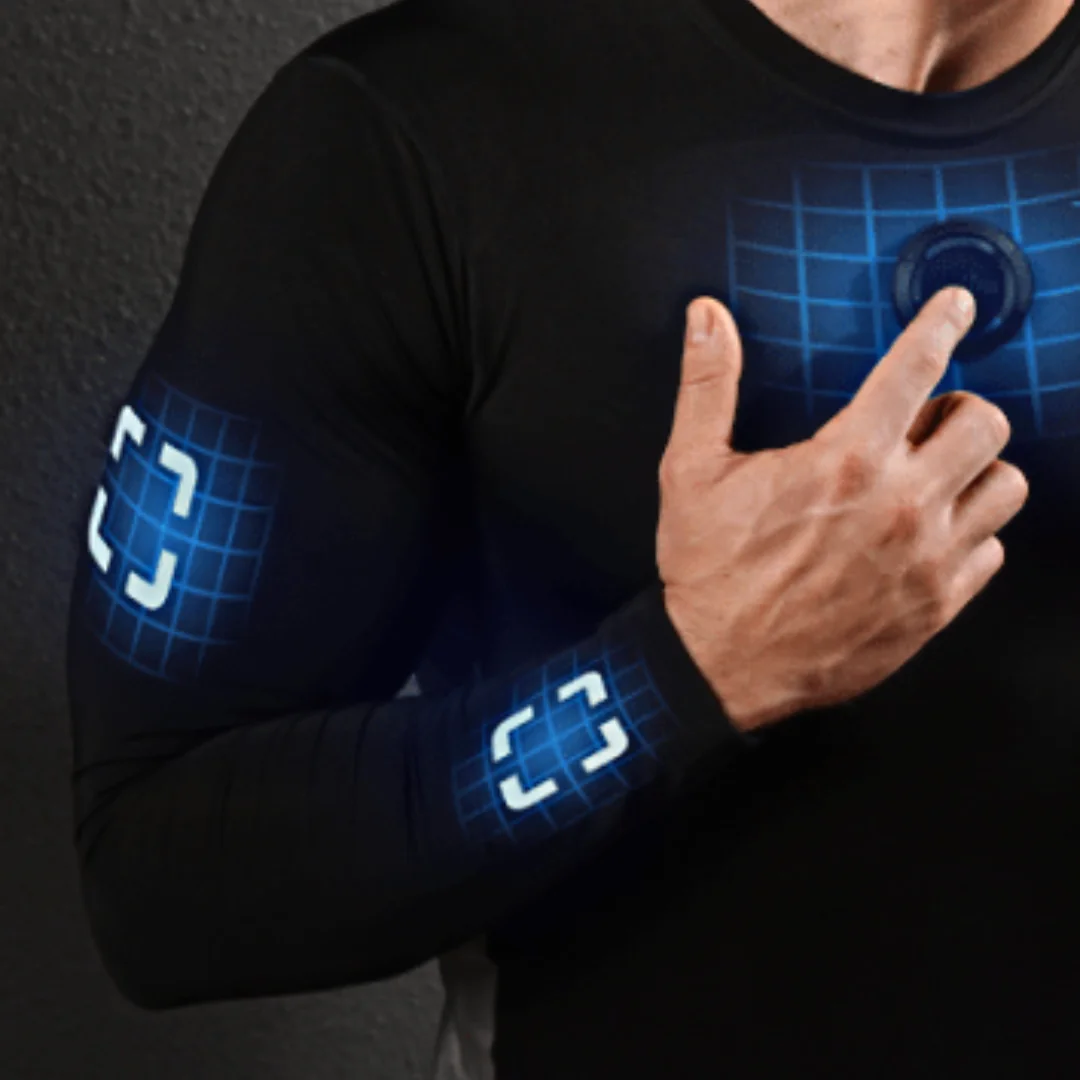
Sensors are the heart of smart textiles. They make it possible to measure physiological or environmental data: heart rate, temperature, motion, pressure, humidity… Their integration must preserve garment comfort, flexibility and reliability.
- Textile sensors for body monitoring (EMG, ECG, breathing).
- Environmental sensors (temperature, humidity, position, UV).
Sensor selection depends on product objectives and the type of data to collect, while ensuring compatibility with textile processes and usage constraints (washing, folding, stretching).
c) Integrating actuators
Actuators add a reactive function: motion, heat, vibration, light, etc. Their integration must be discreet, lightweight and reliable. Heating systems, embedded LEDs or haptic devices require precise design to keep the textile comfortable while ensuring safety and durability.
d) Hardware junction and data processing
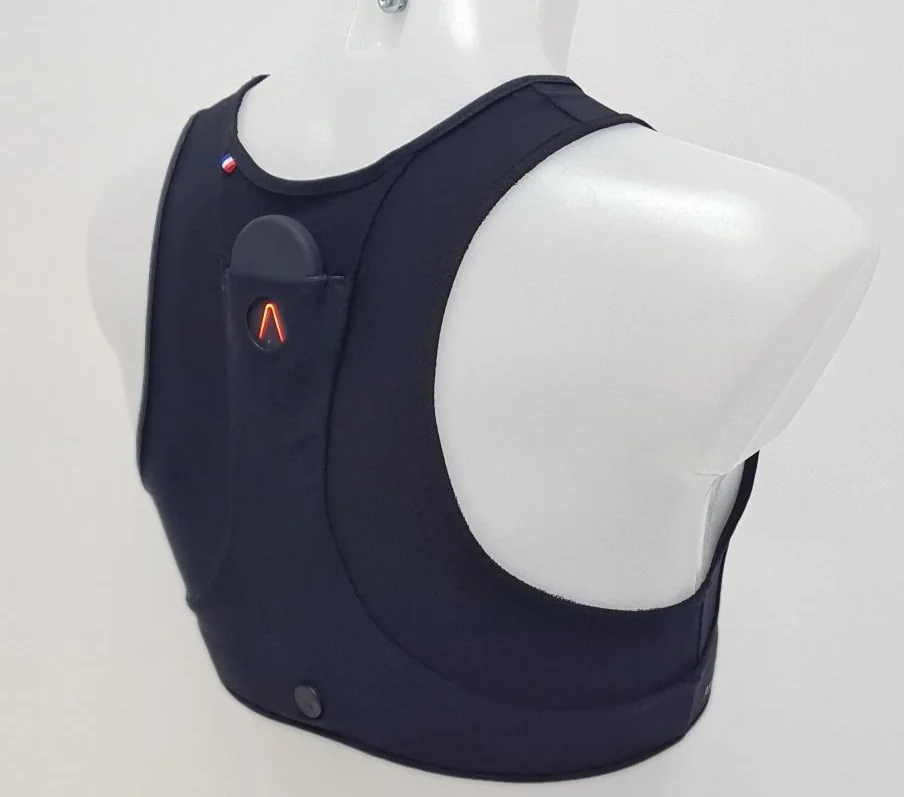
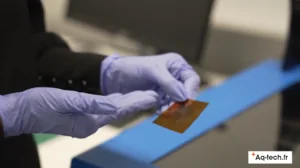
The data collected by the sensors must be transferred to an electronic unit — the junction housing. It groups together printed circuit boards (PCBs), power supply, signal processing and connectivity.
At AQ-Tech, this interface is designed to be compact, ergonomic and mechanically robust. Our mechanical, electronic and software teams work together to define a coherent system, taking into account the type of textile, the fastening method and the connectors.
e) Data transmission and visualization
The final step is to send the data to a network (Wi-Fi, Bluetooth, LTE-M, etc.) and make it accessible through an application or a server. It is the final link between the textile and the digital world, enabling real-time monitoring or advanced analytics.
3. Designing a complete and industrializable product
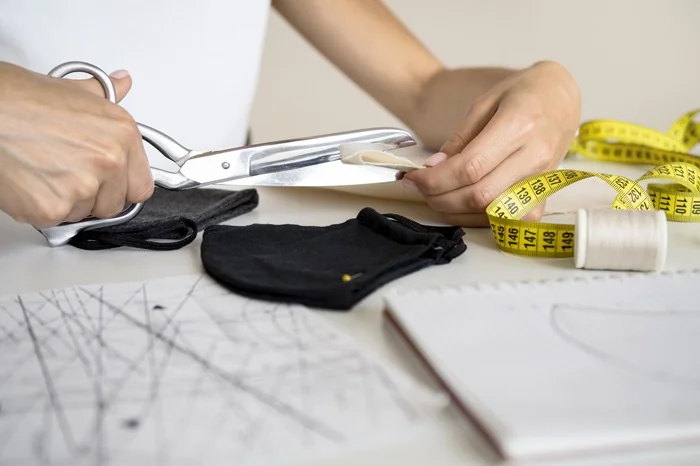
Designing a smart textile is not just about an idea or a functional prototype. You must think industrialization, durability and reproducibility. Many players master a single technological brick (electronics or textile). At AQ-Tech, we master the whole: mechanical, electronic, software and textile design.
This global approach guarantees the consistency of the final product and avoids incompatibilities between technological layers. It enables you to move from an innovative concept to an industrializable and certifiable product.
4. AQ-Tech expertise
Our edge: full mastery of smart textile development, from concept to production.
- Cross-disciplinary expertise in mechanics, electronics, software and textile.
- Capacity to prototype quickly in our in-house workshops.
- End-to-end support up to pre-series and industrialization.
Want to bring your smart textile project to life? Contact our engineers: our team supports you in turning your ideas into innovative, reliable and industrializable products.