



Smart Textile Industrialization: methods, robustness and repeatability
Turning a connected textile into a scalable, durable, controlled and use-stable product.

Our Smart Textile industrialization services
Specialized e-textile industrialization: processes, tooling, controls and long-term validation.
Repeatable manufacturing methods for connected textiles
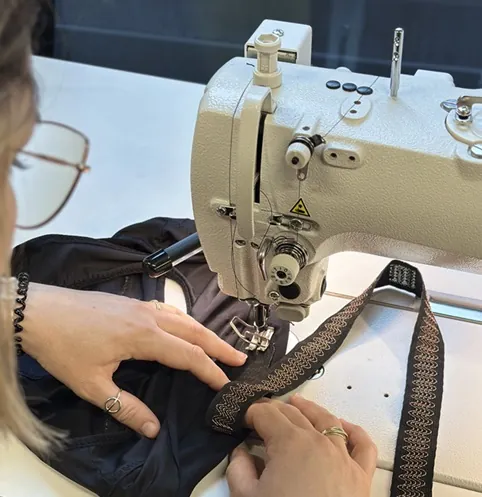
Industrializing a smart textile requires anticipating assembly methods to remain compatible with material variability and electronic integration constraints. Trying to integrate everything into a single operation often leads to solutions that are elegant on paper but too complex and unviable in production. A robust industrial approach consists in separating operations: electronics handled by electronic assembly specialists, sewing by textile workshops, with clearly defined interfaces. This strategy enables a stable and transferable process while integrating repairability and recyclability from the industrial design phase.
Durability: washability, fatigue and signal stability
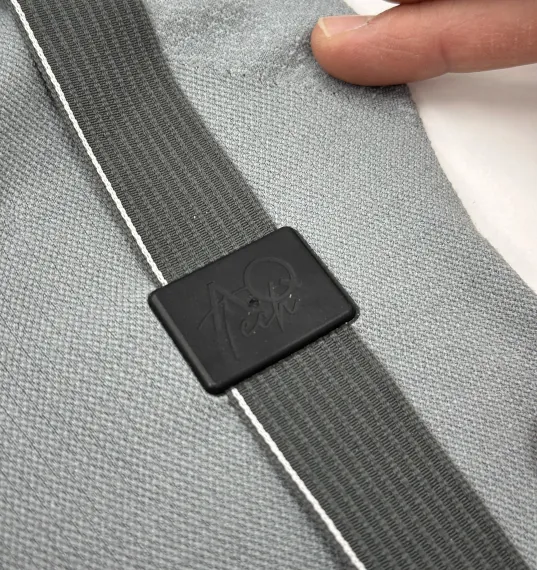
The robustness of a connected textile is a system-level property depending on material and process, not on a single component. Conductive tracks may degrade under repeated bending, abrasion or washing, and connectors may become unstable if mechanical loads are not properly managed by the textile. AQ-Tech implements usage-oriented validations including wash and dry cycles, mechanical ageing, fatigue testing, encapsulation checks and electrical stability verification (continuity, resistance, noise, signal drift) to detect failure mechanisms early and correct them before series production.
Smart Textile quality control: preventing production drift
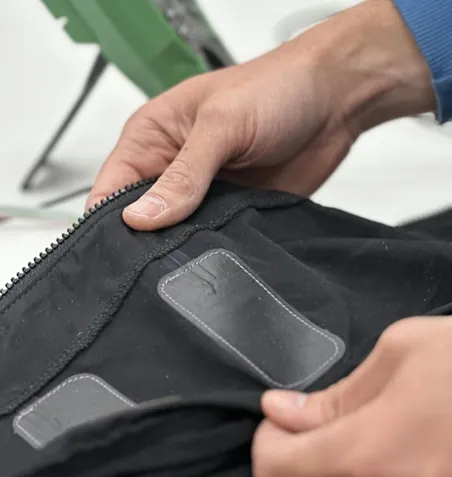
A key aspect of smart textile industrialization is defining relevant quality control capable of managing material, batch and operator variability, which can create invisible deviations directly impacting product performance (skin contact, sensor positioning, electrical continuity, comfort). AQ-Tech structures pragmatic control plans combining dimensional checks, electrical verification at key stages and, when required, batch traceability, to keep controls light enough for production while protecting stability, compliance and repeatability, including in multi-site industrialization.
Industrial documentation and workshop transfer
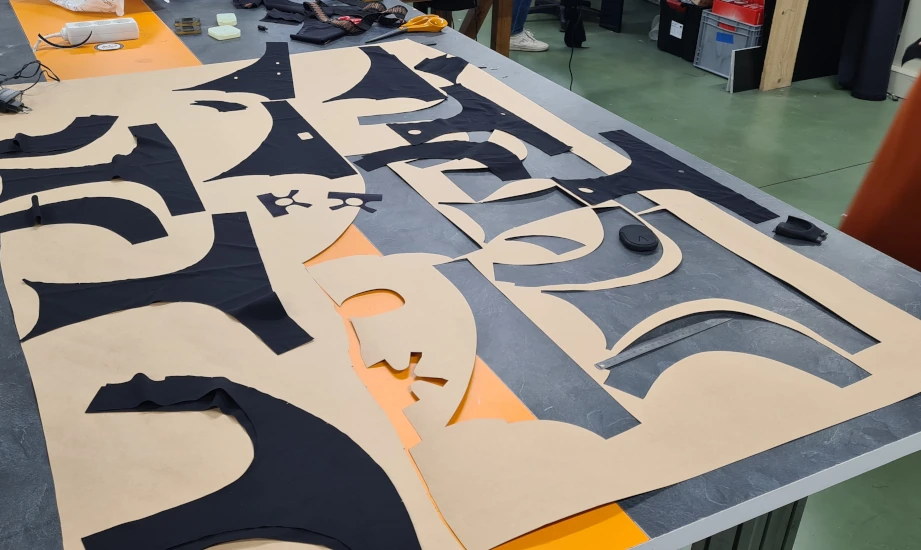
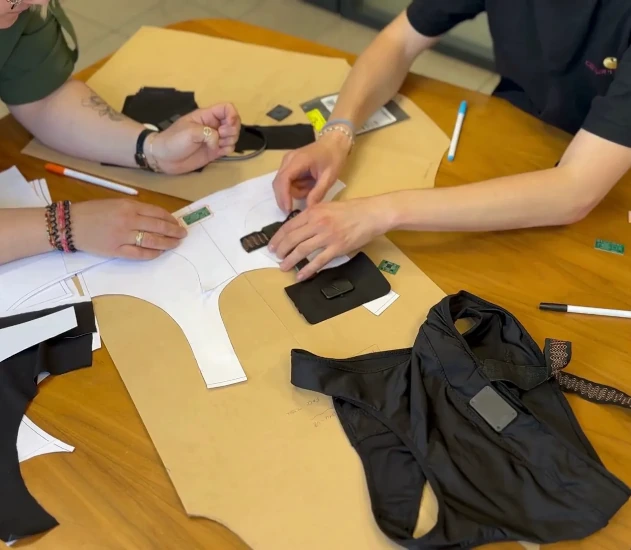
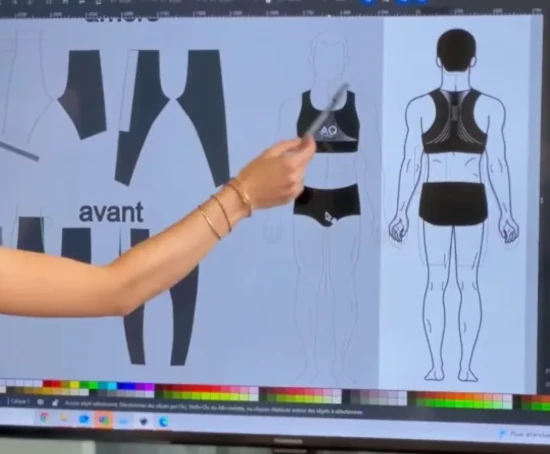
Smart textile industrialization often fails during the industrial transfer phase due to a lack of workshop-ready documentation. AQ-Tech delivers hybrid, production-oriented documentation including coherent bills of materials, patterns and integration drawings, operating procedures and control instructions, and supports the first production runs to stabilize the process before scaling volumes.
E-textile specialization
Industrialization designed for wearable, washable and fatigue-prone products.
Controlled processes
Tooling, in-process controls and repeatable methods.
Long-term validation
Robustness and signal stability in real-use conditions.
Workshop transfer
Industrial files usable by textile production lines.
A complete Smart Textile pathway
Explore upstream and downstream steps
Smart Textile industrialization is the natural continuation of prototyping and directly prepares assembly and manufacturing. To secure your product, AQ-Tech supports the full cycle with a single focus: reliability, durability and repeatability.
Smart Textile Prototyping
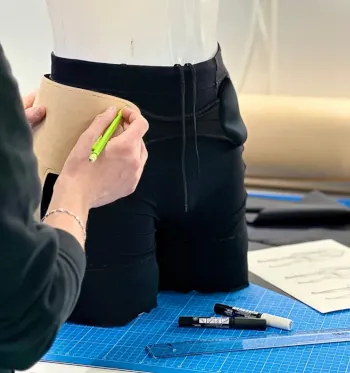
Validate functions, integration and early testing before industrialization.
Assembly & Manufacturing
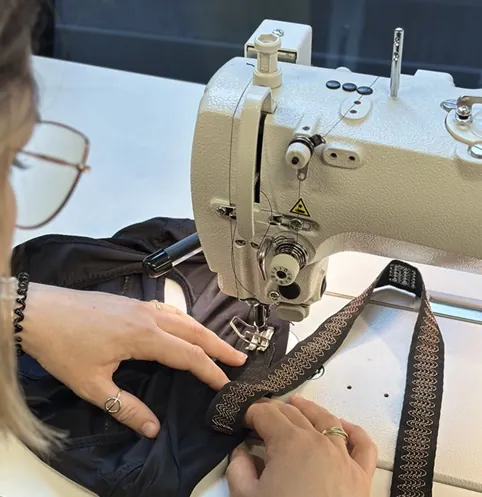
Move to pre-series and production with a stabilized, controlled process.
FAQ — Smart Textile Industrialization
When should Smart Textile industrialization start?
As soon as the prototype is functional and you need to secure repeatability, durability and workshop methods. In smart textile projects, waiting until “the end” to industrialize is a mistake: material, assembly and encapsulation choices must be designed for production from the first prototyping iterations.
How is it different from conventional electronics industrialization?
Textiles introduce phenomena that do not exist in electronics: permanent deformation, material dispersion, gesture variability, and use constraints (washing, abrasion, bending). A viable process must control these variations while maintaining stable electrical performance.
How do you ensure washability of a connected textile?
Washability depends on the full architecture: materials, stress zones, encapsulation, connector interfaces and process compatibility. AQ-Tech runs representative wash cycles and combined electrical/mechanical checks to identify failure mechanisms and adjust the product before series.
What are typical risks in Smart Textile production?
The most common are batch-to-batch quality drift, intermittent failures, delamination, sensor placement variation, and signal instability driven by fatigue or humidity. These issues can be prevented with in-process controls and workshop-ready industrial files.
Can you work with our textile workshop or subcontractors?
Yes. AQ-Tech prepares the industrial transfer and supports your partners (textile, electronics, assembly) during the first runs: operating procedures, tooling, controls, acceptance criteria and smart textile know-how ramp-up.
Do you provide Smart Textile assembly?
Yes, both for pre-series (to stabilize the process, validate quality controls, measure production dispersion and lock critical points before scaling) and for actual production runs. Our assembly workshop is equipped to manage this type of complex manufacturing.
Can you prepare elements for future compliance (CE / medical)?
Yes. For smart textile projects under regulatory requirements, AQ-Tech structures documentation, validations and technical elements (processes, controls, traceability, robustness) to support the compliance phase driven by your product strategy.
What documentation is required to produce a smart textile in series?
Hybrid documentation: coherent textile and electronics BOMs, patterns and integration drawings, operating procedures, control instructions, acceptance criteria and assembly/encapsulation rules. The goal is that a workshop can produce without relying on undocumented “tribal knowledge”.