


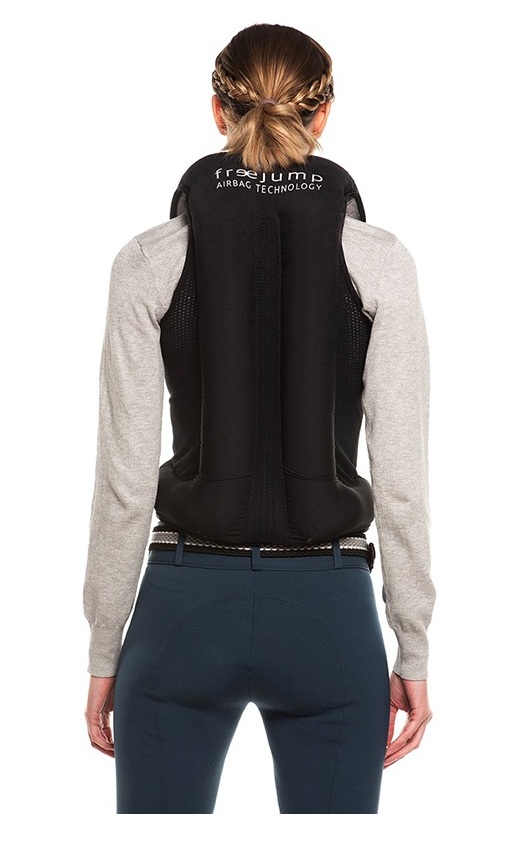
Airbag Technology: The Ultimate Inflatable Safety Solution
For more than four decades, airbag technology has been one of the most reliable and efficient safety innovations ever created. Initially designed for the automotive industry in the 1980s, airbags have since evolved far beyond their original use. Today, they protect motorcyclists, skiers, riders, workers, and even industrial equipment — offering lightweight yet highly effective protection.
What was once a high-volume automotive technology has now become a versatile and accessible solution for multiple markets. The evolution of materials, sensors, and compact gas generators has enabled the creation of portable, intelligent, and multi-sector inflatable safety systems.
At AQ-Tech, we integrate this technology into advanced products combining mechanics, electronics, and textiles. Our mission is to make inflatable protection accessible and reliable — from concept to industrial production.
1. Why airbag technology matters
The fundamental advantage of an airbag lies in its ability to deliver maximum protection from minimal space. When not deployed, the system remains soft and discreet. When triggered, it inflates within a few milliseconds, creating a powerful barrier that absorbs impact energy before the user even hits the ground or obstacle.
This unique characteristic makes airbag systems an ideal safety solution in environments where speed, comfort, and mobility are critical. They combine the responsiveness of electronics with the adaptability of textile engineering.
Key advantages include:
- Energy absorption: reducing injuries during collisions or falls.
- Stabilization: limiting abrupt or hazardous movements.
- Buoyancy: keeping a person on the surface during an avalanche or aquatic incident.
- Compactness: minimal size and weight when inactive.
With these attributes, inflatable protection is now being adopted in sports, medical, industrial, and defense applications, creating new standards of personal safety.
2. How does an airbag system work?
Behind its apparent simplicity, an airbag is a sophisticated system built around three functional subsystems:
- a detection and triggering module,
- a gas generator, and
- an inflatable protection volume.
The detection and triggering module
This module determines when and how the airbag should deploy. Two main families exist:
- Manual triggering systems: often mechanical, activated by pulling a cord or handle. This is the case in equestrian airbags or avalanche backpacks.
- Automatic detection systems: electronic units equipped with sensors such as accelerometers and gyroscopes. These detect abnormal motion patterns or free falls. Advanced models even use AI algorithms to anticipate impact conditions and trigger deployment at the optimal time.
Accuracy is everything: the airbag must inflate before impact, not after. This makes detection software and calibration critical to overall system performance.
The gas generator
Once activation occurs, inflation must be nearly instantaneous. The gas generator is responsible for creating the necessary internal pressure in the inflatable chamber. Different technologies exist, each with distinct trade-offs:
- Pyrotechnic gas generators: deliver extreme speed but generate high heat (up to 800°C). Common in automotive airbags.
- Cold gas generators with pyrotechnic triggering: a small explosive charge punctures a CO₂ or nitrogen cartridge. This system offers rapid deployment with reduced thermal risk — ideal for wearable airbags.
- Mechanical cold gas systems: triggered by a spring or needle, they offer safety and reusability at the cost of slightly slower inflation.
Choosing the right generator depends on factors like required inflation time, volume, operating temperature, and safety regulations.
The inflatable volume
The inflatable volume — or cushion — is the visible protective element. It is generally composed of:
- an airtight inner membrane (often polyurethane or TPU),
- and a protective outer textile layer ensuring mechanical resistance and comfort.
Designing this structure requires deep expertise in fluid dynamics, textile engineering, and energy absorption modeling. The geometry, material choice, and welding method directly influence the airbag’s efficiency and ergonomics.
At AQ-Tech, our engineers develop tailor-made inflatable structures adapted to each use case — from compact wearable airbags to large-scale industrial safety systems.
3. Constraints and design challenges
Although the technology is mature, creating a functional, safe, and certified airbag remains a technical challenge. Each system must balance performance, safety, and manufacturability.
Key challenges include:
- Design complexity: integrating sensors, gas generators, and flexible materials in limited space.
- Regulatory compliance: gas handling, pyrotechnic components, and electronic certification standards (CE, ISO, UL, etc.).
- Environmental durability: maintaining performance despite washing, temperature variations, or impacts.
In short, every inflatable safety system must be engineered as a cohesive unit, where mechanical, electronic, and textile subsystems interact seamlessly.
Our Inflatable Structures department combines these disciplines to deliver high-performance, certified airbag systems ready for production — from concept study to full industrial integration.
4. The future of inflatable safety systems
As sensors become smaller and AI algorithms more accurate, airbag systems will evolve toward smart, adaptive protection capable of real-time self-calibration. Future innovations may include multi-zone airbags, hybrid textile-electronic fibers, or recyclable gas modules for sustainability.
With expertise spanning electronics, mechanics, and advanced textiles, AQ-Tech positions itself at the forefront of this evolution — creating safer, lighter, and smarter inflatable systems for tomorrow’s users.
Want to explore how airbag technology could enhance your product? Contact our engineering team — let’s design your next-generation inflatable protection together.